
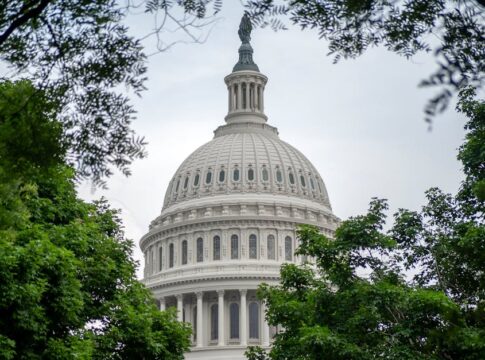
Capitol Hill Debates Government Shutdown Risks
As fiscal deadlines loom over Washington, lawmakers on Capitol Hill find themselves once again engaged in intense debates over federal spending and the looming threat of a government shutdown. These recurring standoffs have become an increasingly familiar feature of American governance, with significant implications for millions of federal employees, essential services, and the broader economy.
Understanding Government Shutdown Mechanics
A government shutdown occurs when Congress fails to pass appropriations bills or continuing resolutions to fund federal government operations and agencies. When funding authorization expires, non-essential government functions cease, and hundreds of thousands of federal employees may be furloughed or required to work without immediate pay. Essential services, including national security operations, air traffic control, and law enforcement, continue operating, though often under strained conditions.
The current debate centers on disagreements between political parties over spending levels, policy provisions, and budgetary priorities. These disputes reflect broader ideological divisions about the role and size of government, fiscal responsibility, and competing national priorities ranging from defense spending to social programs.
Key Points of Contention
Several critical issues dominate the current shutdown debates on Capitol Hill:
- Overall discretionary spending levels for the fiscal year
- Funding allocations for defense versus domestic programs
- Policy riders attached to appropriations bills
- Debt ceiling considerations and their relationship to spending decisions
- Emergency supplemental funding requests
- Long-term budget reforms and deficit reduction measures
Congressional leaders from both parties acknowledge the severe consequences of a shutdown but differ sharply on the path forward. Negotiations often extend to the final hours before a deadline, with temporary extensions becoming increasingly common as lawmakers struggle to reach comprehensive agreements.
Economic and Social Consequences
The ramifications of a government shutdown extend far beyond the political sphere, affecting numerous aspects of American life and the national economy. Federal employees face the immediate impact of disrupted paycheques, creating financial hardship for families who depend on regular income. During previous shutdowns, many workers turned to food banks, delayed mortgage payments, and struggled to meet basic expenses.
The broader economic effects include disrupted government contracts, delayed small business loans, and suspended economic data releases that markets rely upon for decision-making. Tourism suffers when national parks close, and businesses near these attractions experience revenue losses. The Congressional Budget Office has estimated that past shutdowns have cost the economy billions of dollars in lost productivity and economic activity.
Critical services face degradation even when they continue operating. Courts may delay civil proceedings, federal law enforcement agencies may postpone training and non-urgent investigations, and regulatory agencies may halt inspections and reviews. Scientific research projects, including those at institutions like NASA and the National Institutes of Health, face interruptions that can set back important work by months or years.
Historical Context and Frequency
Government shutdowns have become more frequent and prolonged in recent decades, reflecting increased political polarization and the use of budget negotiations as leverage for policy demands. Notable shutdowns include the 21-day closure spanning 1995-1996, the 16-day shutdown in 2013, and the record-breaking 35-day partial shutdown from December 2018 to January 2019.
Each shutdown has reinforced public frustration with congressional dysfunction while demonstrating the practical difficulties of governing through crisis management. Post-shutdown analyses consistently show that these episodes generate costs without producing corresponding policy benefits, as agencies must spend additional resources to resume operations and address backlogs.
Legislative Strategies and Negotiations
Congressional leaders employ various strategies to avoid or resolve shutdown threats. Continuing resolutions provide temporary funding extensions, maintaining current spending levels while negotiations continue. These short-term measures have become increasingly common, sometimes resulting in agencies operating under temporary funding for most of a fiscal year.
Omnibus appropriations bills package multiple spending measures together, sometimes spanning thousands of pages, in an attempt to address numerous priorities simultaneously. These comprehensive bills often face criticism for limiting detailed review and debate, but proponents argue they represent necessary compromises in a divided government.
Bipartisan working groups occasionally emerge to negotiate framework agreements, though these efforts frequently encounter resistance from members who oppose compromise on key principles. Leadership from both the House and Senate must navigate narrow majorities, internal party divisions, and the constitutional requirement for bicameral agreement and presidential approval.
Potential Reforms and Solutions
Policy experts and reform advocates have proposed various measures to reduce shutdown frequency and severity:
- Automatic continuing resolutions that maintain funding at current levels if new appropriations are not enacted
- Biennial budgeting to reduce the frequency of appropriations battles
- Enhanced enforcement of budget process timelines
- Restrictions on policy riders in appropriations bills
- Modified rules requiring lawmakers to remain in session until spending bills pass
However, implementing such reforms requires congressional action, and lawmakers have shown limited appetite for changes that might constrain their negotiating leverage or alter established procedures.
Looking Ahead
As the current debate unfolds, public attention focuses on whether congressional leaders can bridge their differences before funding expires. The outcome will affect not only immediate government operations but also set precedents for future budget battles. Both parties face pressure from their respective bases while confronting the practical realities of governance and the economic costs of dysfunction.
The resolution of this debate will require difficult compromises and political courage from lawmakers willing to prioritize functional government over partisan advantage. As negotiations continue, millions of Americans watch and wait, hoping their elected representatives can fulfill the basic responsibility of keeping the government operational while addressing the nation’s fiscal challenges responsibly.