
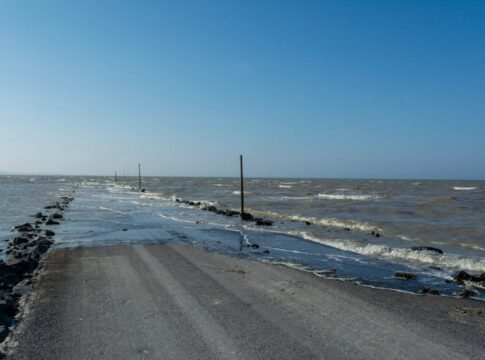
Rising Sea Levels Threaten Coastal Cities Worldwide
Coastal cities across the globe are facing an unprecedented challenge as sea levels continue to rise at an accelerating pace. This environmental crisis, driven primarily by climate change and thermal expansion of ocean waters, poses significant risks to millions of residents, critical infrastructure, and the global economy. Scientific data indicates that the rate of sea-level rise has nearly tripled since the early 1990s, with projections suggesting increasingly severe impacts in the coming decades.
The Science Behind Rising Sea Levels
Sea level rise occurs through two primary mechanisms: thermal expansion and the melting of land-based ice. As global temperatures increase, ocean water absorbs heat and expands, occupying more volume. Simultaneously, glaciers and ice sheets in Greenland and Antarctica are melting at unprecedented rates, adding vast quantities of water to the world’s oceans. According to recent research, global mean sea level has risen approximately 8 to 9 inches since 1880, with about one-third of that increase occurring in just the last 25 years.
The Intergovernmental Panel on Climate Change has warned that without significant reductions in greenhouse gas emissions, sea levels could rise by 2 to 7 feet by the end of the century. Some scientists suggest that if major ice sheets collapse, the increase could be even more dramatic, potentially reaching 10 feet or more in worst-case scenarios.
Cities at Greatest Risk
Numerous major metropolitan areas worldwide face immediate and long-term threats from rising seas. Low-lying coastal cities are particularly vulnerable, with some already experiencing regular flooding during high tides and storm events. The following cities represent some of the most at-risk urban centers:
- Miami, Florida, where the porous limestone foundation allows seawater to seep up through the ground
- Jakarta, Indonesia, which is sinking while sea levels rise, creating a double threat
- Shanghai, China, home to over 24 million people in low-elevation zones
- Mumbai, India, where dense population and limited infrastructure compound the risks
- Lagos, Nigeria, facing threats to its rapidly growing coastal population
- New Orleans, Louisiana, much of which already sits below sea level
- Venice, Italy, experiencing increasingly frequent and severe flooding events
- Bangkok, Thailand, built on soft clay and facing significant subsidence issues
Economic and Social Consequences
The economic implications of rising sea levels are staggering. Coastal regions generate a disproportionate share of global economic activity, hosting major ports, financial centers, and tourism destinations. Property values in affected areas are already beginning to decline as buyers factor in long-term flood risks. Insurance companies are raising premiums or withdrawing coverage entirely from high-risk zones, creating additional financial strain on residents and businesses.
Infrastructure damage represents another enormous cost. Roads, bridges, subway systems, water treatment facilities, and power plants built near coastlines face increasing vulnerability to flooding and saltwater intrusion. The expenses associated with protecting, relocating, or replacing this infrastructure could reach into the trillions of dollars globally over the coming decades.
Beyond economic concerns, rising seas threaten to displace hundreds of millions of people worldwide. Climate refugees forced to abandon coastal homes will strain resources in inland areas, potentially triggering social instability and international migration crises. Low-income communities and developing nations often lack the resources to implement protective measures, creating environmental justice concerns as vulnerable populations bear disproportionate risks.
Current Adaptation Strategies
Cities around the world are implementing various strategies to combat rising sea levels and protect their populations. These approaches generally fall into three categories: protection, accommodation, and retreat.
Protection measures include constructing or enhancing seawalls, levees, and storm surge barriers. The Netherlands, with its centuries of experience managing water, has developed sophisticated systems of dikes and barriers that serve as models for other nations. London’s Thames Barrier and Venice’s MOSE project represent major engineering efforts to protect historic cities from flooding. However, these solutions require massive investment and ongoing maintenance, and may only buy time rather than providing permanent solutions.
Accommodation strategies involve adapting existing structures and infrastructure to withstand periodic flooding. This includes elevating buildings, installing flood-resistant materials, improving drainage systems, and creating green spaces that can absorb excess water. Miami Beach has invested hundreds of millions of dollars in raising roads and installing pumps to address sunny-day flooding caused by high tides.
Managed retreat, though politically challenging, involves relocating people and infrastructure away from high-risk areas. Some communities have begun this difficult process, purchasing properties in flood-prone zones and returning land to natural wetlands that can buffer against storm surge.
The Path Forward
Addressing the threat of rising sea levels requires coordinated action at multiple levels. International cooperation on reducing greenhouse gas emissions remains critical to slowing the rate of sea-level rise. The Paris Agreement and subsequent climate accords represent steps toward global coordination, though many scientists argue that current commitments remain insufficient to prevent dangerous levels of warming.
National governments must invest in both mitigation and adaptation measures, supporting vulnerable communities and funding necessary infrastructure improvements. Regional and local planning processes need to incorporate sea-level rise projections into zoning decisions, building codes, and long-term development plans.
Research and innovation continue to play vital roles in developing new technologies and approaches for managing coastal flooding. From improved modeling capabilities that better predict local impacts to novel engineering solutions and nature-based protective measures, ongoing scientific work provides tools for addressing this challenge.
Conclusion
Rising sea levels represent one of the most significant and irreversible consequences of climate change, threatening coastal cities that serve as economic, cultural, and population centers worldwide. While the challenge is daunting, human ingenuity and cooperation offer pathways to protect vulnerable communities and adapt to changing conditions. The decisions made today regarding emissions reductions, infrastructure investment, and land-use planning will determine the severity of impacts faced by current and future generations. Time remains to act, but the window for preventing the most catastrophic scenarios continues to narrow, making immediate and sustained action imperative.