
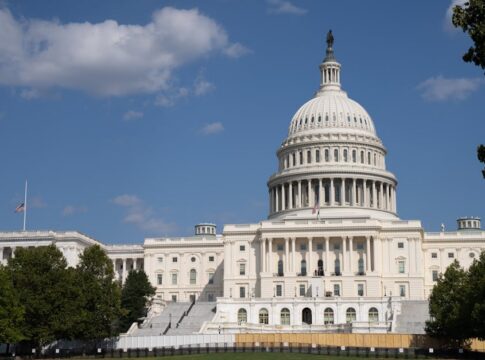
State Legislatures Challenge Federal Authority
The balance of power between state and federal governments has been a defining feature of American democracy since the nation’s founding. In recent years, this tension has intensified as state legislatures increasingly challenge federal authority across a wide range of policy areas. This phenomenon reflects fundamental questions about federalism, constitutional interpretation, and the appropriate distribution of governmental powers in the United States.
Constitutional Foundations of State-Federal Relations
The United States Constitution establishes a federal system that divides sovereignty between the national government and individual states. The Tenth Amendment explicitly reserves powers not delegated to the federal government for the states and the people. This constitutional framework has created an ongoing dialogue about where federal authority ends and state sovereignty begins.
Throughout American history, states have periodically asserted their autonomy when they perceive federal overreach. From the Nullification Crisis of the 1830s to modern disputes over healthcare, immigration, and environmental regulations, state legislatures have consistently tested the boundaries of federal power. Understanding this dynamic requires examining both the legal mechanisms states employ and the policy areas where these conflicts most frequently arise.
Legal Mechanisms for State Challenges
State legislatures utilize several legal and political tools to contest federal authority. These mechanisms range from formal legal challenges to symbolic gestures of resistance, each serving different strategic purposes in the broader federalism debate.
Litigation and Judicial Review
States frequently file lawsuits challenging federal laws and regulations they consider unconstitutional or beyond the scope of federal power. State attorneys general, often acting collectively with their counterparts from other states, have become key players in constitutional litigation. These multi-state lawsuits can significantly impact federal policy implementation and have produced landmark Supreme Court decisions that reshape federal-state relations.
Nullification and Non-Compliance Measures
Some state legislatures have passed laws declaring certain federal statutes null and void within their borders. While courts generally hold that states cannot nullify federal law, these measures serve important political functions. They signal strong opposition to federal policies, mobilize constituents, and sometimes lead to practical non-cooperation with federal enforcement efforts.
Interstate Compacts and Coordination
States increasingly coordinate their resistance to federal policies through interstate compacts and informal coalitions. These agreements allow states to present unified fronts on issues ranging from environmental regulation to professional licensing, creating alternative regional frameworks that can compete with or complement federal approaches.
Key Policy Areas of Conflict
Contemporary challenges to federal authority concentrate in several specific policy domains where state and federal interests regularly collide.
Healthcare Policy
Healthcare remains one of the most contentious areas of federal-state relations. The implementation of the Affordable Care Act generated numerous state challenges, with several states refusing to expand Medicaid or establish state insurance exchanges. More recently, states have challenged federal vaccine mandates and medical privacy regulations, arguing these intrude upon traditional state police powers over public health.
Immigration Enforcement
Immigration policy has sparked intense federal-state conflicts from multiple directions. Some states have enacted “sanctuary” policies limiting cooperation with federal immigration enforcement, while others have passed laws enabling state and local police to enforce federal immigration law more aggressively. Both approaches challenge federal supremacy in immigration matters, though from opposite perspectives.
Environmental Regulation
Environmental protection presents complex federalism questions because environmental problems often cross state boundaries while states maintain significant regulatory authority over natural resources within their borders. States have both challenged federal environmental regulations as too stringent and sued the federal government for failing to adequately protect environmental quality. Some states have also enacted environmental standards exceeding federal requirements, creating patchwork regulatory landscapes that complicate national policy implementation.
Gun Rights and Regulations
Second Amendment issues have generated considerable state-federal tension. Several states have enacted laws purporting to exempt firearms manufactured and sold within their borders from federal regulation. These “Firearms Freedom Acts” assert state sovereignty over intrastate commerce, challenging expansive interpretations of federal commerce clause authority. Other states have adopted gun control measures stricter than federal law, creating their own conflicts with federal preemption principles.
Election Administration
Election law has emerged as a major federalism battleground, with states asserting their constitutional authority to regulate elections within their borders while facing federal legislation and judicial oversight aimed at protecting voting rights. Recent controversies over voter identification requirements, mail-in voting procedures, and redistricting have intensified these tensions.
Political and Constitutional Implications
The increasing frequency of state challenges to federal authority reflects deeper political and constitutional developments. Growing partisan polarization means that states controlled by one party often view a federal government controlled by another party with suspicion and hostility. This dynamic transforms federalism disputes into partisan conflicts, with positions on federal power shifting based on which party controls federal institutions.
These conflicts also reveal genuine philosophical disagreements about the proper scope of federal power. Some argue that expansive federal authority is necessary to address national problems, ensure uniform protection of rights, and prevent a “race to the bottom” in regulatory standards. Others contend that state autonomy promotes experimentation, respects local diversity, and prevents dangerous concentrations of power.
Future Trajectory
State challenges to federal authority show no signs of diminishing. As federal policies continue addressing issues states consider within their traditional domains, conflicts will likely intensify. The Supreme Court’s evolving federalism jurisprudence will prove crucial in resolving these disputes and defining the boundaries between state and federal power for coming generations.
Understanding these dynamics is essential for anyone following American politics. The state-federal relationship remains a living, contested aspect of constitutional government, continuously negotiated through political struggle, legislative action, and judicial interpretation. This ongoing debate about the distribution of governmental powers reflects the complexity and adaptability of American federalism itself.