
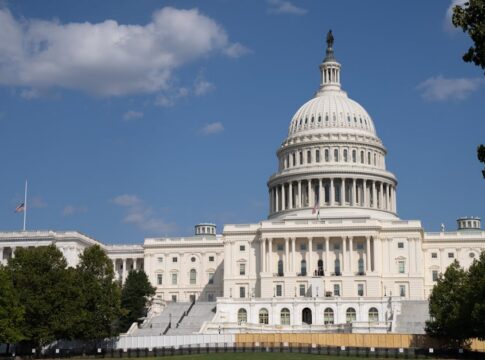
State Legislatures Challenge Federal Authority
The tension between state and federal power has been a defining feature of American governance since the founding of the nation. In recent years, state legislatures have increasingly challenged federal authority across a wide range of policy areas, reigniting debates about federalism, states’ rights, and the proper balance of power in the American constitutional system. This dynamic represents one of the most significant political trends shaping contemporary American politics.
The Constitutional Foundation of Federalism
The United States operates under a federal system of government, where power is divided between the national government and individual state governments. The Tenth Amendment to the Constitution explicitly reserves powers not delegated to the federal government to the states or the people. This constitutional framework has created an ongoing negotiation over which level of government possesses authority in various policy domains.
Throughout American history, the balance between state and federal power has shifted considerably. The Civil War and subsequent constitutional amendments significantly strengthened federal authority, as did the New Deal era and the civil rights movement of the 1960s. However, the pendulum has often swung back toward state autonomy, with various movements emphasizing state sovereignty and local control.
Contemporary Areas of Conflict
Immigration Policy
Immigration represents one of the most contentious areas where states have challenged federal authority. While immigration and naturalization are traditionally considered federal responsibilities, several states have enacted their own immigration enforcement measures, arguing that federal inaction necessitates state intervention. These laws have frequently resulted in legal battles, with courts weighing whether states have overstepped into exclusively federal territory or are legitimately exercising their police powers.
Environmental Regulations
Environmental policy has become another battleground for federal-state conflicts. Some states have challenged federal environmental regulations they consider overly burdensome, particularly in areas affecting energy production, land use, and resource extraction. Conversely, other states have sought to implement stricter environmental standards than federal law requires, leading to questions about whether federal regulations establish a ceiling or merely a floor for state action.
Healthcare and Medicaid
The implementation of federal healthcare policies has generated substantial state resistance. Multiple state legislatures challenged the Affordable Care Act, with litigation reaching the Supreme Court on several occasions. States have also sought greater flexibility in administering Medicaid programs, requesting waivers from federal requirements and, in some cases, refusing to expand Medicaid coverage despite federal incentives.
Election Administration
Election laws represent another area where state authority and federal oversight intersect. While states have primary responsibility for administering elections, federal laws establish certain parameters, particularly regarding voting rights and discrimination. Recent state legislative efforts to modify voting procedures have sparked debates about whether federal intervention is necessary to protect constitutional rights or whether states should retain broad discretion over their electoral processes.
Legal Mechanisms for State Challenges
State legislatures employ various strategies to challenge federal authority:
- Litigation: States frequently bring lawsuits challenging the constitutionality of federal laws or regulations, arguing that Congress has exceeded its constitutional authority or violated state sovereignty.
- Nullification efforts: Some states have passed laws declaring certain federal statutes void within their borders, though such measures have questionable legal standing given the Supremacy Clause of the Constitution.
- Non-cooperation: States may decline to use state resources to enforce federal laws, particularly in areas where enforcement depends heavily on state and local cooperation.
- Interstate compacts: States sometimes band together through formal agreements to present a united front on policy issues, increasing their collective bargaining power with the federal government.
The Role of the Courts
Federal courts, particularly the Supreme Court, serve as the ultimate arbiters of disputes between state and federal authority. The Court has developed various doctrines to navigate these conflicts, including the anti-commandeering principle, which prevents the federal government from compelling states to enforce federal regulatory programs. Recent Supreme Court decisions have sometimes strengthened state autonomy while in other instances upheld expansive federal power, depending on the specific constitutional provisions at issue.
Political Dynamics and Partisanship
The intensity of state challenges to federal authority often correlates with partisan control of different government levels. When one party controls the federal government while the opposing party dominates certain state legislatures, conflicts over federal authority tend to increase. This pattern suggests that federalism disputes are not purely constitutional questions but also reflect broader political and ideological divisions.
Interestingly, both major political parties have alternately championed states’ rights and federal authority depending on which level of government they control and which policies are at stake. This partisan flexibility demonstrates that federalism debates often serve as vehicles for advancing substantive policy preferences rather than reflecting consistent constitutional philosophies.
Implications for Governance
The ongoing tension between state and federal authority has significant implications for American governance. Proponents of strong state authority argue that decentralization allows for policy experimentation, respects regional diversity, and keeps government closer to the people. They contend that states serve as laboratories of democracy, testing different approaches to shared challenges.
Advocates for robust federal authority counter that national action is necessary to address interstate problems, protect individual rights uniformly across the country, and prevent a race to the bottom in areas like environmental protection or labor standards. They argue that excessive state autonomy can lead to inequality and fragmentation.
Conclusion
The challenge state legislatures pose to federal authority represents a continuation of debates that have shaped American politics since the nation’s founding. As new policy challenges emerge and political coalitions shift, the balance between state and federal power will continue to evolve. Understanding this dynamic is essential for comprehending contemporary American politics and the complex constitutional framework that structures governmental power in the United States. The resolution of these tensions will significantly influence the future direction of American federalism and the capacity of different levels of government to address pressing public policy challenges.