
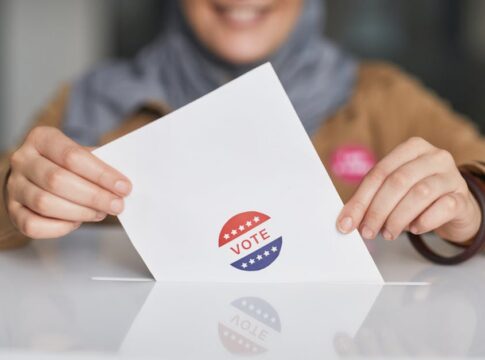
Civic Participation Drops Among Young Voters
Democratic societies worldwide are witnessing a concerning trend: declining civic participation among young voters. This phenomenon, observed across numerous developed nations, raises critical questions about the future of democratic engagement and the health of political systems that depend on active citizen participation. Understanding the scope, causes, and potential solutions to this challenge has become increasingly important for policymakers, educators, and community leaders.
The Scope of the Problem
Statistical evidence paints a clear picture of diminishing youth engagement in civic life. Voter turnout among citizens aged 18-29 consistently lags behind that of older demographics, often by margins of 15-20 percentage points or more. Beyond voting, young people show reduced participation in traditional civic activities such as attending town hall meetings, joining political organizations, volunteering for campaigns, and engaging with local government processes.
This decline is not uniform across all forms of engagement. While traditional civic participation has waned, young people have shown increased activity in alternative forms of engagement, including online activism, protest movements, and single-issue advocacy. However, these newer forms of participation have not translated into higher rates of voter registration or consistent voting behavior, creating a disconnect between political interest and formal democratic participation.
Contributing Factors
Multiple interconnected factors contribute to reduced civic participation among young voters. Understanding these causes is essential for developing effective interventions.
Institutional Barriers
Practical obstacles to voting remain significant for young people. Voter registration requirements, particularly in jurisdictions without automatic or same-day registration, create hurdles for a demographic characterized by high mobility rates. College students face unique challenges, including confusion about where to register, difficulty obtaining proper identification, and conflicts between campus locations and home jurisdictions. Additionally, weekday voting without guaranteed time off work disproportionately affects young people in entry-level positions with limited flexibility.
Political Disillusionment
Surveys consistently reveal high levels of political cynicism among young adults. Many express feeling that their votes do not matter, that politicians do not represent their interests, or that the political system is fundamentally broken. This disillusionment has been amplified by partisan gridlock, perceived corruption, and political discourse that young people find increasingly disconnected from their lived experiences and priorities.
Competing Priorities and Life Transitions
The period between ages 18 and 29 encompasses significant life transitions: completing education, establishing careers, forming relationships, and often relocating multiple times. These transitions create practical challenges for maintaining voter registration and staying informed about local issues. The cognitive load of managing these life changes can push civic engagement lower on the priority list, particularly when immediate personal concerns feel more pressing than political participation.
Information Environment Changes
The fragmentation of media consumption has transformed how young people receive political information. Traditional news sources have given way to social media platforms, where algorithmic curation can create filter bubbles and where misinformation spreads rapidly. While young people have unprecedented access to information, they also face challenges in identifying credible sources and developing coherent political knowledge in an environment of information overload.
Long-term Implications
The consequences of reduced youth civic participation extend beyond immediate electoral outcomes. Civic engagement patterns established in young adulthood tend to persist throughout life, suggesting that current trends may indicate broader, lasting changes in democratic participation. When young people disengage from civic life, their perspectives and priorities receive less representation in policy decisions, potentially creating a self-reinforcing cycle of alienation.
Furthermore, declining participation threatens the legitimacy of democratic institutions. Governments derive authority from citizen consent, and when significant portions of the population abstain from participation, questions arise about whether electoral outcomes truly reflect the popular will. This erosion of legitimacy can weaken democratic norms and institutions over time.
Promising Interventions and Solutions
Despite these challenges, various initiatives have shown promise in increasing youth civic participation:
- Electoral Reform: Automatic voter registration, same-day registration, expanded early voting, and vote-by-mail options reduce practical barriers to participation. Jurisdictions implementing these reforms have seen modest increases in youth turnout.
- Civic Education Enhancement: Schools and universities that prioritize comprehensive civic education, including practical information about registration and voting procedures, produce graduates with higher engagement rates. Programs that combine civic knowledge with experiential learning, such as mock elections or community projects, prove particularly effective.
- Digital Engagement Tools: Mobile apps and websites that simplify voter registration, provide polling location information, and offer nonpartisan candidate information meet young people where they already spend time and can reduce information gaps.
- Campus Initiatives: Colleges and universities implementing comprehensive voter engagement programs, including on-campus polling places and institutional support for student voting, see higher participation rates among their students.
- Peer-to-Peer Outreach: Programs utilizing young people themselves as voter registration ambassadors and civic engagement advocates leverage social networks and prove more effective than traditional top-down outreach methods.
The Path Forward
Reversing the trend of declining civic participation among young voters requires coordinated efforts across multiple sectors. Educational institutions must prioritize civic education and create cultures that value democratic participation. Policymakers should continue removing practical barriers to voting while considering reforms that make participation more accessible and meaningful. Community organizations and civic groups need to develop engagement strategies that resonate with young people’s values and communication preferences.
Most importantly, political systems must demonstrate responsiveness to young people’s concerns. When young voters see their participation leading to tangible changes in policies affecting their lives, engagement increases. Creating this virtuous cycle of participation and responsiveness represents the most sustainable path toward rebuilding robust civic participation among the next generation of citizens.