
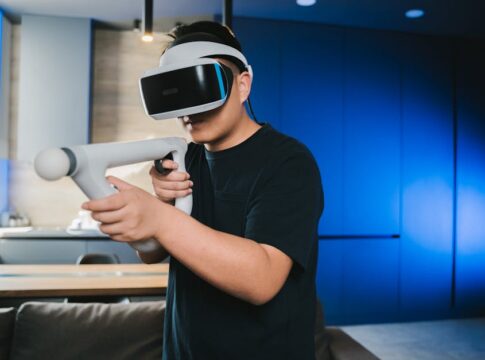
Rapid Overview: Virtual Reality Trends
Virtual reality technology has evolved from a futuristic concept into a transformative force across multiple industries. As hardware becomes more accessible and software applications expand in sophistication, VR is reshaping how individuals work, learn, communicate, and entertain themselves. Understanding the current trends in virtual reality provides valuable insight into the technology’s trajectory and its potential impact on various sectors of society and commerce.
The Mainstream Adoption of VR Hardware
The virtual reality hardware market has witnessed significant democratization over recent years. Standalone headsets that operate without external computers or sensors have removed traditional barriers to entry, making VR experiences more accessible to consumers. These devices offer improved resolution, wider fields of view, and enhanced tracking capabilities while maintaining competitive price points. Major technology companies continue to invest heavily in developing next-generation headsets that prioritize comfort, visual fidelity, and ease of use.
The trend toward wireless VR experiences has fundamentally changed user expectations. Freedom from cables has enabled more natural movement and interaction within virtual environments, particularly benefiting applications that require physical activity or spatial navigation. Additionally, the integration of mixed reality capabilities into VR headsets allows users to blend digital content with their physical surroundings, expanding the range of potential applications.
Enterprise and Professional Applications
Corporate adoption of virtual reality has accelerated dramatically, with organizations recognizing its value for training, collaboration, and design processes. Industries ranging from healthcare to manufacturing are implementing VR solutions to address specific operational challenges and improve efficiency.
Training and Simulation
Virtual reality has emerged as a powerful tool for employee training across numerous sectors. Organizations utilize VR to create realistic simulations that allow personnel to practice complex procedures without real-world risks or costs. Medical professionals rehearse surgical techniques, emergency responders train for crisis scenarios, and industrial workers learn equipment operation in safe, controlled environments. The immersive nature of VR enhances knowledge retention and skill development compared to traditional training methods.
Remote Collaboration
As remote work becomes increasingly prevalent, virtual reality offers innovative solutions for distributed teams. VR collaboration platforms enable participants to meet in shared virtual spaces, interact with three-dimensional models, and communicate with greater presence than conventional video conferencing allows. This technology proves particularly valuable for design review sessions, architectural walkthroughs, and complex problem-solving activities that benefit from spatial visualization.
Social VR and Virtual Communities
The development of social virtual reality platforms represents a significant trend in how people connect and interact online. These environments enable users to gather in virtual spaces represented by customizable avatars, participating in activities ranging from casual conversation to organized events and entertainment experiences.
Social VR platforms are evolving beyond simple chat rooms into comprehensive virtual worlds with their own economies, social structures, and cultural norms. Users create and share content, attend concerts and conferences, and form communities around shared interests. This trend reflects a broader shift toward immersive internet experiences that prioritize presence and embodied interaction over traditional text-based or video communication.
Content Creation and Development Tools
The expansion of user-friendly VR content creation tools has lowered barriers for developers and creators. Modern development platforms offer intuitive interfaces, extensive asset libraries, and streamlined workflows that enable smaller teams and independent creators to produce high-quality VR experiences. This democratization of content creation contributes to a more diverse and innovative VR ecosystem.
No-code and low-code development environments have emerged specifically for VR applications, allowing subject matter experts without extensive programming knowledge to create training modules, educational content, and interactive experiences. This trend empowers organizations to develop custom VR solutions tailored to their specific needs without requiring large development teams.
Integration with Artificial Intelligence
The convergence of virtual reality and artificial intelligence technologies is creating new possibilities for adaptive and responsive virtual environments. AI-powered systems can analyze user behavior within VR experiences, adjusting difficulty levels, personalizing content, and providing intelligent assistance. Natural language processing enables more sophisticated voice interactions with virtual characters and environments.
Machine learning algorithms enhance VR applications by generating realistic animations, optimizing rendering performance, and creating procedural content. These capabilities allow for more dynamic and personalized experiences that respond to individual user preferences and behaviors.
Healthcare and Therapeutic Applications
Virtual reality continues to gain traction in healthcare settings for both clinical and therapeutic purposes. Medical professionals utilize VR for surgical planning, patient education, and diagnostic procedures. The technology enables physicians to visualize complex anatomical structures in three dimensions, improving understanding and treatment planning.
Therapeutic applications of VR address conditions including anxiety disorders, phobias, post-traumatic stress disorder, and chronic pain. Controlled virtual environments allow patients to confront fears gradually, practice coping strategies, and engage in distraction therapy during painful procedures. Research continues to validate VR’s effectiveness for various psychological and physical health interventions.
Educational Innovation
Educational institutions increasingly incorporate virtual reality into curricula across multiple disciplines. VR enables students to explore historical sites, conduct virtual laboratory experiments, visualize abstract concepts, and engage in experiential learning that would be impractical or impossible in physical classrooms. This trend reflects growing recognition of VR’s potential to enhance engagement and improve learning outcomes.
Future Outlook
The virtual reality landscape continues to evolve rapidly, driven by technological advances, expanding use cases, and increasing market acceptance. Key trends include improvements in haptic feedback systems, eye-tracking integration, enhanced visual fidelity, and the development of more comfortable and ergonomic hardware designs. As VR technology matures and becomes more integrated into daily life, its influence across entertainment, commerce, education, and professional environments will likely expand significantly.
The ongoing convergence of VR with other emerging technologies, including augmented reality, artificial intelligence, and high-speed networks, promises to unlock new applications and experiences that further blur the boundaries between physical and digital realities.