
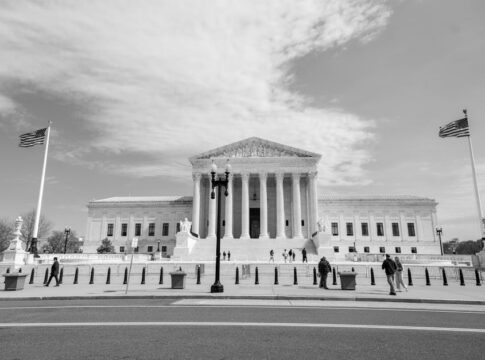
Supreme Court Ruling Reshapes National Policy Debate
The United States Supreme Court has long served as the final arbiter of constitutional questions, wielding significant influence over the nation’s legal and political landscape. When the Court issues major rulings, the reverberations extend far beyond the courtroom, fundamentally altering policy discussions at federal, state, and local levels. Recent landmark decisions have once again demonstrated the Court’s profound capacity to reshape national debates on critical issues affecting millions of Americans.
The Court’s Constitutional Authority
Established by Article III of the U.S. Constitution, the Supreme Court holds the power of judicial review, allowing it to determine whether laws and government actions comply with constitutional principles. This authority, solidified in the 1803 case Marbury v. Madison, positions the Court as a co-equal branch of government alongside Congress and the Executive. When the nine justices issue decisions on contentious matters, they effectively set precedents that bind lower courts and guide lawmakers, administrators, and citizens across the country.
The Court’s composition and the judicial philosophies of its members significantly influence how constitutional questions are resolved. Justices appointed for life terms bring varied interpretive approaches, from originalism to living constitutionalism, creating a complex dynamic that shapes American jurisprudence for generations.
Impact on Federal and State Legislation
Supreme Court rulings frequently necessitate immediate legislative responses. When the Court strikes down existing laws or upholds controversial statutes, lawmakers at both federal and state levels must reassess their legal frameworks. This judicial-legislative interplay creates a continuous cycle of policy adaptation and reform.
State legislatures often find themselves at the forefront of this transformation. Following significant Court decisions, states may rush to enact new laws that comply with or test the boundaries of the ruling. This phenomenon creates a patchwork of policies across the nation, with some states moving quickly to embrace the Court’s interpretation while others seek alternative approaches within constitutional limits.
Congress faces its own challenges when responding to Supreme Court decisions. Lawmakers may attempt to codify protections that the Court has left vulnerable or craft legislation that addresses gaps created by judicial rulings. However, the legislative process often moves slowly, leaving significant periods where policy uncertainty prevails.
Shifting Public Discourse
Beyond formal legal changes, Supreme Court decisions profoundly influence public conversation and political priorities. Major rulings dominate news cycles, fuel social media discussions, and become central issues in electoral campaigns. The Court’s pronouncements provide frameworks through which citizens understand their rights and responsibilities, shaping civic engagement and activism.
Advocacy groups on all sides of contested issues mobilize in response to Court decisions, launching campaigns to either defend or challenge the new legal landscape. These organizations play crucial roles in educating the public, supporting litigation, and lobbying for legislative changes that align with their missions.
Economic and Social Ramifications
The practical consequences of Supreme Court rulings extend into numerous aspects of daily life. Decisions affecting healthcare, education, employment, environmental protection, and civil rights have tangible impacts on how Americans live and work. Businesses must adapt their practices to comply with new legal standards, while individuals navigate changed access to services and protections.
The economic implications can be substantial. Rulings that affect regulatory authority, taxation, or commerce can influence market behavior, investment decisions, and economic planning. Industries may face increased compliance costs or benefit from reduced regulatory burdens, depending on the nature of the Court’s decisions.
Social effects prove equally significant. Court rulings on civil liberties, equality, and fundamental rights shape the experiences of diverse communities across the nation. These decisions can advance or impede progress toward social justice goals, affecting marginalized populations in particularly profound ways.
The Role of Lower Courts
While Supreme Court rulings establish binding precedents, lower federal and state courts play essential roles in interpreting and applying these decisions to specific cases. District and appellate courts must reconcile Supreme Court pronouncements with the unique factual circumstances before them, creating additional layers of legal development.
This process sometimes reveals ambiguities or gaps in Supreme Court rulings, leading to circuit splits where different appellate courts reach conflicting conclusions on similar issues. These divisions often provide the impetus for the Supreme Court to grant further review, continuing the cycle of legal refinement.
Long-Term Constitutional Evolution
Supreme Court decisions contribute to the ongoing evolution of constitutional interpretation. Over time, the Court may refine, limit, or even overturn its previous rulings as societal values shift and new justices join the bench. This constitutional dialogue reflects the tension between stability and adaptability in American governance.
Historical examination reveals that some of the Court’s most consequential decisions have taken years or decades to fully implement and have sometimes required subsequent rulings to clarify or correct their scope. The Court’s willingness to reconsider established precedents under the doctrine of stare decisis remains a subject of intense debate among legal scholars and practitioners.
Looking Forward
As the Supreme Court continues to address fundamental questions about governmental authority, individual rights, and the balance of power in American democracy, its influence on national policy debates will persist. The cases accepted for review each term signal which issues will dominate legal and political discourse in the coming years.
Understanding the mechanisms through which Supreme Court rulings reshape policy debates helps citizens, lawmakers, and institutions better navigate the complex relationship between law and governance. While disagreements about specific decisions will continue, the Court’s central role in American constitutional democracy remains undisputed, ensuring that its pronouncements will continue shaping the nation’s trajectory for generations to come.