
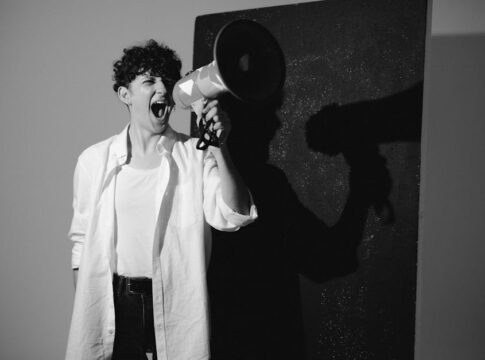
Free Speech Debates Expand on College Campuses
College campuses across the nation have become focal points for intense debates surrounding free speech, academic freedom, and the boundaries of acceptable discourse. What was once considered a straightforward constitutional principle has evolved into a complex conversation involving diverse perspectives on intellectual safety, inclusivity, and the fundamental purpose of higher education. These discussions reflect broader societal tensions about the balance between protecting free expression and creating environments where all students can learn and thrive.
The Historical Context of Campus Free Speech
The free speech movement has deep roots in American higher education, particularly dating back to the 1960s when students at the University of California, Berkeley, protested restrictions on political activities and advocacy on campus. This era established colleges as bastions of free expression and intellectual exploration, where challenging ideas could be debated openly without fear of censorship or retaliation.
However, the landscape of campus speech has transformed significantly over the decades. Today’s debates involve not only traditional concerns about administrative censorship but also questions about student-led activism, speaker invitations and disinvitations, social media’s role in amplifying controversy, and the intersection of speech with issues of discrimination and harassment.
Contemporary Flashpoints
Several recurring issues have emerged as central to modern campus free speech debates. Controversial speaker invitations frequently trigger protests and counter-protests, with students and faculty sometimes calling for the cancellation of events featuring speakers whose views they find objectionable. These incidents raise questions about whether universities should platform all viewpoints or whether some perspectives fall outside the bounds of legitimate academic discourse.
The implementation of bias response teams and reporting systems has also generated discussion. While proponents argue these mechanisms help create inclusive environments and address discriminatory behavior, critics contend they may chill speech by encouraging students to report one another for expressing unpopular opinions.
Social media has amplified these tensions exponentially. Comments made in classroom discussions or at campus events can quickly spread beyond their original context, sometimes resulting in public backlash, calls for disciplinary action, or even threats against individuals involved. This phenomenon has created what some describe as a chilling effect on candid academic discourse.
The Legal Framework
At public universities, the First Amendment provides robust protections for speech, prohibiting government institutions from restricting expression based on its content or viewpoint, with limited exceptions. These exceptions include true threats, incitement to imminent lawless action, and harassment that creates a hostile environment based on protected characteristics.
Private universities, while not bound by the First Amendment in the same way, often commit to free speech principles through their own policies and stated values. However, they generally maintain greater latitude to impose speech restrictions consistent with their educational missions and institutional values.
The legal concept of academic freedom further complicates these discussions. This principle protects faculty members’ ability to teach, research, and speak on matters of public concern without institutional interference, though its precise boundaries remain contested in various contexts.
Competing Perspectives
The campus free speech debate features several distinct viewpoints, each with legitimate concerns and reasoning:
- Free speech absolutists argue that universities must protect nearly all speech, even when offensive or controversial, to fulfill their mission as marketplaces of ideas where truth emerges through open debate and critical examination.
- Inclusivity advocates emphasize that truly free speech requires creating environments where marginalized students feel safe enough to participate in discussions, arguing that some forms of expression can effectively silence others by creating hostile environments.
- Academic freedom proponents focus on protecting faculty members’ rights to pursue controversial research and teaching without fear of retaliation, while recognizing appropriate professional standards and pedagogical responsibilities.
- Institutional autonomy supporters argue that universities should maintain authority to make decisions about speakers, events, and campus policies that align with their educational missions and community standards.
Impact on Academic Life
These debates have tangible effects on campus culture and academic practices. Some faculty members report self-censoring on controversial topics to avoid student complaints or social media backlash. Students from across the political spectrum express concerns about freely sharing their views in classroom discussions or campus forums.
Research indicates that students hold diverse opinions about campus speech issues, often defying simple characterizations. Surveys reveal that most students support free speech principles in the abstract while also expressing support for certain restrictions on speech they consider harmful or discriminatory. This apparent contradiction reflects the genuine complexity of applying broad principles to specific situations.
Seeking Balance
Universities have adopted various approaches to navigate these tensions. Some institutions have issued Chicago Principles-style statements strongly affirming their commitment to free expression. Others have emphasized both free speech and inclusive excellence as complementary values requiring careful balancing.
Educational initiatives have emerged as promising approaches, including:
- Programs teaching students constructive dialogue skills and how to engage with challenging ideas
- Faculty development focusing on facilitating difficult conversations in classrooms
- Campus forums bringing together diverse perspectives for structured discussions
- Clear policies distinguishing protected speech from prohibited harassment
Looking Forward
The expansion of free speech debates on college campuses reflects fundamental questions about the purpose and values of higher education in a diverse democracy. As these discussions continue, universities face the challenge of honoring their commitment to free inquiry while fostering inclusive learning environments where all students can participate fully in academic life.
Rather than viewing free speech and inclusivity as inherently opposed values, many educators and administrators are working to demonstrate how robust protection for expression, combined with strong norms of civil discourse and mutual respect, can serve both goals simultaneously. The outcome of these efforts will likely shape the intellectual culture of higher education for generations to come.