
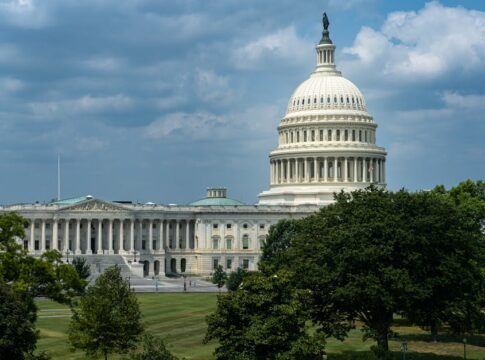
Capitol Hill Debates Government Shutdown Risks
As federal funding deadlines loom, lawmakers on Capitol Hill find themselves once again embroiled in intense negotiations to avert a potential government shutdown. The recurring standoff highlights deep partisan divisions over spending priorities, policy riders, and the fundamental question of how the federal government should allocate taxpayer resources. With critical services and hundreds of thousands of federal employees potentially affected, the stakes of these deliberations extend far beyond the marble halls of Congress.
Understanding the Government Shutdown Mechanism
A government shutdown occurs when Congress fails to pass appropriations bills or continuing resolutions to fund federal operations. The U.S. Constitution grants Congress the “power of the purse,” meaning no federal money can be spent without legislative authorization. When funding lapses, agencies must cease all non-essential operations, a process governed by the Antideficiency Act of 1884 and subsequent amendments.
Federal agencies categorize their employees and functions as either “essential” or “non-essential.” Essential personnel, including those involved in national security, law enforcement, air traffic control, and emergency medical care, continue working without immediate pay. Non-essential employees are furloughed, meaning they are temporarily sent home without work or compensation until funding resumes.
Current Points of Contention
The current debate centers on several contentious issues that have divided lawmakers along both partisan and ideological lines. Understanding these friction points is essential to grasping why shutdown threats have become increasingly common in recent years.
Spending Levels and Fiscal Policy
Disagreements over total government spending remain at the core of most shutdown debates. Conservative lawmakers typically advocate for reduced federal expenditures, emphasizing fiscal responsibility and deficit reduction. Progressive members often argue for increased investment in social programs, infrastructure, and climate initiatives. Finding common ground between these competing visions requires extensive negotiation and compromise.
Policy Riders and Ideological Provisions
Beyond topline spending numbers, appropriations bills frequently become vehicles for broader policy debates. Lawmakers may attempt to attach provisions—known as riders—that advance specific policy goals unrelated to funding. These can address issues ranging from immigration enforcement to environmental regulations, healthcare provisions, or foreign aid conditions. Such additions often complicate negotiations and create additional hurdles to reaching agreement.
Debt Ceiling Considerations
While technically separate from appropriations, debt ceiling debates often intersect with shutdown risks. The statutory limit on federal borrowing requires periodic increases to prevent default on existing obligations. When these deadlines coincide with funding battles, the complexity and political stakes multiply significantly.
Economic and Social Consequences
Government shutdowns carry substantial consequences that ripple through the economy and society, affecting millions of Americans directly and indirectly.
Impact on Federal Employees
Approximately two million federal civilian employees face uncertainty during shutdown threats. While essential workers continue reporting to duty, they do not receive paychecks until funding resumes. Furloughed employees face immediate income loss, creating financial hardship for families dependent on regular wages. Although Congress has historically provided back pay after shutdowns end, the temporary loss of income creates real difficulties, particularly for those living paycheck to paycheck.
Disruption of Government Services
Shutdowns interrupt numerous public services that Americans rely upon daily. National parks close to visitors, resulting in lost tourism revenue for surrounding communities. The processing of passports, visas, and federal permits slows or stops entirely. Small businesses seeking loans from the Small Business Administration face delays. Scientific research projects lose momentum, and grant disbursements are postponed.
Economic Ramifications
The broader economic impact of government shutdowns extends beyond immediate service disruptions. The Congressional Budget Office has estimated that previous shutdowns cost the economy billions of dollars in lost productivity and economic activity. Federal contractors, who employ millions of workers, often do not receive back pay for work periods during shutdowns. Consumer and business confidence may suffer as political dysfunction undermines faith in governmental stability.
Historical Precedents
Government shutdowns have occurred with varying frequency throughout modern American history, though they have become more common in recent decades. The longest shutdown in U.S. history stretched for 35 days from December 2018 to January 2019, affecting approximately 800,000 federal workers. Previous significant shutdowns occurred in 2013, lasting 16 days, and in 1995-1996, with two separate shutdowns totaling 26 days.
Analysis of these historical shutdowns reveals patterns in their causes and resolutions. Most have ended through last-minute compromises, continuing resolutions that maintain current funding levels temporarily, or one party calculating that public opinion has turned against their negotiating position.
Negotiating Strategies and Solutions
Lawmakers employ various strategies to navigate shutdown threats and reach agreement:
- Continuing Resolutions: These temporary measures extend current funding levels for specified periods, buying time for comprehensive negotiations while keeping the government operational.
- Omnibus Appropriations Bills: Rather than passing individual appropriations for each federal department, Congress may bundle all spending into a single massive bill, facilitating faster passage but limiting detailed deliberation.
- Bipartisan Commissions: Some propose empowering independent bodies to recommend spending frameworks, reducing political pressure on individual votes.
- Automatic Continuing Resolutions: Reforms could establish automatic funding at current levels if new appropriations are not enacted, removing shutdown threats from negotiations.
Looking Forward
As Capitol Hill continues debating current funding measures, the fundamental challenge remains: finding mechanisms that balance legitimate policy disagreements with the need for stable, predictable government operations. Whether through procedural reforms, shifting political dynamics, or evolved norms around appropriations processes, addressing recurring shutdown risks represents an ongoing challenge for American governance.
The resolution of current negotiations will not only determine immediate funding but may also set precedents for how future Congresses approach these perennial conflicts between fiscal philosophy and governmental functionality.