
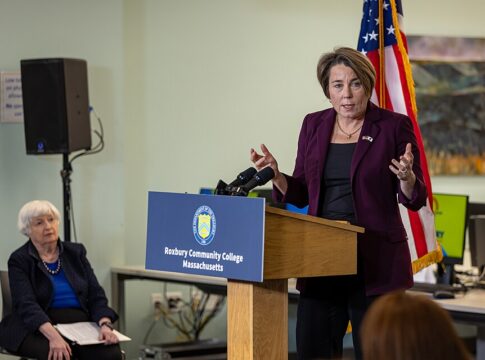
Massachusetts Governor Maura Healey signed legislation Wednesday that she claims creates the strongest protections against Immigration and Customs Enforcement in the nation, restricting federal agents from conducting civil immigration arrests at schools, hospitals, courthouses, and childcare facilities without warrants.
Governor Declares War on Federal Immigration Enforcement
At a signing ceremony in Chelsea, Healey made clear her opposition to federal immigration enforcement. She told reporters that ICE agents are “untrained, unqualified, and unfit to do their jobs” and called for the agency to be “stopped in its tracks” both in Massachusetts and nationwide. The Democrat governor signed the Protect Act at an economic development agency, surrounded by supporters of the sanctuary-style legislation.
The new law prohibits ICE agents from performing civil immigration arrests without warrants at specific locations throughout the state. Healey justified the restrictions by claiming immigrant communities have avoided medical appointments and pulled children from schools due to fear of federal enforcement. Chelsea schools have documented declining attendance rates, which the governor attributed to ICE operations rather than other factors affecting educational participation.
Federal Enforcement Reaches Record Levels
The Massachusetts legislation arrives as the Trump administration has significantly increased immigration enforcement operations across the country. Federal records obtained by CBS News show that ICE achieved record detention numbers in July 2026, marking the highest monthly total on record. The administration’s summer enforcement surge has targeted individuals living in the United States without legal authorization, leading to confrontations with sanctuary jurisdictions like Massachusetts.
Healey claimed ICE presence at courthouses has prevented witnesses from appearing at hearings, undermining the judicial process. She characterized federal immigration enforcement as harmful to public safety rather than protective of it. The governor insisted the state needs immigration reform and border controls while simultaneously blocking federal agents from enforcing existing immigration law within Massachusetts borders.
Constitutional Clash Between State and Federal Authority
The legislation sets up a potential legal battle over the constitutional division of powers between state and federal governments. Immigration enforcement falls under federal jurisdiction, and previous court cases have established limits on how far states can go in obstructing federal law enforcement operations. Massachusetts has positioned itself in direct opposition to federal immigration policy, creating operational challenges for ICE agents attempting to carry out their congressionally mandated duties within the state’s boundaries. The law represents the latest escalation in the ongoing conflict between Democratic-controlled states and federal immigration enforcement agencies.