
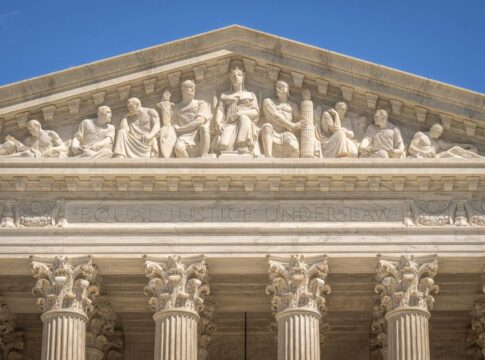
Supreme Court Confirmation: How Justices Are Chosen
Supreme Court Confirmation: How Justices Are Chosen
By Newsroom, National Desk — Published August 8, 2026
Table of Contents
- The Constitutional Framework Behind Supreme Court Confirmation
- From Vacancy to Nomination: The President’s Calculus
- The Senate’s Role: Hearings, Debates, and Votes
- What Makes a Confirmation Controversial?
- Why This Process Matters for Everyday Americans
- Frequently Asked Questions
When a seat opens on the nation’s highest court, the supreme court confirmation process becomes one of the most consequential events in American politics today. Unlike elections that happen on a fixed schedule, these vacancies arrive unpredictably—through retirement, death, or the rare resignation—and the resulting battle can reshape United States current events for months. The stakes are enormous. A single justice can shift the court’s direction for decades, influencing everything from abortion rights to environmental regulation, voting laws to executive power.
Understanding how justices reach the bench requires looking beyond the partisan theater. The process is part constitutional blueprint, part political chess match, and entirely central to the American political system. It touches federal government news, US domestic policy, and the balance of power in Washington DC updates. For citizens who want to grasp how their government actually works, this is essential terrain.
The Constitutional Framework Behind Supreme Court Confirmation
The Constitution offers a deceptively simple recipe. Article II grants the president the power to nominate justices. The Senate provides “advice and consent.” That’s it. The Founders left nearly everything else to tradition, politics, and evolution.
No minimum qualifications appear in the text. A nominee need not be a lawyer, judge, or legal scholar—though every justice in modern history has been. No age limits exist. The document doesn’t even specify how many justices should serve; Congress set that number at nine in 1869, and it’s held ever since, despite occasional calls to expand the court.
This sparse framework has allowed the process to change dramatically over time. Early confirmations were quiet affairs. The Senate often voted without hearings or debate. George Washington’s nominees sailed through. By the twentieth century, as the court’s role in US national affairs expanded, so did scrutiny of its members. Today’s process is a high-stakes public spectacle.
From Vacancy to Nomination: The President’s Calculus
When a seat opens, the president faces immediate pressure from all sides. Legal groups submit wish lists. Senators lobby for candidates from their states. Interest groups launch campaigns. The White House counsel’s office begins vetting potential nominees, a process that can take weeks or months depending on the political calendar.
Presidents weigh several factors. Judicial philosophy tops the list—conservative presidents want reliable conservative votes, progressives want the mirror image. But other considerations matter too. Age is crucial; a forty-something nominee could serve for four decades. Professional credentials must withstand scrutiny. Diversity concerns have grown over time; the court’s first woman joined in 1981, its first African American in 1967, its first Latina in 2009.
Political timing shapes everything. A president in the first year of a term has more freedom than one facing a hostile Senate in an election year. The 2016 vacancy that arose after Justice Antonin Scalia’s death became a watershed moment—the Republican Senate refused to consider President Obama’s nominee, holding the seat open for the next administration. That decision, controversial as homeland developments go, established a new norm about election-year vacancies that continues to fuel debate.
The Vetting Process
Before a name goes public, investigators comb through the candidate’s entire life. Every published opinion, speech, article, and email becomes fair game. The FBI conducts background checks. Potential controversies get war-gamed. Financial records are examined. The goal is to avoid surprises that could derail the nomination later.
This vetting has intensified over the decades. A casual comment from twenty years ago can become a confirmation hearing flashpoint. Nominees now undergo what amounts to opposition research from their own side, all before the formal announcement.
The Senate’s Role: Hearings, Debates, and Votes
Once nominated, the action shifts to the Senate Judiciary Committee. This is where the public drama unfolds, where senators question nominees for hours across multiple days, and where confirmation battles are won or lost.
The hearing format has become ritualized. Senators make opening statements. The nominee offers carefully prepared remarks, often emphasizing family, judicial independence, and reverence for the law. Then come questions—some probing legal philosophy, others seeking commitments on specific issues, still others designed to create viral video clips.
Nominees walk a careful line. They must appear knowledgeable and thoughtful without making promises about future rulings. The phrase “I can’t comment on issues that might come before the court” has become a mantra. Critics call this evasive; defenders say it protects judicial independence. Both are partly right.
After hearings, the committee votes on whether to recommend the nominee to the full Senate. A negative committee vote doesn’t kill a nomination—the full Senate can still proceed—but it’s a serious political blow. The full Senate then debates, sometimes for days, before voting. Since 2017, only a simple majority is required, down from the sixty votes previously needed to overcome a filibuster. That rule change, itself a product of escalating confirmation wars, has made it easier for presidents to confirm nominees when their party controls the Senate.
What Makes a Confirmation Controversial?
Not all confirmations generate heat. Some nominees are widely respected across ideological lines and win overwhelming bipartisan support. Others ignite firestorms. Several factors predict controversy:
- Ideological stakes: When a nomination could flip the court’s balance on major issues, expect a fight. Replacing a centrist justice with a firm conservative or vice versa raises the temperature.
- Political context: Nominations during election years, or when the Senate and presidency are controlled by different parties, tend to be rougher.
- Past statements or rulings: Nominees with long paper trails give opponents ammunition. A controversial lower-court opinion or provocative academic article can become the focus of attacks.
- Personal conduct questions: Allegations of ethical lapses, financial impropriety, or personal misconduct can derail or seriously damage a nomination, regardless of judicial philosophy.
The confirmation process has grown more partisan over time. Votes that once would have been 95-5 now end up 53-47. Whether this reflects genuine disagreement over judicial philosophy or pure political tribalism—or both—is itself a matter of debate in American political system discussions.
Why This Process Matters for Everyday Americans
Supreme Court decisions touch nearly every aspect of American life, often in ways that don’t make headlines until years after a justice is confirmed. The court has determined whether states can regulate abortion, whether the federal government can mandate health insurance, how voting districts are drawn, what gun regulations are permissible, and whether businesses can refuse service based on religious objections.
These aren’t abstract questions. They affect healthcare access, workplace rights, environmental protections, and civil liberties. A justice confirmed today will likely still be deciding cases in 2050, shaping federal policy and legislation long after the president who nominated them has left office.
The confirmation process is also a rare moment of transparency in judicial selection. Lower federal judges are confirmed with far less scrutiny. State judges are often elected or appointed through processes most voters don’t follow. But Supreme Court confirmations force a national conversation about law, rights, and the role of courts in a democracy. That conversation, messy as it often becomes, is itself valuable.
Frequently Asked Questions
How long does the confirmation process typically take?
The timeline varies widely based on political circumstances. Some nominations have moved through the Senate in less than a month, while others have taken three or four months. The vetting process before a formal nomination can add weeks or months. In recent decades, the average has been around two to three months from nomination to final vote, though this can compress dramatically when the Senate majority is eager to confirm or stretch when opposition is fierce.
Can a Supreme Court nomination be withdrawn?
Yes. Presidents can withdraw nominations at any time before a Senate vote, and this has happened occasionally throughout history. Nominees themselves can also withdraw if they decide the confirmation battle isn’t worth the personal or professional cost. Sometimes nominations are withdrawn when it becomes clear the Senate won’t confirm, allowing the president to avoid a public defeat and try again with a different candidate.
What happens if the Senate rejects a nominee?
The president must start over with a new nomination. The Senate has explicitly rejected nominees by vote relatively rarely in American history, though many have been effectively blocked without a formal vote. When rejection happens, presidents sometimes nominate a more moderate candidate to improve confirmation chances, or they may double down with someone equally controversial if they believe they can win the political fight.
Do Supreme Court justices have to retire, or can they serve indefinitely?
Justices receive lifetime appointments and can serve as long as they wish, provided they remain in good health and good behavior. There’s no mandatory retirement age. This lifetime tenure is designed to insulate justices from political pressure, allowing them to make decisions based on law rather than popular opinion or career concerns. Some justices have served into their eighties or nineties; others have retired relatively young for personal or health reasons.
The supreme court confirmation process will never be free of politics—the Founders designed it that way, creating a system where elected branches shape the judiciary. What matters is whether Americans understand how that system works, what’s at stake, and how their representatives use the power entrusted to them. The next vacancy could come tomorrow or five years from now. Either way, it will matter.