
Florida faces its worst dengue fever crisis in decades as health officials confirm 485 locally acquired cases this year, with Tampa Bay emerging as the epicenter of an outbreak that shows no signs of slowing down.
Emergency Declarations Across Tampa Bay Region
State surveillance recorded 60 new infections during a single week between October 18 and October 24. The Tampa Bay area accounts for roughly 95 percent of all locally acquired cases reported statewide, prompting emergency declarations in Hillsborough, Pasco, and Pinellas counties in late September. These declarations enable faster purchasing and deployment of mosquito control measures while allowing counties to request state and federal reimbursement for emergency response costs.
Hillsborough County extended its local state of emergency as transmission continues throughout the region. Beyond the locally acquired infections, Florida recorded more than 300 additional travel-associated dengue cases this year, underscoring the virus’s widespread presence.

Emergency

Aggressive Daytime Mosquitoes Present Unique Threat
The virus spreads through bites from infected Aedes aegypti and Aedes albopictus mosquitoes, which behave differently from typical mosquito species. Unlike most mosquitoes that bite primarily at dawn and dusk, these dengue carriers feed aggressively during daytime hours and flourish in humid residential environments. The Aedes mosquitoes breed in containers holding as little as a tablespoon of standing water, making backyard items like birdbaths, gutters, planters, and discarded tires potential breeding grounds.
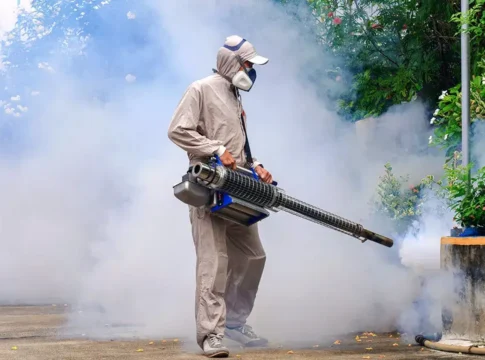
Florida Mosquito Control Association teams deployed targeted ground spraying, aerial applications, and localized property inspections to combat the outbreak. Public health officials urge residents to inspect yards weekly and drain or cover any containers that collect water.
Recognizing Severe Dengue Symptoms
Most infected individuals experience mild or no symptoms and recover within two weeks. However, symptoms typically appear four to ten days after an infectious bite and can include fever, severe muscle and joint pain, nausea, and rash. Severe dengue progresses rapidly within 24 to 48 hours after initial fever subsides. Warning signs requiring immediate emergency medical care include persistent vomiting, severe abdominal pain, difficulty breathing, mucosal bleeding, and extreme lethargy. The Centers for Disease Control and Prevention warns that severe cases can result in dangerous complications or death, making early recognition critical for Florida families.