
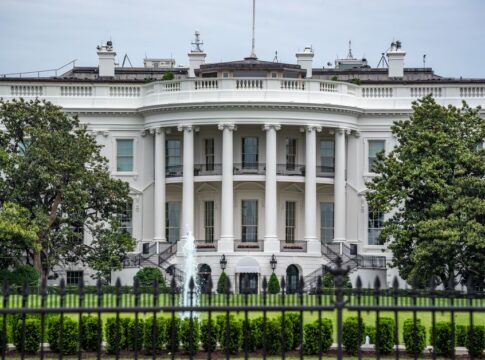
Photo: Dominik Gryzbon / Pexels
By Daily American Press Newsroom, Politics Desk — Published November 13, 2026
Table of Contents
- White House sends clear signal: Key Takeaways
- The Background & Context
- Why This Matters
- Reactions & Analysis
- What Happens Next
- Frequently Asked Questions
The White House sends a sharp message to congressional Democrats: back off investigations into President Trump’s administration or face legal consequences. In a confrontation that signals the administration’s aggressive posture toward legislative oversight, the White House counsel’s office has fired warning shots at Democratic lawmakers pursuing inquiries into executive branch conduct. The clash represents one of the most direct challenges to congressional investigative authority in recent memory, raising fundamental questions about the balance of power between the legislative and executive branches.
According to multiple reports, the White House’s top lawyer has dispatched formal letters to Democratic representatives warning them against continuing certain investigations. The move comes as Democrats in Congress have ramped up oversight efforts targeting various aspects of Trump administration activities, from alleged conflicts of interest to security protocols at Trump-branded properties.
The confrontation escalated further when a U.S. attorney demanded that Senator Richard Blumenthal preserve all documents related to his inquiry into a White House ballroom. That demand, itself unusual in the context of congressional oversight, represents the administration’s willingness to turn the tables on investigators—using prosecutorial tools typically reserved for criminal probes against a sitting senator conducting legislative business.
White House sends clear signal: Key Takeaways
- The White House counsel’s office has sent formal warning letters to Democratic lawmakers conducting investigations into the Trump administration, signaling an aggressive stance against congressional oversight.
- Representative Garcia received direct communication from the White House’s top lawyer regarding threats to investigate Trump administration activities.
- A U.S. attorney has demanded Senator Richard Blumenthal preserve documents from his inquiry into a White House ballroom, reversing the typical investigator-subject dynamic.
- Democrats are putting potential targets on notice as they organize their oversight strategy, setting up a constitutional showdown over legislative authority.
- The conflict raises fundamental questions about separation of powers and the extent to which Congress can investigate the executive branch.
- The confrontation could set precedents affecting future congressional oversight regardless of which party controls the White House or Congress.
The Background & Context
Congressional oversight has been a flashpoint in American politics for generations. The Constitution grants Congress broad investigative powers to inform its legislative functions and check executive overreach. These powers aren’t explicitly enumerated but have been recognized by courts as inherent to the legislative branch’s role in our system of checks and balances.
Democrats have long argued that Trump administration officials have stonewalled legitimate oversight. During Trump’s first term, battles over subpoenas, witness testimony, and document production consumed enormous congressional energy and frequently landed in federal court. Some disputes remained unresolved even after Trump left office in 2021.
With Trump back in the White House, the dynamic has shifted dramatically. Democrats no longer control the House of Representatives, limiting their investigative capacity. Yet individual members retain significant authority to request information and conduct inquiries, particularly senators who serve on committees with oversight jurisdiction.
The specific focus on Representative Garcia and Senator Blumenthal suggests the administration is targeting Democrats who have been particularly vocal or persistent in their oversight efforts. Garcia has emerged as a key figure in congressional efforts to examine Trump administration conduct. Blumenthal’s inquiry into a White House ballroom raises questions about security, conflicts of interest, and the use of government facilities for potentially private purposes.
The deployment of a U.S. attorney to demand document preservation from a senator represents an extraordinary escalation. Federal prosecutors typically investigate suspected crimes, not senators conducting constitutionally authorized oversight. The move suggests the administration may be contemplating legal action against lawmakers themselves—a prospect that would be virtually unprecedented in modern American governance.
Why This Matters
For ordinary Americans, this battle might seem like inside-the-Beltway noise. It’s anything but. The outcome will determine whether elected representatives can effectively investigate how tax dollars are spent, whether security protocols are followed, and whether officials are acting in the public interest or personal gain.
Congressional oversight serves as a crucial accountability mechanism. Without it, administrations of any party could operate in secrecy, shielded from public scrutiny. Voters depend on Congress to uncover facts that inform both legislation and electoral choices. If the executive branch can intimidate lawmakers into silence, that democratic feedback loop breaks down.
The conflict also has immediate practical implications. Questions about White House facilities, security arrangements, and potential conflicts of interest aren’t abstract constitutional theory. They affect everything from national security to how taxpayer money is allocated and spent. Americans have a right to know whether their government is operating properly and legally.
Campaign finance and election integrity also factor into this equation. Investigations into administration conduct can reveal information relevant to upcoming elections. If one party’s administration can effectively shut down oversight, it gains an electoral advantage by controlling what information reaches voters before they cast ballots.
The precedent being set extends far beyond Trump. Future presidents will cite whatever legal theories and tactics succeed now. If aggressive pushback against congressional oversight works, expect every subsequent administration to deploy similar strategies. Conversely, if courts or public pressure force the White House to back down, future presidents will face stronger legislative scrutiny.
Reactions & Analysis
Democrats have characterized the White House warnings as an assault on constitutional governance. They argue that Congress has not just the right but the duty to investigate executive branch activities, particularly when questions arise about legal compliance, ethics, or national security. The administration’s aggressive response, they contend, suggests officials have something to hide.
Republicans have generally defended the White House position, arguing that Democrats are pursuing partisan witch hunts rather than legitimate oversight. They point to what they see as years of unfair investigations into Trump, claiming Democrats are motivated by political animus rather than genuine concern about governance. Some GOP lawmakers have suggested that Democratic investigations themselves may warrant scrutiny for potential abuses of power.
Legal experts are divided on the constitutional questions at play. Some argue that while Congress has broad oversight authority, it isn’t unlimited—investigations must serve a legitimate legislative purpose and can’t be conducted solely to harass political opponents. Others contend that courts have historically given Congress wide latitude in defining its investigative needs and that executive branch efforts to block oversight threaten constitutional separation of powers.
The use of a U.S. attorney to target Senator Blumenthal has raised particular concern among legal scholars. Federal prosecutors serve under the Attorney General, who works for the President. Using that prosecutorial apparatus against a senator investigating the White House creates obvious conflict-of-interest concerns and could be seen as weaponizing the Justice Department for political purposes.
Civil liberties organizations have expressed alarm at the confrontational approach. They warn that normalizing executive branch intimidation of congressional investigators could have cascading effects on democratic accountability, regardless of which party benefits in any particular instance.
What Happens Next
The immediate future likely involves legal maneuvering. If Democrats continue their investigations despite White House warnings, the administration may seek court orders or other legal remedies. Those cases could take months or years to resolve, potentially outlasting the current congressional session or even the current administration.
Democrats face strategic choices. They can back down, continue their investigations and risk legal consequences, or escalate by using their own congressional powers more aggressively. Each path carries political and legal risks. Backing down might look weak and abandon important oversight. Continuing could tie them up in lengthy court battles. Escalating could further poison an already toxic political atmosphere.
Public opinion may ultimately prove decisive. If Americans see the White House as hiding important information, political pressure could force a retreat. If voters view Democratic investigations as overreach, the administration’s hardline stance may prove politically sustainable. Media coverage and how facts emerge will shape those perceptions.
Congress itself could act legislatively to clarify or strengthen its oversight powers, though any such legislation would require cooperation across party lines and would likely face a presidential veto. Constitutional amendments are theoretically possible but practically unlikely given the high bar for passage.
The courts will probably have the final word on the legal questions. Federal judges will need to balance congressional authority against executive privilege and other presidential prerogatives. Their decisions will set precedents affecting American governance for decades.
Frequently Asked Questions
What legal authority does Congress have to investigate the executive branch?
Congress possesses broad investigative powers derived from its constitutional role in creating legislation and providing oversight of government operations. While not explicitly stated in the Constitution, courts have long recognized that the legislative branch needs the ability to gather information to perform its duties effectively. These powers include issuing subpoenas, compelling testimony, and demanding documents, though they are subject to certain limitations such as executive privilege and must serve a legitimate legislative purpose.
Can the White House legally block congressional investigations?
The White House can assert various legal privileges and protections to resist certain congressional demands, most notably executive privilege, which protects some internal deliberations and communications. However, these protections are not absolute. Courts typically require a balancing test between congressional need for information and executive branch interests in confidentiality. The administration cannot simply refuse all oversight, but it can challenge specific requests it views as overreaching or lacking proper legislative purpose.
What happens if lawmakers ignore White House warnings and continue investigating?
If Democrats proceed with investigations despite White House objections, several outcomes are possible. The administration could seek court injunctions to stop the investigations, argue that certain information is privileged and cannot be disclosed, or potentially pursue legal action against the lawmakers themselves. Congress could hold officials in contempt for refusing to cooperate, though enforcing contempt citations against executive branch officials has proven difficult historically. The conflict would likely end up in federal court for resolution.
How does this compare to oversight battles in previous administrations?
Conflicts between Congress and the White House over oversight are nothing new in American politics. Every modern administration has resisted some congressional investigations, and both parties have accused the other of either obstructing legitimate oversight or conducting partisan witch hunts. What distinguishes the current situation is the directness of the White House warnings and the use of prosecutorial tools like document preservation demands against sitting senators. The aggressive posture on both sides suggests this conflict may test constitutional boundaries in ways previous disputes did not.
As this constitutional confrontation unfolds, Americans are watching a fundamental test of democratic accountability. The resolution will help define the relationship between Congress and the presidency for years to come, affecting how future administrations operate and how much transparency the public can expect from its government. The stakes extend far beyond any single investigation or political party.