
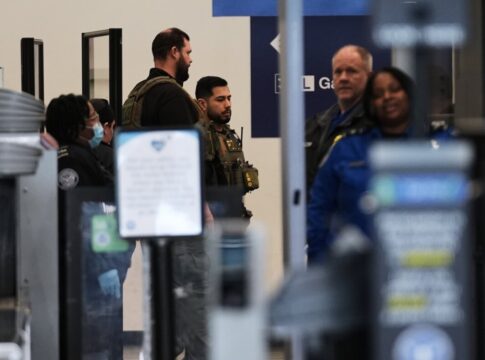
Immigration and Customs Enforcement agents have been stationed at major airports nationwide as the Transportation Security Administration faces a staffing collapse, with over 480 agents quitting since funding lapsed in mid-February during a partial government shutdown.
Separately Funded Agency Steps In
While TSA employees work without pay and thousands call out daily, ICE remains fully operational thanks to a separate $75 billion allocation Congress approved last summer. The deployment raises questions about the agency’s expanding role beyond traditional immigration enforcement. White House border czar Tom Homan oversees the new program, directing agents to assist with airport security operations, including crowd control, entrance monitoring, and identification verification using TSA equipment and procedures.
Broad Federal Powers Raise Concerns
ICE possesses sweeping authority to question, search, and arrest individuals suspected of being undocumented without warrants. The agency can stop anyone based on reasonable suspicion regarding immigration status, detain and prosecute those living illegally in the United States, and execute deportations. As federal law enforcement officers, ICE agents can also arrest individuals under any criminal statute when witnessing crimes. Theresa Brown, an immigration law fellow at Cornell Law School, confirmed these broad powers extend beyond immigration matters into general federal law enforcement.
Transformation Into National Police Force
Hiroshi Motomura, co-director of UCLA’s Center for Immigration Law and Policy, warned that ICE is being transformed into a police force operating under aggressive border rules traditionally not applied inside American territory. The agency has drawn criticism for confrontational tactics, including masked plainclothes officers conducting arrests. The combination of separate funding and expanded operational latitude creates what Motomura called a real danger to traditional law enforcement boundaries within the United States.
Questions About Primary Mission
Department of Homeland Security officials stated ICE agents would support TSA operations by handling logistics and crowd management to expedite security lines. However, observers question whether agents will prioritize passenger flow or continue aggressive immigration enforcement. Paul Ong, director of UCLA’s Center for Neighborhood Knowledge, noted the dual mandate creates tension between facilitating airport security and pursuing ICE’s core immigration enforcement mission. The deployment occurs as the Trump administration accelerates immigration enforcement operations nationwide.