
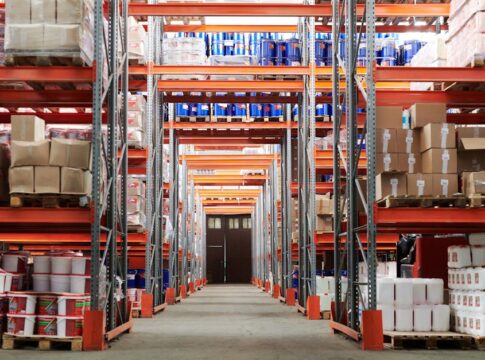
Supply Chain Resilience Enters Political Spotlight
In recent years, supply chain resilience has transformed from a niche concern for logistics professionals into a central focus of national and international political discourse. The convergence of global disruptions, from the COVID-19 pandemic to geopolitical tensions, has exposed critical vulnerabilities in interconnected supply networks, prompting governments worldwide to reassess their economic dependencies and strategic priorities.
The Catalyst for Political Attention
The pandemic served as a watershed moment, revealing how fragile just-in-time manufacturing systems and concentrated production networks could become under stress. When factory shutdowns in Asia rippled across continents, leaving store shelves empty and hospitals short of essential equipment, the consequences of decades of supply chain optimization became painfully apparent. Political leaders suddenly found themselves answering uncomfortable questions about why their nations lacked domestic capacity to produce basic medical supplies, semiconductors, and other critical goods.
This awakening accelerated as additional disruptions compounded the challenge. Port congestion, semiconductor shortages affecting automotive production, and geopolitical conflicts disrupting energy and food supplies have kept supply chain issues at the forefront of political agendas. The result has been a fundamental shift in how governments view economic policy, national security, and international trade relationships.
Key Legislative and Policy Responses
Governments across major economies have introduced substantial legislative measures aimed at strengthening supply chain resilience. These initiatives represent a departure from the globalization-focused policies that dominated previous decades, signaling a new era where security considerations weigh heavily alongside efficiency metrics.
In the United States, multiple pieces of legislation have addressed supply chain vulnerabilities. The CHIPS and Science Act allocated billions of dollars to revitalize domestic semiconductor manufacturing, recognizing that dependence on concentrated Asian production posed both economic and national security risks. Executive orders have mandated comprehensive supply chain reviews across critical sectors, from pharmaceuticals to rare earth minerals, with agencies tasked to identify weaknesses and propose remediation strategies.
The European Union has similarly prioritized strategic autonomy through initiatives like the European Chips Act and the Critical Raw Materials Act. These measures aim to reduce dependence on single suppliers for essential inputs while fostering regional production capabilities. The bloc has also enhanced screening mechanisms for foreign investments in strategic sectors, reflecting heightened awareness of supply chain security dimensions.
Asian economies have responded with their own strategies. Japan has allocated funding to help companies diversify production away from concentrated regions, while South Korea has invested heavily in securing stable supplies of critical materials and components. China, meanwhile, has emphasized self-sufficiency in key technologies and materials, viewing supply chain control as central to its economic and geopolitical objectives.
The Reshoring and Nearshoring Trend
Political emphasis on supply chain resilience has accelerated trends toward reshoring and nearshoring production. Governments are offering tax incentives, grants, and regulatory support to encourage companies to relocate manufacturing closer to home markets or to allied nations. This represents a significant shift from the offshoring wave that characterized the late twentieth and early twenty-first centuries.
The motivations extend beyond pure economics. Political leaders increasingly frame supply chain decisions through the lens of national security, workforce development, and reducing vulnerability to coercion by adversarial nations. This framing has gained bipartisan support in many democracies, making supply chain policy one of the few areas of broad political consensus.
Challenges and Trade-offs
The political push for greater supply chain resilience faces significant challenges and involves complex trade-offs. Rebuilding domestic manufacturing capacity requires substantial investment in infrastructure, workforce training, and technology. These efforts take years to materialize and may result in higher costs for consumers and businesses accustomed to the price advantages of globalized production.
There are also tensions between resilience goals and other policy priorities. Environmental objectives may conflict with rapid industrial expansion, while the emphasis on allied supply chains could fracture global trade networks and reduce efficiency gains from specialization. Developing nations worry that reshoring trends could undermine their economic development prospects by reducing foreign investment and export opportunities.
Additionally, defining which sectors truly require domestic production capacity involves difficult political judgments. Policymakers must balance genuine security concerns against protectionist pressures from domestic industries seeking government support. The risk of subsidy races between nations could lead to inefficient resource allocation and trade disputes.
International Coordination and Competition
The political spotlight on supply chains has complicated international relations. While some initiatives emphasize cooperation among allied nations—such as “friend-shoring” proposals to build resilient networks among democracies—others reflect more competitive or confrontational approaches. Export controls on advanced technologies have proliferated, with nations seeking to maintain strategic advantages while denying potential adversaries access to critical capabilities.
International organizations have struggled to provide frameworks for managing these tensions. The World Trade Organization, already weakened before the pandemic, faces challenges in reconciling traditional free trade principles with the security-focused justifications nations increasingly invoke for protectionist measures. Regional trade agreements have become venues for supply chain cooperation, but these arrangements may fragment rather than integrate global commerce.
The Future Landscape
Supply chain resilience appears destined to remain in the political spotlight for the foreseeable future. The intersection of economic security, geopolitical competition, and technological transformation ensures continued government attention and intervention in this domain. Businesses must navigate an increasingly complex landscape where political considerations shape supply chain decisions as much as cost and efficiency factors.
The challenge for policymakers will be crafting approaches that genuinely enhance resilience without sacrificing the benefits of international trade and specialization. Success will require sustained investment, international cooperation where possible, and realistic assessments of both risks and capabilities. As supply chain policy evolves, it will fundamentally reshape the global economic order, with implications extending far beyond logistics and manufacturing to touch virtually every aspect of international commerce and relations.