
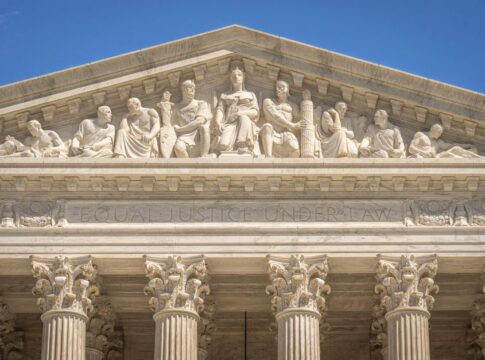
Supreme Court Review: How Cases Reach the Highest Court
Supreme Court Review: How Cases Reach the Highest Court
By Newsroom, National Desk — Published July 31, 2026
Table of Contents
- The Path Through the Federal Court System
- What Makes a Case Certworthy
- The Rule of Four and Conference Deliberations
- Types of Cases the Court Accepts
- Emergency Applications and the Shadow Docket
- What Happens After Cert Is Granted
- Frequently Asked Questions
Every year, thousands of Americans petition the Supreme Court to hear their cases. Fewer than one hundred make it through. The supreme court review process stands as one of the most selective gatekeeping mechanisms in the American political system, determining which constitutional questions, federal disputes, and urgent legal controversies will shape United States current events for generations. Understanding how cases climb from trial courts to the nation’s highest bench reveals much about how power flows through our federal government news cycle and why certain issues dominate Washington DC updates while others languish in lower courts.
The journey isn’t automatic. The Supreme Court doesn’t randomly pluck cases from the judicial system. Instead, a complex filtering process weighs urgency, constitutional significance, and conflicts between lower courts. For citizens tracking US domestic policy or wondering why their state legislature news never seems to reach the justices, the answer lies in these selection criteria.
The Path Through the Federal Court System
Most cases begin far from the marble steps of One First Street. A typical dispute starts in a federal district court or state trial court, where a judge hears evidence and renders a verdict. The losing party can appeal to a circuit court of appeals—there are thirteen federal circuits covering different geographic regions and subject matters. State systems mirror this structure with their own appellate courts.
Here’s where supreme court review becomes relevant. After losing at the appellate level, parties can petition the Supreme Court through a writ of certiorari, essentially asking the justices to agree to hear the case. The Court receives roughly seven to eight thousand of these petitions annually. It grants cert to fewer than eighty.
That staggering rejection rate isn’t arbitrary. The Court functions as the final arbiter of federal law and constitutional interpretation, not a general error-correction service. A well-argued case that simply lost on the facts won’t interest the justices. They’re looking for something bigger.
What Makes a Case Certworthy
Several factors elevate a petition above the thousands competing for attention. Circuit splits top the list. When two or more federal appellate courts reach opposite conclusions on the same legal question, the Supreme Court often steps in to resolve the contradiction. Without intervention, identical federal laws would mean different things depending on geography—an untenable situation for US national affairs.
Constitutional questions carry weight. If a lower court strikes down a state or federal law as unconstitutional, or upholds a statute against constitutional challenge in a novel way, the justices take notice. These cases directly implicate the Court’s core function as guardian of the Constitution and often intersect with homeland developments that affect millions.
Practical importance matters too. A case affecting a narrow, unlikely-to-recur situation will struggle regardless of its legal elegance. The Court prioritizes disputes with broad implications—immigration and border policy affecting thousands of families, federal agency actions touching entire industries, or questions about national economic indicators that could reshape markets.
The federal government’s position carries unusual influence. When the Solicitor General—the lawyer representing the United States before the Supreme Court—files a brief or petitions for review, the justices pay attention. The SG’s office screens cases carefully and files only when federal interests are genuinely at stake, lending credibility to their requests.
The Rule of Four and Conference Deliberations
Once petitions arrive, the real sorting begins. Law clerks—recent law school graduates working for individual justices—review filings and write memos summarizing each case. Justices discuss petitions in private conferences held twice weekly during term. No staff attend. No recordings exist. What happens in conference stays in conference, though occasional leaks and justice memoirs have sketched the outlines.
The “Rule of Four” governs cert grants. If four of the nine justices vote to hear a case, it makes the docket. This threshold, lower than a simple majority, ensures that minority viewpoints on the Court can force consideration of issues the majority might prefer to avoid. It injects a democratic element into an otherwise opaque process and occasionally produces surprising additions to the term’s calendar.
Strategic calculations inevitably creep in. A justice who thinks the Court might rule the wrong way on an important issue might vote against granting cert, preferring no national precedent to a bad one. Conversely, justices confident they can assemble five votes might push to grant review on cases they see as vehicles for advancing particular constitutional interpretations relevant to American politics today.
Types of Cases the Court Accepts
While every term differs, patterns emerge in the Court’s docket. Cases fall into several recurring categories that illuminate the intersection of law and policy:
- Federalism disputes: Conflicts between state and federal authority, including challenges to congressional legislation or federal agency actions that states claim overstep constitutional boundaries
- Individual rights claims: First Amendment speech and religion cases, Fourth Amendment search and seizure questions, and other Bill of Rights challenges that define the relationship between citizens and government
- Criminal procedure: Cases establishing what police can do during investigations, what defendants are entitled to at trial, and how sentences should be calculated
- Statutory interpretation: Disputes over what federal laws mean, often involving highly technical questions with massive practical consequences
- Administrative law: Challenges to regulations issued by federal agencies, testing how much deference courts should give to bureaucratic interpretations
The mix shifts with changing political currents and the composition of the Court itself. A Court skeptical of federal power might accept more cases challenging agency regulations. One focused on individual liberty might prioritize First Amendment disputes. These choices ripple through federal policy and legislation, steering the development of American law.
Emergency Applications and the Shadow Docket
Not every case follows the leisurely cert petition path. Emergency applications—requests for immediate intervention before a lower court ruling takes effect—have proliferated in recent years. These applications, sometimes called the “shadow docket,” allow the Court to block or permit policies without full briefing, oral argument, or signed opinions explaining the reasoning.
Emergency relief makes sense in genuine crises. An execution scheduled for midnight requires faster action than the months-long briefing schedule of ordinary cases. But the shadow docket has expanded beyond capital cases to major policy disputes, producing unsigned orders that effectively decide significant questions about immigration enforcement, pandemic regulations, and election procedures with minimal explanation.
Critics argue this trend undermines transparency and prevents the careful deliberation that complex constitutional questions deserve. Defenders contend that when lower courts issue sweeping injunctions blocking federal policies nationwide, the Supreme Court must intervene quickly to preserve the status quo while appeals proceed. The debate itself reveals tension between the Court’s role as a deliberative body and its function as ultimate arbiter when urgent conflicts arise.
What Happens After Cert Is Granted
The roughly seventy cases granted full review each term proceed to briefing. Both sides submit written arguments. Interested parties—states, advocacy groups, industry associations—file friend-of-the-court briefs offering additional perspectives. Oral arguments follow, typically an hour of intense questioning where justices probe weaknesses in each side’s position and telegraph their concerns.
Months later, opinions emerge. The majority opinion becomes binding precedent. Concurrences agree with the result but offer different reasoning. Dissents argue the majority got it wrong and often sketch alternative approaches that future Courts might adopt. These opinions shape everything from state legislature news to congressional developments, as lawmakers adjust statutes to comply with or work around new constitutional boundaries.
Frequently Asked Questions
Can the Supreme Court choose to hear any case it wants?
The Court has almost complete discretion over its docket. With rare exceptions involving disputes between states or certain other specialized matters where the Court has “original jurisdiction,” the justices decide which cases to accept. This discretionary power means they can decline cases that don’t meet their criteria for importance, even if the lower court decision seems wrong to many observers. Conversely, they cannot be forced to hear a case simply because it’s controversial or affects many people.
How long does the supreme court review process typically take?
From petition to decision, the timeline usually spans a year or more. A petition filed in summer might be considered at fall conferences, granted in winter, argued in spring, and decided by late June when the term ends. Emergency applications can produce orders within days or even hours. Once cert is granted, briefs take several months, oral arguments are scheduled based on the Court’s calendar, and opinions can take additional months as justices debate, draft, and revise their positions.
Why does the Court reject so many petitions?
The justices see their role as resolving the most important legal questions, not correcting every error by lower courts. Most petitions involve fact-specific disputes or straightforward applications of settled law. The Court looks for cases that will establish broadly applicable precedent, resolve conflicts between circuits, or address constitutional questions of national significance. A case might be wrongly decided yet still not warrant Supreme Court intervention if it doesn’t meet these criteria. The Court’s limited capacity—it can thoroughly consider only so many cases per term—forces selectivity.
Do politics influence which cases the Court accepts?
Justices bring judicial philosophies shaped by their views on constitutional interpretation, federal power, and individual rights. These perspectives inevitably influence which questions seem important or urgent. A justice who believes courts should defer to democratic processes might vote against hearing cases challenging legislation, while one committed to robust judicial review might seek opportunities to scrutinize government action. That said, case selection often crosses ideological lines, with liberal and conservative justices agreeing that certain legal questions need resolution regardless of the expected outcome. The Rule of Four also means that even a minority faction can force consideration of issues the majority might prefer to avoid.
The supreme court review process remains one of the least understood yet most consequential features of American governance. Those nine justices, meeting in private to decide which seventy cases merit their attention, shape the boundaries of government power and individual liberty for a nation of hundreds of millions. The cases they reject matter almost as much as those they accept, leaving lower court decisions in place and allowing legal questions to percolate longer before national resolution. For anyone trying to understand why certain issues dominate judicial headlines while others fade, the answer begins with that selective, strategic, and often mysterious choice of what to review.