
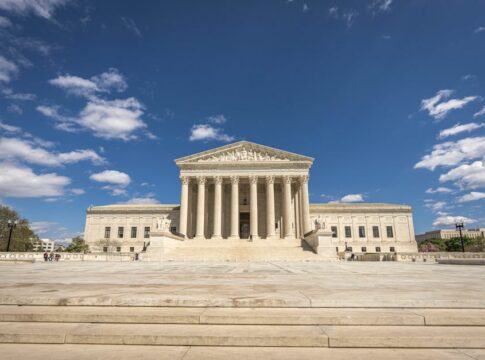
Supreme Court Hears Case on Digital Privacy Rights
The United States Supreme Court has taken up a landmark case that could fundamentally reshape digital privacy protections for millions of Americans in the modern technological age. As the highest court in the nation grapples with questions about Fourth Amendment protections in an increasingly digital world, the outcome of this case stands to have far-reaching implications for law enforcement practices, technology companies, and individual citizens alike.
The Case at Hand
The case centers on the question of whether law enforcement agencies require a warrant to access digital data stored by third-party service providers. This fundamental question touches on the intersection of constitutional protections established centuries ago and the realities of 21st-century digital communication and data storage. The justices must determine how traditional privacy expectations apply when personal information is routinely stored on remote servers owned by private companies rather than kept within the physical confines of one’s home or person.
At the heart of the legal dispute is the interpretation of the Fourth Amendment, which protects citizens against unreasonable searches and seizures. The challenge facing the Court is reconciling this protection with modern technology that allows vast amounts of personal data to be collected, stored, and potentially accessed by government entities without the knowledge or consent of the individuals involved.
Legal Background and Precedent
The current case builds upon decades of legal precedent regarding privacy rights and government searches. The Court has previously addressed similar issues in cases involving new technologies, but the rapid pace of technological advancement has consistently outstripped the legal framework designed to regulate it. The third-party doctrine, established in cases from the 1970s, held that individuals have no reasonable expectation of privacy for information voluntarily shared with third parties, including banks and telephone companies.
However, critics of this doctrine argue that it was developed in an era vastly different from today’s digital landscape, where sharing information with third parties is virtually unavoidable for anyone participating in modern society. The storage of emails, text messages, location data, browsing history, and countless other digital footprints with service providers has become an inescapable aspect of contemporary life.
Arguments Presented to the Court
The petitioners argue that warrantless access to digital data violates fundamental privacy rights guaranteed by the Constitution. Their position emphasizes several key points:
- Digital data contains far more intimate and comprehensive information about individuals than was conceivable when earlier precedents were established
- Citizens have a reasonable expectation of privacy regarding their digital communications and data, even when stored by third-party providers
- Requiring warrants for digital data access would not unduly burden law enforcement, as the warrant process provides necessary oversight while allowing legitimate investigations to proceed
- The sheer volume and sensitive nature of digital information necessitates stronger constitutional protections
The government’s position, conversely, maintains that existing legal frameworks provide adequate protection while allowing law enforcement to effectively investigate crimes and protect national security. Government attorneys argue that:
- The third-party doctrine remains valid and applicable to digital information voluntarily shared with service providers
- Requiring warrants for all digital data access would significantly hamper criminal investigations and national security operations
- Congress, rather than the courts, should be responsible for updating privacy protections to reflect technological changes
- Alternative legal mechanisms already exist to protect against abuse of data access
Implications for Technology Companies
Major technology companies have filed amicus briefs expressing their concerns about how the Court’s decision might affect their operations and their relationships with users. These companies argue that strong privacy protections are essential for maintaining user trust and for the continued growth of the digital economy. Many technology firms have implemented policies requiring warrants before complying with data requests, and they seek legal clarity and support for these practices.
The technology sector contends that weakened privacy protections could harm American competitiveness in the global marketplace, as international users may choose services from countries with stronger privacy laws. Additionally, these companies face the challenge of balancing cooperation with law enforcement against their obligations to protect user privacy and comply with various international data protection regulations.
Broader Societal Impact
The Supreme Court’s decision will extend far beyond the immediate parties involved in the case. Civil liberties organizations have emphasized that the ruling could affect how Americans conduct their daily lives, potentially creating a chilling effect on free speech and association if individuals fear government surveillance of their digital activities.
Privacy advocates stress that comprehensive digital surveillance capabilities in the hands of government agencies, without robust warrant requirements, could enable abuse and undermine democratic freedoms. They point to the intimate nature of information that can be gleaned from digital data, including political affiliations, religious beliefs, health conditions, and personal relationships.
The Path Forward
Legal experts anticipate that regardless of how the Court rules, the decision will likely prompt legislative action. Congress may need to craft comprehensive legislation addressing digital privacy in the modern age, potentially updating laws that were written before smartphones, cloud computing, and social media transformed how Americans communicate and store information.
The case represents a critical moment in defining constitutional rights for the digital age. As the justices deliberate, they must balance legitimate law enforcement needs against fundamental privacy protections, all while attempting to create a framework flexible enough to remain relevant as technology continues to evolve. The Court’s decision, expected in the coming months, will undoubtedly shape digital privacy rights for years to come and may well rank among the most significant constitutional rulings of the modern era.