
Why Voter Apathy Is America’s Biggest Problem
In a nation founded on the principle of representative democracy, perhaps no threat looms larger than the systematic disengagement of citizens from the electoral process. Voter apathy—the lack of interest, enthusiasm, or concern about participating in elections—has become a pervasive force undermining the foundations of American democracy. While headlines often focus on partisan divisions, foreign interference, or campaign finance issues, the quiet crisis of millions of Americans simply choosing not to vote represents a fundamental challenge to democratic legitimacy and effective governance.
The Scale of the Problem
The statistics paint a sobering picture of civic disengagement. Despite being one of the world’s oldest democracies, the United States consistently ranks near the bottom among developed nations in voter turnout. In presidential elections, turnout typically hovers around 55-60% of eligible voters, while midterm elections often see participation rates plummet to 40% or lower. Local elections frequently witness single-digit turnout percentages, meaning that critical decisions about schools, policing, infrastructure, and local governance are made by a tiny fraction of the community.
The 2020 presidential election, while achieving record turnout at approximately 66% of eligible voters, still meant that one-third of Americans who could vote chose not to participate in arguably the most consequential election in recent memory. This means that elected officials at every level often govern with the explicit consent of only a minority of their constituents, raising serious questions about the mandate and legitimacy of democratic institutions.
The Cascading Consequences
Voter apathy creates a self-perpetuating cycle that weakens democratic institutions and policy outcomes. When large segments of the population abstain from voting, elected officials become accountable only to those who do participate. This skewed representation leads to policies that may not reflect the interests or needs of the broader population, further alienating non-voters and reinforcing their belief that the system does not work for them.
The consequences extend across multiple dimensions of governance:
- Policy Distortion: Low turnout means policies often reflect the preferences of a narrow, more ideologically extreme subset of citizens rather than the moderate majority. This contributes to polarization and gridlock.
- Resource Allocation: Politicians naturally prioritize the concerns of reliable voters, meaning that communities with low turnout receive less attention and fewer resources, perpetuating cycles of neglect.
- Legitimacy Crisis: When governments are elected by small percentages of eligible voters, their authority to make binding decisions for all citizens becomes questionable, eroding trust in democratic institutions.
- Vulnerability to Manipulation: Low-turnout elections are easier and cheaper to influence through targeted disinformation, voter suppression tactics, or special interest money.
Understanding the Root Causes
Voter apathy does not emerge in a vacuum. Multiple structural, psychological, and social factors contribute to civic disengagement. Understanding these causes is essential to developing effective solutions.
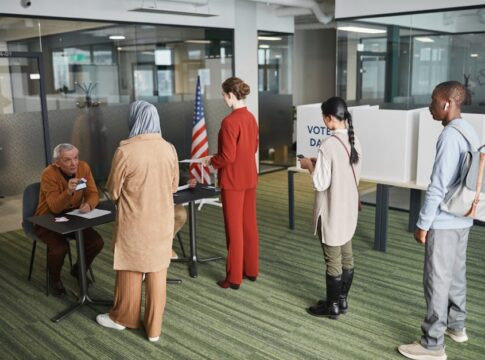
Systemic barriers to voting remain significant obstacles. Complex registration procedures, limited early voting options, inadequate polling locations, long wait times, and restrictive voter identification laws create friction that discourages participation, particularly among working-class citizens, young people, and minorities. When voting requires taking time off work, arranging childcare, or navigating bureaucratic hurdles, many citizens simply cannot or will not participate.
Political disillusionment plays an equally important role. Decades of partisan gridlock, broken campaign promises, corruption scandals, and the perception that wealthy donors and special interests control the political process have convinced many Americans that their vote does not matter. This sense of powerlessness becomes a self-fulfilling prophecy: as fewer people vote, government becomes less responsive, which validates the decision not to participate.
The complexity and constant negativity of modern politics also contribute to apathy. Campaign advertisements focus overwhelmingly on attacking opponents rather than presenting positive visions, creating a toxic environment that repels rather than engages citizens. Meanwhile, the sheer volume of information required to make informed decisions about dozens of races and ballot measures can overwhelm even well-intentioned voters.
Why This Matters More Than Other Issues
Voter apathy deserves recognition as America’s most critical problem because it is fundamentally a meta-issue—a problem that makes solving all other problems more difficult. Climate change, healthcare reform, infrastructure investment, education funding, criminal justice reform, and economic inequality all require effective democratic governance to address. When a third to half of eligible voters consistently abstain from elections, the political system lacks the broad-based input and accountability necessary to tackle these challenges.
Furthermore, voter apathy disproportionately affects already marginalized communities, amplifying existing inequalities. Young people, low-income Americans, and minorities vote at lower rates than older, wealthier, white citizens. This participation gap means that those most affected by policy decisions often have the least voice in making them, entrenching systemic disadvantages across generations.
Moving Toward Solutions
Addressing voter apathy requires comprehensive reforms at multiple levels. Structural changes like automatic voter registration, universal mail-in voting, making election day a national holiday, and expanding early voting can reduce barriers to participation. Civic education must be strengthened to help citizens understand how government affects their daily lives and why their participation matters.
Political parties and candidates must also take responsibility for engaging rather than alienating voters through more substantive campaigns focused on solving problems rather than demonizing opponents. Media organizations can contribute by providing more accessible, constructive political coverage that informs rather than inflames.
Ultimately, revitalizing American democracy requires recognizing that voter apathy is not simply an individual failing but a systemic crisis demanding urgent attention. The health of democratic institutions depends on broad-based participation, and without addressing the apathy that keeps millions of Americans on the sidelines, the promise of government of, by, and for the people remains unfulfilled. No issue facing America can be adequately addressed without first ensuring that all citizens have both the opportunity and the motivation to make their voices heard at the ballot box.