
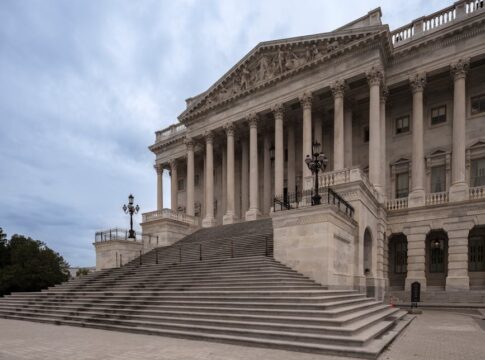
State Legislatures Challenge Federal Authority
The tension between state and federal power has been a defining characteristic of American governance since the nation’s founding. In recent years, state legislatures have increasingly challenged federal authority on a wide range of issues, reigniting debates about federalism, states’ rights, and the proper balance of power in the American constitutional system. This dynamic reflects fundamental disagreements about policy priorities, constitutional interpretation, and the role of government at different levels.
The Constitutional Framework of Federalism
The United States Constitution establishes a federal system of government that divides power between the national government and the states. The Tenth Amendment explicitly states that powers not delegated to the federal government nor prohibited to the states are reserved to the states or the people. This constitutional architecture was designed to prevent the concentration of power while allowing for effective governance across a diverse nation.
The Supremacy Clause in Article VI of the Constitution declares that federal law is “the supreme Law of the Land,” creating a hierarchy when state and federal laws conflict. However, determining exactly where federal authority ends and state sovereignty begins has been subject to continuous interpretation and reinterpretation throughout American history.
Historical Context of State-Federal Tensions
Conflicts between state and federal authority are not new phenomena. From the Nullification Crisis of the 1830s to resistance against federal civil rights legislation in the 1960s, states have periodically asserted their autonomy against federal mandates. The Civil War itself was the ultimate manifestation of this tension, permanently settling the question of whether states could secede from the Union but leaving many other federalism questions unresolved.
Throughout the 20th century, the balance of power gradually shifted toward the federal government, particularly during the New Deal era and the expansion of federal regulatory authority. The Supreme Court’s evolving interpretation of the Commerce Clause allowed Congress to regulate an increasingly broad range of activities affecting interstate commerce, expanding federal reach into areas traditionally governed by states.
Contemporary Areas of State-Federal Conflict
Immigration Enforcement
Immigration policy has become a major flashpoint in federalism debates. While immigration law is primarily a federal responsibility, states have attempted to implement their own enforcement measures or, conversely, limit their cooperation with federal immigration authorities. Some states have passed laws creating so-called “sanctuary” policies that restrict local law enforcement cooperation with federal immigration officials, while others have sought to enhance immigration enforcement beyond federal requirements.
Healthcare Policy
The implementation of the Affordable Care Act sparked significant state resistance, with numerous state legislatures refusing to expand Medicaid programs or establish state-based insurance exchanges. Multiple states filed lawsuits challenging various provisions of the law, with some reaching the Supreme Court. This resistance exemplifies how states can limit federal policy implementation within their borders, even when the underlying federal law remains valid.
Environmental Regulation
Environmental policy represents another arena where state and federal authority frequently collide. Some states have implemented stricter environmental standards than federal requirements, particularly regarding emissions controls and renewable energy mandates. Other states have challenged federal environmental regulations they view as economically burdensome or as overreach into areas of traditional state concern, such as land use and natural resource management.
Marijuana Legalization
The legalization of marijuana for medical and recreational use in numerous states directly conflicts with federal law classifying marijuana as a Schedule I controlled substance. This situation creates a complex legal landscape where state-sanctioned activities remain federal crimes, though federal enforcement priorities have varied across administrations. This conflict highlights the practical limits of federal authority when states choose non-cooperation.
Gun Rights and Regulation
Second Amendment issues have generated state challenges to federal authority from multiple directions. Some states have enacted laws declaring certain federal gun regulations unenforceable within their borders, while others have implemented stricter gun control measures than federal baseline requirements. These divergent approaches reflect deep philosophical divisions about constitutional rights and public safety.
Mechanisms of State Resistance
State legislatures employ various strategies when challenging federal authority:
- Litigation: States frequently file lawsuits challenging federal laws or regulations in federal court, often coordinating multi-state legal actions.
- Non-cooperation: States may refuse to implement federal programs or dedicate state resources to federal enforcement efforts.
- Nullification attempts: Some states have passed laws declaring federal statutes void within their borders, though the legal validity of such measures remains highly questionable.
- Constitutional amendments: States can petition for constitutional conventions or ratify amendments to limit federal power, though this mechanism is rarely successful.
- Political pressure: State officials can lobby Congress and federal agencies to modify policies or grant waivers and exemptions.
Legal and Political Implications
The current wave of state challenges to federal authority raises important questions about American governance. Supporters of strong state autonomy argue that federalism allows for policy experimentation, respects regional diversity, and prevents tyranny through the dispersion of power. They contend that many federal mandates represent unconstitutional overreach into matters best handled at the state and local levels.
Critics warn that excessive state resistance to federal authority can undermine national unity, create legal uncertainty, and result in unequal rights and protections for citizens depending on their state of residence. They argue that certain issues, particularly those involving fundamental rights or truly national concerns, require uniform federal standards.
The Role of the Courts
Federal courts, particularly the Supreme Court, serve as the ultimate arbiters of federalism disputes. Recent Supreme Court decisions have sent mixed signals about the boundaries of federal power, sometimes protecting state sovereignty and other times upholding federal authority. The Court’s composition and judicial philosophy significantly influence how these conflicts are resolved, making judicial appointments critically important to federalism debates.
Conclusion
The ongoing challenges by state legislatures to federal authority reflect enduring tensions built into the American constitutional system. While these conflicts can create legal complexity and political friction, they also demonstrate the dynamic nature of federalism and the continued vitality of debates about governmental power. As new policy challenges emerge and political coalitions shift, the balance between state and federal authority will continue to evolve, requiring ongoing negotiation, litigation, and democratic deliberation to maintain a functional federal system.