
State Legislature Powers: What They Control vs Congress
By Newsroom, National Desk — Published August 11, 2026
Table of Contents
- What State Legislature Powers Actually Include
- Congressional Powers: The Federal Domain
- Where the Lines Blur and Conflict Arises
- Why This Division Matters for American Politics Today
- Key Differences at a Glance
- Frequently Asked Questions
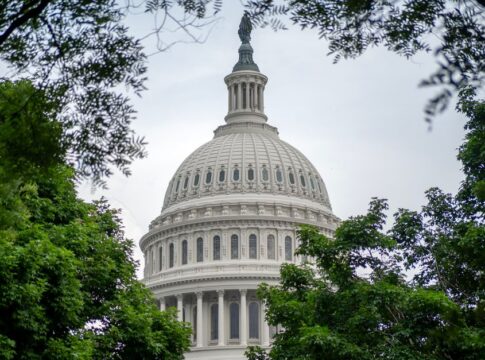
When Americans think about lawmaking, the spotlight usually falls on Washington. But much of the policy that shapes daily life—from the schools your children attend to the roads you drive on—originates not in the Capitol dome but in fifty state capitols scattered across the country. Understanding state legislature powers and how they differ from congressional authority is essential to grasping how the American political system actually works. These distinctions aren’t just civics trivia. They determine who decides everything from your tax bill to your voting rules, and they explain why identical issues can play out so differently depending on where you live.
The division of power between state and federal government is baked into the Constitution. The founders designed a federal system in which states retained significant sovereignty while ceding specific, enumerated powers to Congress. Over more than two centuries, that balance has shifted, stretched, and been tested in courtrooms and ballot boxes. Yet the basic architecture remains: Congress legislates on matters of national scope and constitutional grant, while state legislatures govern the vast terrain of domestic policy that affects residents most directly.
What State Legislature Powers Actually Include
State legislatures wield what legal scholars call the “police power”—a broad authority to enact laws for the health, safety, and welfare of their residents. This isn’t about uniformed officers; it’s about the fundamental regulatory authority that states never surrendered when they joined the union. That power is expansive.
Education policy sits squarely in state hands. Legislatures set curriculum standards, decide school funding formulas, establish teacher certification requirements, and determine whether districts may offer charter schools or voucher programs. The federal government can influence education through funding strings and civil rights enforcement, but it cannot dictate how states structure their school systems.
Criminal law is another core state domain. Murder, theft, assault, fraud—nearly all the offenses prosecuted in American courtrooms are violations of state statutes, not federal law. State legislatures define these crimes, set sentencing ranges, and determine parole eligibility. Congress can criminalize acts that cross state lines or involve federal interests, like bank robbery or immigration violations, but routine law enforcement remains a state and local function.
States also control the machinery of elections, even for federal offices. Legislatures draw congressional district lines, set voter registration procedures, decide whether to allow early voting or mail ballots, and establish ballot access rules for candidates. This authority has become a flashpoint in US domestic policy debates, as decisions made in state capitols directly affect who votes and how.
Professional licensing, marriage and divorce law, property rules, contract enforcement, insurance regulation, and most business incorporation standards all fall to state legislatures. So do decisions about infrastructure and transportation within state borders, from highway funding to municipal transit systems. The variety is staggering, and it explains why moving from one state to another can feel like crossing into a different regulatory universe.
Congressional Powers: The Federal Domain
Congress operates under a different constitutional mandate. Its powers are enumerated—listed specifically in Article I, Section 8. Chief among them: regulating interstate and international commerce, coining money, establishing post offices, raising armies, declaring war, and making laws “necessary and proper” to execute its other powers.
That commerce power has proven remarkably elastic. Over decades of Supreme Court rulings, it has been interpreted to cover not just goods crossing state lines but activities that substantially affect interstate commerce. This reading has allowed Congress to legislate on civil rights, environmental protection, labor standards, and consumer safety—areas that might seem local but involve economic activity that crosses borders.
Federal government news often centers on issues where national uniformity matters or where collective action is required. Immigration and border policy, for instance, is exclusively federal; states cannot create their own visa systems or negotiate treaties. National defense, foreign affairs, and monetary policy similarly belong to Washington. Congress also controls the vast apparatus of federal agencies, from the Environmental Protection Agency to the Department of Homeland Security, setting their budgets and defining their mandates.
Taxation illustrates the overlap. Congress can levy income taxes, tariffs, and excise taxes. States can impose income, sales, and property taxes. Both levels can tax the same activity, though federal law usually preempts conflicting state rules when Congress has occupied a regulatory field.
Where the Lines Blur and Conflict Arises
The tidy division between state and federal authority breaks down in practice. Many policy areas involve both levels of government, sometimes cooperating, sometimes colliding.
Healthcare offers a prime example. States traditionally regulated insurance and licensed medical professionals. Then Congress enacted Medicare and Medicaid, creating federal entitlements administered partly by states. The Affordable Care Act added federal insurance standards while leaving states to decide whether to expand Medicaid or run their own exchanges. The result is a patchwork where federal mandates, state choices, and Supreme Court rulings all shape what coverage looks like in any given place.
Environmental regulation presents similar complexity. The Clean Air Act and Clean Water Act are federal statutes, but states implement many of their provisions and can adopt stricter standards. When California sets aggressive vehicle emissions rules, it’s exercising state authority under a federal waiver—a hybrid that reflects both state legislature powers and congressional design.
Tensions erupt when states and the federal government pursue conflicting policies. In recent years, states have legalized marijuana despite federal prohibition, refused to assist with immigration enforcement despite federal requests, and challenged federal environmental rollbacks in court. These conflicts test the boundaries of federalism and often land before judges who must interpret where one government’s authority ends and another’s begins.
Why This Division Matters for American Politics Today
The federal structure shapes political strategy and citizen experience in profound ways. Advocates who lose in Congress can win in state capitols, and vice versa. A policy defeated at the national level can be enacted in a dozen states, creating laboratories of democracy—or, critics argue, islands of inequality.
Voters face different accountability structures. Your state legislator likely represents far fewer people than your member of Congress, making direct contact easier but also meaning fewer resources and less media scrutiny. State legislative sessions may last only a few months each year, compressing decision-making into intense bursts. Many state legislators serve part-time and hold other jobs, a far cry from the professionalized, year-round Congress.
The division also creates opportunities for forum-shopping and regulatory arbitrage. Businesses incorporate in Delaware for favorable corporate law. Individuals move to states with no income tax. Companies lobby state legislatures for carve-outs they couldn’t secure in Washington. These dynamics mean that understanding state legislature news is just as important as following Washington DC updates if you want to grasp how policy actually gets made.
Supreme Court rulings increasingly turn on federalism questions. Recent decisions have limited federal authority over state officials, struck down federal mandates deemed to coerce states, and clarified when federal law preempts state rules. These aren’t abstract legal doctrines—they determine whether a state can set its own minimum wage above the federal floor, whether it must enforce federal gun laws, and whether it can regulate internet platforms in ways Congress hasn’t.
Key Differences at a Glance
- Scope of authority: States possess general police power; Congress has specific enumerated powers.
- Criminal law: States prosecute most crimes; federal jurisdiction covers interstate offenses and specific federal interests.
- Education: States control curriculum, funding, and structure; federal role limited to funding conditions and civil rights enforcement.
- Elections: States administer all elections, including for federal office; Congress can regulate time, place, and manner of federal elections.
- Commerce: Congress regulates interstate and foreign commerce; states regulate intrastate economic activity unless preempted.
- Taxation: Both can tax, but federal law generally prevails in conflicts.
- Foreign affairs: Exclusively federal; states cannot make treaties or conduct diplomacy.
Frequently Asked Questions
Can state laws override federal laws?
No. Under the Supremacy Clause of the Constitution, federal law prevails when it conflicts with state law. However, this only applies when Congress has actually legislated in an area and when the state law directly contradicts federal requirements. States can set higher standards than federal minimums in many areas, and they can decline to assist with federal enforcement, but they cannot nullify or forbid application of valid federal law within their borders.
Why do some issues get decided at the state level instead of nationally?
The constitutional design reserves most domestic policy to the states unless the issue involves interstate commerce, crosses state lines, or falls within another enumerated federal power. This structure allows for regional variation reflecting different values and circumstances. It also serves as a check on centralized power. Practically, many issues—like family law, property rules, and professional licensing—have always been state matters, and there’s no constitutional mechanism for Congress to seize control absent a compelling federal interest.
Do state legislators have the same powers as members of Congress?
Within their respective spheres, yes, but those spheres differ dramatically. State legislators can pass laws on education, criminal justice, and election administration that members of Congress cannot. Conversely, Congress controls national defense, immigration, and interstate commerce in ways closed to states. State legislators typically lack the staff, resources, and year-round schedule of their congressional counterparts, but they often have more direct constituent contact and greater ability to see legislation enacted quickly.
How do federal agencies interact with state governments?
Federal agencies administer national programs and enforce federal law, but they often depend on state cooperation. Many federal statutes—covering environmental protection, workplace safety, and social services—allow states to implement federal standards or run parallel programs. Agencies provide funding, set minimum requirements, and audit state compliance. When states refuse to cooperate, agencies must enforce federal law directly, a more resource-intensive approach. This cooperative federalism defines much of US national affairs, blending state and federal authority in ways the Constitution’s framers never envisioned.
The interplay between state legislature powers and congressional authority remains one of the most consequential features of the American political system. It’s messy, sometimes contradictory, and frequently contested in court. But it’s also deliberate—a system designed to divide power, allow experimentation, and keep government closer to the people it serves. Whether that system is working as intended is a question each generation of Americans must answer for itself, at the ballot box and in the choices made in fifty state capitols and one national legislature.