
Supply Chain Disruptions: Why Delays Affect Consumers
By Newsroom, Business Desk — Published August 14, 2026
Table of Contents
- How Supply Chain Disruptions Begin and Spread
- The Corporate Response and Strategic Calculations
- Why Consumers Bear the Brunt
- The Broader Economic and Market Implications
- Frequently Asked Questions
When a product you ordered arrives weeks late or a store shelf sits empty, you’re witnessing the end result of supply chain disruptions—breakdowns in the complex global network that moves goods from raw materials to your doorstep. These disruptions ripple through the economy, affecting everything from quarterly earnings reports to your household budget. Understanding why these delays happen and how they cascade through the business world helps explain why a factory closure halfway around the globe can leave you waiting for a new appliance or paying more for groceries.
Supply chains connect manufacturers, distributors, retailers, and logistics providers across continents. When one link weakens, the entire chain feels the strain. Companies scramble to protect shareholder value while consumers face higher prices and longer waits.
How Supply Chain Disruptions Begin and Spread
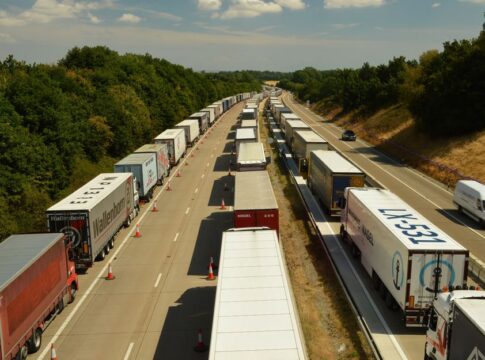
A supply chain disruption can start anywhere along the production and distribution path. Natural disasters shut down ports. Labor strikes halt trucking. A semiconductor shortage freezes electronics manufacturing. Political tensions close borders. Each trigger creates a domino effect.
Consider how products reach consumers. Raw materials must be extracted, processed, and shipped to factories. Manufacturers assemble components into finished goods. These products travel by ship, rail, truck, or plane to distribution centers, then to retail locations or directly to homes. Every handoff represents a potential failure point.
When disruption hits one segment, companies can’t simply reroute overnight. Long-term contracts lock in suppliers and shipping routes. Warehouse space is finite. Alternative manufacturers may lack capacity or certifications. This inflexibility means a localized problem quickly becomes a regional or global crisis.
The financial impact shows up fast. Companies issue revised revenue forecasts as they calculate lost sales and increased costs. Investor relations teams field anxious questions about when operations will normalize. Market capitalization can swing wildly as analysts reassess business growth strategies in light of supply uncertainty.
The Corporate Response and Strategic Calculations
Executives face difficult choices when disruptions strike. Do they pay premium rates to secure scarce materials and protect current quarter results? Or do they accept short-term pain to preserve profit margins? These decisions affect competitive advantage in ways that persist long after the immediate crisis passes.
Some companies pursue business model innovation in response. They diversify supplier bases, previously concentrated in single regions for cost efficiency. They invest in vertical integration, bringing more production in-house. They build redundancy into logistics networks, maintaining relationships with multiple carriers even when it costs more during normal times.
Corporate governance structures influence these strategic pivots. Boards must balance short-term shareholder demands with long-term resilience. Quarterly earnings pressure can discourage the kind of patient investment in supply chain flexibility that pays off only during the next disruption. Companies with stronger governance frameworks tend to weather supply shocks better because they’ve prioritized operational stability over maximizing every penny of quarterly profit.
The retail sector illustrates these tensions vividly. Retailers operate on thin margins and rely on precise inventory management. Too much stock ties up capital. Too little means lost sales. When supply chains falter, retailers face impossible choices: raise prices and risk losing customers, or absorb costs and squeeze already modest profits.
Key Strategies Companies Deploy
- Nearshoring or reshoring production to reduce transportation vulnerabilities and lead times
- Holding larger safety stock despite the carrying costs and warehouse space requirements
- Investing in supply chain visibility technology to spot problems earlier and respond faster
- Negotiating flexible contracts that allow for supplier switching when primary sources fail
- Building direct relationships with multiple tiers of suppliers rather than relying on intermediaries
Why Consumers Bear the Brunt
Supply chain costs eventually flow downstream to consumers. Companies pass along higher shipping rates, premium supplier prices, and expedited freight charges. Even when disruptions ease, prices often don’t return to previous levels. Businesses that invested heavily in supply chain resilience need to recoup those costs.
The delay effect compounds the price effect. When you can’t buy what you need, you may settle for a more expensive alternative or go without. Holiday shopping gets stressful when popular items vanish from shelves. Home improvement projects stall waiting for backordered appliances. Medical equipment shortages can threaten health outcomes.
E-commerce and digital transformation have changed consumer expectations in ways that amplify disruption pain. Two-day shipping became standard. Real-time inventory tracking made us impatient. When supply chains break, the gap between what digital interfaces promise and what physical logistics can deliver grows glaring.
Consumer behavior shifts in response. People order earlier, buy in bulk when items are available, or switch brand loyalty based solely on what’s in stock. These behavioral changes then create secondary disruptions as demand patterns become unpredictable, making it even harder for companies to plan inventory and production.
The Broader Economic and Market Implications
Supply chain disruptions don’t just inconvenience shoppers—they reshape entire markets. Startups that solve supply chain problems attract venture capital interest. Established companies pursue mergers and acquisitions to gain control over critical supply chain assets. Initial public offerings from logistics technology firms draw investor enthusiasm as markets search for solutions.
Earnings reports become exercises in explaining supply chain challenges. Analysts parse language about “normalization timelines” and “supply headwinds.” Companies with superior supply chain management gain market share from struggling competitors, sometimes permanently. What starts as a temporary disruption can permanently alter competitive landscapes.
Workplace culture and management practices evolve too. Supply chain roles gain strategic importance. Companies hire chief supply chain officers and elevate them to executive leadership teams. Operations expertise becomes as valued as marketing or finance acumen in leadership succession planning.
The macroeconomic effects extend beyond individual companies. Widespread supply disruptions contribute to inflation as too much money chases too few goods. Central banks may raise interest rates to cool demand they can’t satisfy through increased supply. These monetary policy responses affect borrowing costs, housing markets, and employment across the economy.
Frequently Asked Questions
How long do supply chain disruptions typically last?
The duration varies enormously depending on the cause and the industry. Minor disruptions from weather events might resolve in days or weeks as alternative routes open. Structural disruptions from factory closures, trade policy changes, or fundamental capacity shortages can persist for months or years. Complex products with many components face longer recovery times because every part of the supply chain must heal before production normalizes. Historical patterns suggest that systemic disruptions affecting multiple industries simultaneously tend to last longer than isolated incidents.
Can consumers do anything to protect themselves from supply chain disruptions?
Individual consumers have limited options but some strategies help. Planning purchases earlier provides buffer time for delays. Building modest stockpiles of non-perishable essentials reduces vulnerability to shortages. Maintaining flexibility about brands and specifications increases the odds of finding available alternatives. Supporting local producers and retailers with shorter supply chains can provide more reliable access to some goods. However, most supply chain solutions require action at corporate and policy levels beyond consumer control.
Why don’t companies just keep more inventory on hand?
Holding inventory costs money in several ways. Warehouses require rent, utilities, and staff. Products sitting in storage tie up capital that could be invested elsewhere or returned to shareholders. Some goods spoil, become obsolete, or lose value over time. For decades, businesses optimized for lean inventory systems that minimized these costs. The trade-off is vulnerability when supply chains break. Recent disruptions are causing many companies to recalculate this balance, accepting higher inventory costs in exchange for greater reliability, but the financial pressure to minimize inventory remains strong.
Do supply chain problems affect all products equally?
No. Products with complex, geographically dispersed supply chains face greater vulnerability. Electronics with components from multiple countries, automobiles with thousands of parts, and specialized medical equipment with limited manufacturers all face higher disruption risk. Simpler products made regionally from readily available materials tend to be more resilient. Products with many substitute options give consumers flexibility, while unique items with sole suppliers create bottlenecks. Perishable goods face different challenges than durable goods, and luxury items often have more flexible supply chains than commodity products.
The global economy’s interconnected nature means supply chain resilience affects everyone. As companies rethink decades of efficiency-focused optimization, consumers may see both higher baseline prices and more reliable product availability. The challenge is building systems robust enough to handle inevitable future disruptions without making everyday goods unaffordable.