
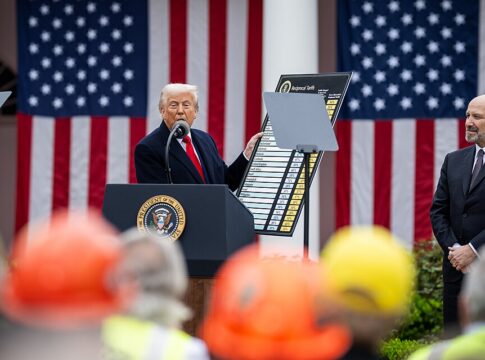
President Trump signed a proclamation Thursday imposing tariffs as high as 100 percent on certain imported drones, citing national security vulnerabilities and the urgent need to rebuild American manufacturing capacity in a critical defense technology sector.
Massive Tariffs Target Security Threats
The new tariffs impose a 100 percent levy on drones exceeding 55 pounds maximum takeoff weight and those equipped with thermal imaging capabilities. Docking stations and critical components for these advanced systems face the same punishing rate. Smaller imported drones will face a 25 percent tariff. The administration carved out reduced rates for trusted allies, with European Union, Japan, South Korea, Switzerland, Taiwan and Liechtenstein facing 15 percent tariffs, while United Kingdom imports receive a 10 percent assessment.
Commerce Secretary Howard Lutnick conducted the investigation at Trump’s direction, examining how foreign drone imports threaten American security interests. His report identified substantial import penetration from foreign producers and determined the United States relies dangerously on overseas sources for unmanned aerial systems and their components. The findings highlighted cybersecurity vulnerabilities and unreliable supply chains as critical national security risks.
Domestic Production Gap Drives Policy
The investigation revealed insufficient domestic manufacturing capacity to meet national security requirements. Trump’s proclamation noted particular concerns about America’s ability to produce drones at the speed and scale necessary for national security operations, especially during wartime surges or armed conflicts. The administration identified unfair trade practices as a major factor discouraging American producers from investing in expanded drone manufacturing facilities. Current production levels fall short of what the nation needs to maintain long-term economic competitiveness in this strategic sector.
What This Means
The tariffs on security-sensitive drones take effect in 21 days, while levies on less sensitive systems and components begin in 180 days. The staggered implementation gives domestic manufacturers time to scale production while immediately addressing the most critical security vulnerabilities. The move represents a major shift in defense technology sourcing, forcing government agencies and private sector operators to transition toward American-made drone systems. Industry experts anticipate significant disruption in commercial and government drone operations as organizations adjust to higher equipment costs while domestic production capacity develops to meet surging demand.