
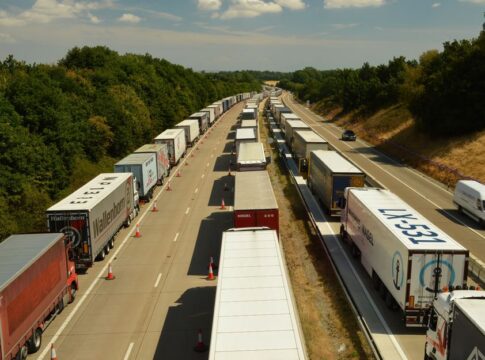
Supply Chain Disruptions: Why Delays Cascade Globally
By Newsroom, Business Desk — Published August 24, 2026
Table of Contents
- How Supply Chain Disruptions Amplify Across Borders
- Why Geographic Concentration Magnifies Risk
- Financial Pressures and Strategic Miscalculation
- E-commerce Acceleration and Consumer Expectations
- Rethinking Supply Chain Strategy
- What This Means for Different Stakeholders
- Frequently Asked Questions
When a container ship blocks a canal or a factory shuts down halfway around the world, the effects ripple outward for months. Supply chain disruptions have become a defining feature of the modern global economy, exposing vulnerabilities that few companies anticipated and fewer still were prepared to handle. These breakdowns don’t just delay shipments. They reshape quarterly earnings, force businesses to rethink fundamental strategies, and ultimately determine which firms protect shareholder value and which watch their competitive advantage evaporate.
Understanding why these disruptions cascade so dramatically requires looking at how global commerce actually works—and why the system that delivers remarkable efficiency in good times becomes remarkably fragile when anything goes wrong.
How Supply Chain Disruptions Amplify Across Borders
Modern supply chains operate on principles of efficiency, not resilience. Companies spent decades optimizing for cost, building networks where components travel thousands of miles, crossing multiple borders before final assembly. A smartphone might contain parts from forty different suppliers across a dozen countries. Automakers famously adopted just-in-time inventory systems, keeping minimal stock on hand to reduce warehousing costs and free up capital.
This architecture creates interdependence. When one link breaks, the effects multiply. A semiconductor shortage doesn’t just slow computer production—it halts automobile assembly lines, delays medical equipment manufacturing, and disrupts consumer electronics launches. Each downstream company then faces its own crisis, scrambling for alternative suppliers or redesigning products around available components.
The cascading effect accelerates because companies rarely maintain backup plans for backup plans. Business model innovation over the past generation prioritized lean operations. Redundancy meant waste. Multiple suppliers for the same component added complexity and cost. When disruption hit, firms discovered they’d traded resilience for margin improvement—a trade-off that looked brilliant in spreadsheets but proved costly when reality intervened.
The Bullwhip Effect in Action
Supply chain experts describe something called the bullwhip effect: small fluctuations in demand at the retail level create increasingly wild swings in orders as you move upstream through distributors, manufacturers, and raw material suppliers. A modest uptick in consumer purchases triggers retailers to increase orders. Distributors, seeing higher orders, stock up further. Manufacturers ramp production. Suppliers expand capacity.
When the cycle reverses—or when disruption interrupts flow—the whip cracks backward with equal violence. Suddenly retailers cancel orders. Distributors sit on excess inventory. Manufacturers idle plants. The whole system lurches from shortage to glut, with each participant making rational decisions based on incomplete information that collectively produce irrational outcomes.
Why Geographic Concentration Magnifies Risk
Certain regions dominate production of specific goods or components, creating single points of failure for entire industries. This concentration emerged from sensible economic logic—expertise clusters, infrastructure develops, ecosystems form. Manufacturers benefit from proximity to suppliers and skilled workers. Costs drop as scale increases.
But concentration creates vulnerability. When a regional crisis hits—whether pandemic, natural disaster, geopolitical conflict, or infrastructure failure—there’s no easy alternative. Companies can’t simply shift production elsewhere when decades of investment, specialized knowledge, and supporting industries exist in only one place.
The semiconductor industry illustrates this perfectly. Advanced chip fabrication requires extraordinary capital investment, years of technical development, and entire ecosystems of suppliers and talent. A handful of facilities produce the most sophisticated processors. When demand surges or production stumbles, the entire global electronics industry feels the impact. No amount of money can quickly build alternative capacity—the expertise and infrastructure simply don’t exist elsewhere.
Financial Pressures and Strategic Miscalculation
Corporate governance structures and investor relations dynamics inadvertently encouraged the fragility. Quarterly earnings pressure pushed executives toward decisions that optimized short-term financial performance. Maintaining extra inventory or paying for redundant suppliers hurt margins and invited questions from analysts focused on efficiency metrics.
Market capitalization often rewarded companies that ran lean operations and showed improving return on assets. Business growth strategies emphasized asset-light models. Revenue forecasts assumed stable conditions. Risk management focused on financial hedging rather than operational resilience.
When disruption hit, these chickens came home to roost. Companies that had stripped away buffers found themselves unable to fulfill orders while competitors with slightly less optimized but more robust networks kept operating. The competitive advantage flipped overnight. Firms that had looked inefficient suddenly looked prescient.
The Real Cost of Optimization
Financial modeling typically treats disruption as a rare event—a standard deviation or two from normal. But recent years suggest major supply shocks may be more frequent than historical data implied. Climate change increases extreme weather. Geopolitical tensions disrupt trade flows. Pandemics expose health infrastructure gaps. Cyberattacks target critical systems.
Each event alone might qualify as unusual. Collectively, they create a new operating environment where resilience has tangible value that traditional financial metrics failed to capture. The companies rethinking their approach aren’t abandoning efficiency—they’re recognizing that efficiency without resilience is ultimately inefficient when disruptions become routine rather than exceptional.
E-commerce Acceleration and Consumer Expectations
Digital transformation accelerated dramatically, fundamentally altering consumer expectations and retail operations. Online shopping surged, creating unprecedented demand for logistics capacity, warehouse space, and last-mile delivery. Companies built for gradual e-commerce growth suddenly faced years of projected expansion compressed into months.
This shift stressed every part of the supply chain. Warehouses designed for bulk shipments to stores now had to handle individual consumer orders. Delivery networks built for business-to-business transport expanded into residential delivery. Packaging requirements changed. Return volumes exploded. The entire logistics infrastructure had to adapt while simultaneously handling volume growth.
Consumer expectations evolved faster than infrastructure could respond. Two-day delivery became table stakes. Real-time tracking became standard. Flexibility in delivery options became expected. Companies that couldn’t meet these expectations lost sales, but meeting them required supply chain capabilities that took years to build.
Rethinking Supply Chain Strategy
Businesses are now reconsidering fundamental assumptions. Some are nearshoring or reshoring production, accepting higher costs for greater control and reduced transit times. Others are diversifying supplier bases, maintaining relationships with multiple vendors even when a single supplier might offer better pricing. Many are increasing inventory buffers for critical components, recognizing that the cost of stockouts exceeds the cost of carrying extra stock.
Technology investments are accelerating. Better visibility into supply networks helps companies spot problems earlier and respond faster. Predictive analytics identify vulnerabilities before they cause crises. Automation reduces dependence on labor availability. Digital twins—virtual replicas of physical supply chains—let companies test scenarios and plan responses.
These changes require investment that affects near-term profitability but potentially protects long-term shareholder value. The challenge for corporate leadership is convincing investors and boards that spending money to build resilience makes sense when the benefits only become obvious during the next crisis.
What This Means for Different Stakeholders
For consumers, supply chain disruptions mean higher prices, longer waits, and fewer choices. Companies pass along increased costs. Products disappear from shelves or websites. Delivery times stretch from days to weeks or months.
For workers, disruptions create instability. Factories swing from overtime to layoffs. Warehouse workers face intense pressure during peaks. Truck drivers navigate chaotic scheduling. The gig economy expands in logistics, offering flexibility but often lacking benefits or stability.
For investors, supply chain issues complicate analysis. Traditional financial metrics may not capture operational vulnerabilities. Companies with similar revenue forecasts may have vastly different risk profiles based on supply chain structure. Due diligence increasingly requires understanding operational details that once seemed too granular for investment decisions.
For policymakers, these disruptions raise questions about economic security, industrial policy, and the balance between efficiency and resilience. Should governments incentivize domestic production of critical goods? How do you define critical? What role should regulation play in ensuring supply chain transparency or resilience?
Frequently Asked Questions
Why can’t companies just switch suppliers when disruptions occur?
Switching suppliers isn’t like changing vendors for office supplies. Manufacturing relationships often involve years of development, specialized tooling, quality certifications, and integrated systems. A new supplier needs time to ramp production, meet quality standards, and integrate into existing processes. For complex components, alternative suppliers may not exist at all, or may lack capacity to absorb new orders. The switching costs—both financial and temporal—often exceed the cost of waiting out disruptions with existing suppliers.
How do supply chain problems affect a company’s stock price?
Supply chain disruptions hit companies in multiple ways that investors care about. Revenue suffers when products can’t be manufactured or delivered. Margins compress as companies pay premium prices for scarce components or expedited shipping. Market share erodes if competitors handle disruptions better. Guidance becomes unreliable, creating uncertainty. Companies may also face inventory write-downs, contract penalties, or lost customer relationships. The market capitalization impact depends on whether investors view the problems as temporary headwinds or signs of deeper competitive weakness.
Are supply chain disruptions becoming more common or just more visible?
Both factors are at play. Global supply chains have always faced disruptions, but several trends are increasing both frequency and visibility. Climate change is generating more extreme weather events. Geopolitical tensions are rising. Pandemic risks are better understood. Simultaneously, digital connectivity makes disruptions more visible—consumers track shipments in real time and social media amplifies shortages. The just-in-time systems that reduced costs also reduced buffers, meaning smaller disruptions now cause visible problems that once would have been absorbed by inventory slack.
What can individual businesses do to protect themselves?
Companies are adopting several strategies, though each involves trade-offs. Diversifying suppliers reduces dependence on single sources but adds complexity and may increase costs. Building inventory buffers provides cushion but ties up capital and risks obsolescence. Nearshoring production improves control and reduces transit risk but typically costs more than offshore alternatives. Investing in supply chain visibility technology helps spot problems earlier but requires significant capital and expertise. The right approach depends on the specific business, industry dynamics, and risk tolerance. No single solution eliminates vulnerability—the goal is managing and distributing risk rather than eliminating it entirely.
Supply chains will continue evolving as companies, investors, and policymakers absorb lessons from recent disruptions. The pendulum is swinging from pure efficiency toward balanced resilience, though how far remains uncertain. What’s clear is that supply chain strategy has moved from operational detail to boardroom priority—a shift that will shape competitive dynamics, investment decisions, and economic policy for years to come.