
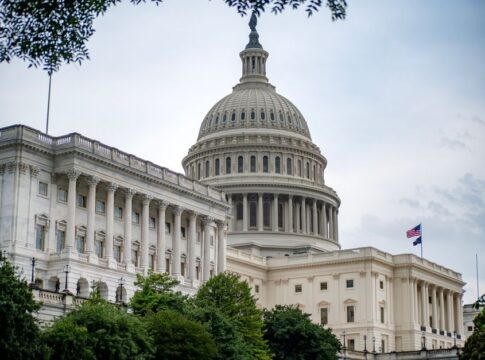
Photo: Ramaz Bluashvili / Pexels
By Daily American Press Newsroom, National Desk — Published September 2, 2026
Table of Contents
- Key Takeaways
- The Background & Context
- Why This Matters
- Reactions & Analysis
- What Happens Next
- Frequently Asked Questions
The Trump administration has announced a landmark agreement with Venezuela that would grant the United States control over an estimated 65 billion barrels of the South American nation’s oil reserves. The deal, confirmed by President Trump, represents one of the most significant energy agreements in recent history and marks a dramatic shift in U.S.-Venezuela relations after years of diplomatic tensions and economic sanctions.
According to reports from multiple news outlets, the arrangement would give Washington unprecedented access to Venezuela’s vast petroleum resources, which rank among the largest proven oil reserves in the world. The announcement raises immediate questions about the deal’s structure, its implications for American energy policy, and what it means for Venezuela’s sovereignty and economic future.
This trump administration updates story has captured national attention as lawmakers, energy analysts, and foreign policy experts scramble to understand the details of an agreement that could reshape global oil markets and America’s strategic position in the Western Hemisphere.
Key Takeaways
- President Trump announced the U.S. has entered into a deal with Venezuela for control of approximately 65 billion barrels of oil reserves
- The agreement represents a major shift in U.S.-Venezuela relations after years of sanctions and diplomatic isolation
- Venezuela holds some of the world’s largest proven oil reserves, making this a strategically significant energy deal
- Questions remain about the specific terms, legal framework, and implementation timeline of the arrangement
- The deal has prompted analysis about what factors drove Venezuela to agree to such an arrangement with Washington
- Implications extend beyond energy to include geopolitical considerations, national security, and economic policy
The Background & Context
Venezuela’s oil wealth has long been both a blessing and a curse for the nation. Sitting atop the world’s largest proven petroleum reserves, the country once enjoyed prosperity from its state-owned oil company, PDVSA. But years of mismanagement, corruption, and underinvestment caused production to collapse from over three million barrels per day in the 1990s to a fraction of that capacity today.
Relations between Washington and Caracas deteriorated sharply over the past decade. The United States imposed sweeping sanctions on Venezuela’s oil sector, targeting the government of Nicolás Maduro and attempting to pressure the regime through economic isolation. Those sanctions effectively cut Venezuela off from its largest historical oil customer and crippled the country’s ability to generate revenue from petroleum exports.
The federal government under previous administrations recognized opposition leader Juan Guaidó as Venezuela’s legitimate president, further straining diplomatic ties. Yet despite international pressure, the Maduro government maintained its grip on power, even as Venezuela’s economy contracted by more than 75 percent and millions of citizens fled the country in one of the Western Hemisphere’s worst humanitarian crises.
Against this backdrop, the announcement of a deal granting the U.S. control over 65 billion barrels represents a stunning reversal. The arrangement suggests either a dramatic shift in Venezuela’s political calculus or unprecedented leverage by the Trump administration to secure access to resources that have been largely off-limits to American companies for years.
Energy experts note that 65 billion barrels represents a substantial portion of Venezuela’s estimated total reserves. For context, the entire United States holds approximately 68 billion barrels in proven reserves. Control over such a massive quantity of petroleum would significantly enhance America’s energy security and global market influence.
Why This Matters
For American citizens and taxpayers, this deal carries multiple layers of significance. Energy security remains a cornerstone of national security policy. Access to reliable, affordable petroleum supplies affects everything from gasoline prices at the pump to the cost of goods transported across the country. Control over 65 billion barrels could insulate the U.S. economy from global oil price shocks and reduce dependence on other foreign suppliers.
The geopolitical implications are equally profound. Venezuela’s location in the Western Hemisphere has made it a focal point for competing international interests. Russia, China, and Iran have all cultivated relationships with Caracas, viewing the country as a foothold in America’s traditional sphere of influence. A U.S.-Venezuela oil deal could dramatically alter that calculus, potentially reducing the influence of rival powers in the region.
From a defense and national security perspective, the arrangement raises questions about how the agreement will be enforced and what commitments the United States might make to protect its interests. Will American personnel operate in Venezuelan oil fields? What security guarantees has Washington provided? These details matter enormously for understanding the full scope of U.S. obligations under the deal.
Economic considerations extend beyond energy markets. If the deal leads to increased oil production and exports from Venezuela, it could generate revenue that might stabilize the country’s economy. That could, in turn, reduce the flow of Venezuelan migrants and refugees to the United States, addressing a humanitarian and immigration challenge that has strained resources in border states and cities nationwide.
Yet the arrangement also raises fundamental questions about sovereignty and international norms. What precedent does it set when one nation gains control over another’s natural resources? How will other countries, particularly in Latin America, view such an agreement? The answers could affect America’s diplomatic relationships throughout the region for years to come.
Reactions & Analysis
The announcement has prompted intense scrutiny about what drove Venezuela to enter such an agreement. Reports questioning the deal’s origins suggest multiple possible explanations. Venezuela’s desperate economic situation may have left the Maduro government with few alternatives for generating revenue and maintaining power. The country’s oil infrastructure has deteriorated so severely that Venezuelan production capacity has withered, potentially making partnership with American companies the only viable path to reviving the sector.
Another possibility involves political calculations within Venezuela. If the Maduro government faces internal pressure or believes its hold on power is weakening, trading resource control for American support or sanctions relief might represent a survival strategy. Alternatively, the deal could signal a broader geopolitical realignment, with Venezuela pivoting away from its traditional allies in Moscow, Beijing, and Tehran.
Energy industry analysts are examining what U.S. control actually means in practical terms. Does Washington gain ownership of the reserves, or merely extraction and export rights? Will American companies operate the fields directly, or will they partner with PDVSA? The distinction matters enormously for understanding the deal’s mechanics and profit distribution.
Legal experts are questioning the constitutional and international law framework supporting such an arrangement. Does the Venezuelan government have the authority to transfer control of national resources without legislative approval? How does the agreement square with international norms regarding sovereignty and resource rights? These questions may ultimately require clarification from both governments and potentially international legal bodies.
Congressional reaction will likely prove critical. Lawmakers from both parties will demand transparency about the deal’s terms, especially any financial commitments or security guarantees the United States has made. The Supreme Court could eventually weigh in if legal challenges arise regarding executive authority to enter such agreements without Senate ratification as a treaty.
What Happens Next
Implementation details will determine whether this announcement translates into actual changes on the ground. Venezuela’s oil infrastructure requires massive investment to restore production capacity. Even with American expertise and capital, rebuilding could take years and cost tens of billions of dollars. The timeline for seeing meaningful increases in output remains uncertain.
Sanctions policy will need immediate clarification. If U.S. companies are to operate in Venezuela, existing sanctions on the country’s oil sector must be modified or lifted. That process involves complex regulatory and legal steps that could take months to navigate, even with political will to move quickly.
International reaction will shape the deal’s broader impact. How will other oil-producing nations respond? Will OPEC adjust production targets in anticipation of increased Venezuelan output? Could the arrangement inspire similar deals elsewhere, or will it provoke backlash against what some may view as resource imperialism?
Domestically, the agreement will factor into ongoing debates about energy policy and climate goals. Some will argue that securing access to 65 billion barrels of oil contradicts efforts to transition toward renewable energy. Others will counter that energy security and economic considerations justify the deal regardless of long-term climate objectives.
The Venezuelan people’s reaction remains perhaps the most important unknown. Will they view the arrangement as a lifeline that could restore their country’s economy, or as a surrender of national patrimony? Public opinion in Venezuela could ultimately determine the deal’s political sustainability and long-term viability.
Frequently Asked Questions
What does U.S. “control” of Venezuelan oil reserves actually mean?
The specific terms have not been fully disclosed, but control likely involves some combination of extraction rights, operational authority over oil fields, and influence over production and export decisions. It may range from direct ownership to long-term concessions that give American companies the right to develop and profit from Venezuelan petroleum resources. The exact legal structure will determine how much authority the U.S. exercises versus Venezuela retaining nominal sovereignty.
How does this deal affect gasoline prices for American consumers?
The impact on pump prices depends on how quickly production increases and how much additional oil reaches global markets. In theory, greater supply could put downward pressure on prices, but the effect would likely take years to materialize given the time needed to restore Venezuela’s degraded oil infrastructure. Short-term price impacts are probably minimal, while long-term effects depend on production levels and global demand patterns.
Is this arrangement legal under international law?
The legality depends on details not yet public. If Venezuela’s government entered the agreement voluntarily and through proper constitutional procedures, it could be considered a legitimate bilateral arrangement. However, questions may arise about whether resource control agreements of this magnitude require legislative approval in Venezuela, and whether the deal respects international norms regarding permanent sovereignty over natural resources. Legal challenges are possible.
What happens if Venezuela’s government changes?
This represents one of the biggest uncertainties. If a different government takes power in Caracas, it might seek to renegotiate or void the agreement, arguing it was signed under duress or exceeded the previous administration’s authority. The deal’s durability likely depends on whether it’s structured as a treaty, contract, or other legal instrument, and what dispute resolution mechanisms it includes. Future Venezuelan leaders could challenge terms they view as unfavorable to national interests.
As details of this historic agreement continue to emerge, Americans will be watching closely to understand how it affects their energy costs, national security, and country’s role in global affairs. The deal represents a bold gambit with the potential to reshape energy markets and hemispheric relations for decades to come. Whether it proves a strategic masterstroke or a problematic overreach will depend on implementation details still to be revealed and political developments both in Washington and Caracas that remain impossible to predict with certainty.