
Photo: Mark Stebnicki / Pexels
By Daily American Press Newsroom, National Desk — Published August 28, 2026
Table of Contents
- Key Takeaways
- The Background & Context
- Why This Matters
- Reactions & Analysis
- What Happens Next
- Frequently Asked Questions
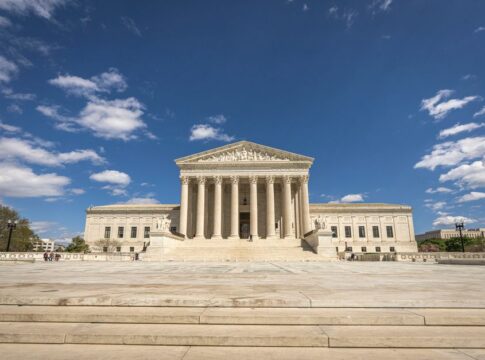
The Trump administration has escalated a contentious legal battle over federal funding to the nation’s highest court. The administration’s petition asks the Supreme Court to review a lower court ruling that blocked its attempt to terminate grants to the University of California system. This move represents the latest chapter in an ongoing confrontation between the federal government and one of America’s largest public university networks over immigration enforcement policies.
The dispute centers on whether the federal government can withhold research and education funding from universities that decline to cooperate fully with immigration authorities. At stake are billions of dollars in grants that support scientific research, medical studies, and educational programs across the UC system’s ten campuses. The Trump administration petitions the Supreme Court at a moment when tensions over sanctuary policies and federal-state relations remain at a fever pitch.
For millions of students, faculty, and researchers whose work depends on federal grants, the outcome could reshape the landscape of higher education funding. The case also tests fundamental questions about executive power and the conditions Washington can impose on states and institutions that receive taxpayer dollars.
Key Takeaways
- The Trump administration has formally asked the Supreme Court to overturn a ruling that prevented the termination of federal grants to the University of California system.
- The legal dispute revolves around UC’s policies regarding cooperation with federal immigration enforcement, which the administration argues violate federal law.
- Billions of dollars in federal research and education funding hang in the balance, affecting scientific programs, medical research, and student services across ten UC campuses.
- The case represents a broader conflict over sanctuary policies and whether the federal government can use funding as leverage to compel state institutions to assist with immigration enforcement.
- Legal observers view this petition as part of a wider pattern of the administration using the courts to challenge state and local governments that resist its immigration agenda.
- The Supreme Court’s decision on whether to hear the case could have far-reaching implications for federal-state relations and the future of higher education funding nationwide.
The Background & Context
The University of California system has long maintained policies that limit campus police cooperation with federal immigration authorities. These policies, adopted across UC’s ten campuses, generally prohibit campus law enforcement from detaining individuals solely based on immigration status or from allowing Immigration and Customs Enforcement agents unrestricted access to campus facilities without a judicial warrant.
UC officials have defended these measures as necessary to maintain an educational environment where all students feel safe. They argue that students living without legal immigration status must be able to attend classes, seek medical care, and report crimes without fear of deportation. The university system enrolls tens of thousands of students who came to the United States as children and have received protection under various immigration programs.
The Trump administration has taken a different view. Federal officials argue that UC’s policies obstruct immigration enforcement and violate federal statutes requiring cooperation with immigration authorities. In response, the administration moved to terminate certain federal grants, threatening to cut off funding streams that support everything from cancer research to engineering programs.
A lower court blocked that termination, ruling that the administration had overstepped its authority. The court found that the federal government could not unilaterally impose new conditions on grants that had already been awarded under different terms. That decision preserved UC’s funding while the legal battle continued through the appeals process.
The administration’s petition to the Supreme Court seeks to reverse that protective ruling. Government lawyers argue that federal law gives the executive branch broad authority to enforce immigration statutes and to ensure that federal funds do not support entities that impede those enforcement efforts.
Why This Matters
The financial stakes are enormous. The University of California system receives approximately ten billion dollars annually in federal funding for research, student aid, and various programs. A significant portion supports groundbreaking medical research, climate science, and technology development that benefits the entire nation.
Cutting off these funds would not simply punish UC administrators. Graduate students conducting cancer research would lose their stipends. Labs working on renewable energy solutions would shut down. Medical facilities serving low-income communities would close programs. The ripple effects would extend far beyond California, affecting collaborative research projects with institutions nationwide and slowing scientific progress on challenges that transcend state borders.
Beyond the immediate financial impact, the case raises profound questions about federalism and the separation of powers. Can the president use control over federal spending to compel state institutions to carry out federal enforcement priorities? Where is the line between legitimate conditions on federal grants and coercive overreach that violates state sovereignty?
These questions matter to every American, not just Californians. If the Supreme Court sides with the administration, other states could face similar pressure to align their policies with federal preferences on a range of issues, from environmental regulations to healthcare programs. The precedent could fundamentally alter the balance of power between Washington and state governments.
For immigrant communities, the outcome carries personal consequences. Many students and families have built their lives around the promise that educational institutions would remain safe spaces. A ruling that forces universities to cooperate with immigration enforcement could drive vulnerable populations away from seeking education and healthcare, with long-term social costs.
Reactions & Analysis
Legal experts have offered varying assessments of the administration’s chances before the Supreme Court. Some constitutional scholars note that the Court has historically been skeptical of federal attempts to commandeer state resources or impose retroactive conditions on grants. Previous rulings have established that Congress must speak clearly when it attaches strings to federal funding, and that the executive branch cannot unilaterally rewrite those conditions.
Other analysts point to the Court’s current composition and its general deference to executive authority on immigration matters. The administration may argue that national security and immigration enforcement represent areas where the federal government’s power is at its apex, and where state resistance cannot be tolerated.
University leaders across the country are watching closely. Many institutions maintain similar policies limiting cooperation with immigration authorities, reasoning that their educational missions require creating environments where all students can learn without fear. A ruling against UC could force universities nationwide to choose between their values and their federal funding.
Immigration advocacy organizations have characterized the administration’s petition as part of a broader legal strategy to punish jurisdictions that decline to assist with enforcement. They view the UC case as emblematic of an approach that uses federal spending power as a cudgel rather than as a tool for genuine partnership between levels of government.
Civil liberties groups have raised concerns about the precedent such a ruling could set. If the federal government can cut off university funding over immigration cooperation, what other policy areas might become subject to similar pressure? Could future administrations threaten to withhold highway funds from states that decline to enforce federal gun laws, or education dollars from districts that resist federal curriculum mandates?
What Happens Next
The Supreme Court must first decide whether to accept the case for review. The justices receive thousands of petitions annually and grant full hearings to fewer than one hundred. They typically take cases that present significant constitutional questions, conflicts between lower courts, or issues of national importance. This petition arguably checks all three boxes.
If the Court declines to hear the case, the lower court ruling stands and UC retains its funding under current policies. That outcome would provide some breathing room for universities but would leave the underlying legal questions unresolved, potentially leading to future litigation.
If the Court agrees to hear the case, oral arguments would likely occur in the next term, with a decision following months later. During that period, UC’s funding would presumably continue under the lower court’s injunction, but the uncertainty would complicate long-term planning for research projects and academic programs.
A Supreme Court ruling in favor of the administration would not automatically terminate UC’s grants but would remove the legal obstacle preventing such termination. UC would then face a stark choice: modify its policies to satisfy federal demands or risk losing billions in funding. Other universities would confront similar decisions.
A ruling in UC’s favor would affirm limits on executive power and preserve existing funding arrangements. However, it might not prevent Congress from passing new legislation explicitly conditioning future grants on immigration cooperation, shifting the battle to the legislative arena.
Regardless of the outcome, this case will shape the relationship between federal power and state autonomy for years to come. The principles established here will extend beyond immigration and universities, influencing how Washington interacts with states and localities on countless policy questions.
Frequently Asked Questions
What exactly is the Trump administration asking the Supreme Court to do?
The administration is petitioning the Supreme Court to review and overturn a lower court decision that blocked the federal government from terminating grants to the University of California system. The administration argues it has the authority to cut off funding to institutions that do not fully cooperate with federal immigration enforcement efforts.
How much federal funding does the UC system receive?
The University of California system receives approximately ten billion dollars annually in federal funding. These funds support a wide range of activities including scientific research, medical studies, student financial aid, and various educational programs across UC’s ten campuses. The potential loss of this funding would have devastating effects on research and education throughout the system.
Why does UC limit cooperation with immigration authorities?
UC maintains policies that restrict campus police cooperation with federal immigration enforcement to create an educational environment where all students feel safe, regardless of immigration status. University officials argue that students must be able to attend classes, access healthcare, and report crimes without fear of deportation. These policies are designed to protect the university’s educational mission and serve its diverse student population.
What would happen if the Supreme Court sides with the Trump administration?
If the Supreme Court rules in favor of the administration, the lower court’s protective order would be lifted, allowing the federal government to proceed with terminating UC’s grants. This could force UC to choose between changing its immigration policies or losing billions in federal funding. The decision would also set a precedent that could affect universities and state institutions nationwide, potentially giving the federal government broader power to impose conditions on funding recipients.
As this case winds its way through the judicial system, thousands of researchers continue their work in UC laboratories, unaware whether their projects will survive the legal battle overhead. Their uncertainty reflects a larger American struggle to define the boundaries of federal power in an age of deep political division. Whatever the Supreme Court decides, the reverberations will be felt far beyond the ivory towers of academia.