
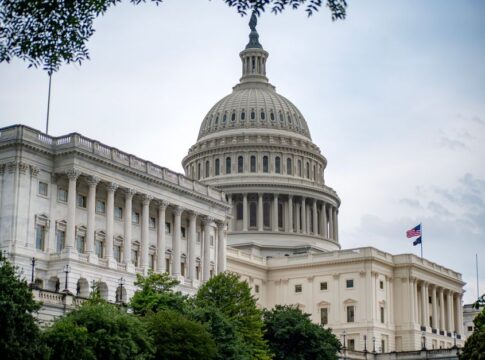
Photo: Ramaz Bluashvili / Pexels
By Daily American Press Newsroom, National Desk — Published August 28, 2026
Table of Contents
- Key Takeaways
- The Background & Context
- Why This Matters
- Reactions & Analysis
- What Happens Next
- Frequently Asked Questions
The Trump administration lets a century-old federal firearms regulation expire without mounting a legal defense, marking a dramatic shift in how the Justice Department handles gun control enforcement. The National Firearms Act, a cornerstone of federal weapons regulation since the Prohibition era, now sits in legal limbo after the Department of Justice declined to appeal a lower court decision striking down portions of the law.
This unprecedented move has sent shockwaves through law enforcement circles and gun policy debates nationwide. The decision effectively allows a major piece of federal firearms legislation to lapse without the Supreme Court weighing in on its constitutionality. For millions of gun owners, law enforcement officers, and public safety advocates, the implications remain uncertain and potentially far-reaching.
The Justice Department’s choice not to pursue an appeal represents a significant departure from standard federal practice, where the government typically defends long-standing statutes through every available judicial avenue. The silence from federal prosecutors has left legal experts, state officials, and citizens scrambling to understand what comes next for gun regulation in America.
Key Takeaways
- The Trump administration has allowed the National Firearms Act to lapse by refusing to appeal a court ruling that struck down key provisions of the Depression-era law.
- The Justice Department’s decision to hold off on an appeal leaves the gun law in legal limbo, creating uncertainty for federal enforcement nationwide.
- The National Firearms Act, enacted during the Prohibition era, has regulated certain categories of firearms for nearly a century.
- This marks a rare instance where the federal government has declined to defend a major piece of established legislation through the appeals process.
- The lapse affects how federal authorities can regulate and track specific categories of weapons previously controlled under the act.
- State and local law enforcement agencies now face questions about how to proceed with enforcement actions that relied on federal statutory authority.
The Background & Context
The National Firearms Act emerged from one of the most turbulent periods in American history. Born during Prohibition, when organized crime wielded Thompson submachine guns and sawed-off shotguns with impunity, Congress passed the landmark legislation to bring certain weapons under federal oversight. The law established registration requirements, imposed taxes on transfers, and created a regulatory framework that has endured for generations.
For nearly a century, the act stood as a pillar of federal gun policy. It regulated items like short-barreled rifles, suppressors, and automatic weapons—categories of firearms that lawmakers deemed particularly dangerous or easily concealed. The Bureau of Alcohol, Tobacco, Firearms and Explosives built much of its enforcement infrastructure around the statute’s provisions.
The current crisis began when a lower court ruled against the government, finding constitutional problems with how the law operated. Typically, such decisions trigger immediate appeals from federal attorneys who defend statutes enacted by Congress. The Justice Department routinely argues cases through multiple levels of federal courts, often taking disputes all the way to the Supreme Court when fundamental questions of law are at stake.
But this time, something changed. The Trump administration’s Justice Department chose not to file an appeal, allowing the deadline to pass. That decision—or non-decision—has created a vacuum where once stood clear federal authority. Legal scholars note that such restraint is exceptionally rare, particularly for legislation with such a long pedigree and widespread application across the national law enforcement landscape.
Why This Matters
American citizens now face a regulatory gap that could affect everything from gun sales to criminal prosecutions. Thousands of pending cases may hinge on whether prosecutors can rely on the National Firearms Act’s provisions. Defense attorneys are already examining whether charges filed under the statute remain valid if the federal government won’t defend the underlying law.
For gun owners, the situation creates confusion about what remains legal and what might still carry federal penalties. Firearms dealers who have spent decades navigating the act’s complex paperwork requirements wonder whether those rules still apply. Manufacturers who designed products to comply with the law’s technical specifications face uncertainty about future regulations.
Law enforcement agencies across the country have depended on the National Firearms Act as a tool for combating gun trafficking and violent crime. Federal, state, and local officers coordinated investigations using the statute’s framework. Without clear guidance from the Justice Department, police departments and sheriffs’ offices must decide independently how to proceed with cases that involve weapons previously regulated under the act.
The decision also raises questions about the separation of powers and the executive branch’s duty to defend laws passed by Congress. When the Justice Department declines to appeal, it effectively allows a single district or appellate court to set national policy. That approach concentrates enormous power in individual judges, rather than allowing the Supreme Court to provide uniform guidance for the entire country.
Taxpayers have funded the regulatory apparatus built around this law for generations. The infrastructure includes databases, inspection systems, and specialized personnel trained to enforce the act’s requirements. If the statute truly lapses, citizens may ask what happens to those investments and whether the government will redirect resources to other priorities or simply let the capacity atrophy.
Reactions & Analysis
The legal community has responded with a mixture of surprise and concern. Prosecutors who built careers on enforcing federal firearms laws suddenly find themselves without clear marching orders. Some former Justice Department officials have spoken out, noting that the decision breaks with decades of institutional practice regarding how the government defends congressional enactments.
Gun rights advocates see the development as vindication of long-held constitutional arguments. For years, Second Amendment activists have challenged the National Firearms Act as an infringement on the right to bear arms. The administration’s refusal to appeal suggests that federal lawyers may have concluded the law cannot withstand modern constitutional scrutiny, particularly after recent Supreme Court decisions expanding gun rights.
On the other side, gun control organizations express alarm at what they view as abandonment of public safety tools. These groups argue that the National Firearms Act has prevented dangerous weapons from flooding American streets. They worry that the law’s lapse will make it easier for criminals to obtain military-style firearms and accessories that were previously subject to strict federal oversight.
State attorneys general are watching closely, trying to determine whether they can step in to fill the federal void. Some states have their own firearms regulations that might pick up where federal law leaves off. Others rely heavily on federal statutes and lack the infrastructure to enforce similar rules at the state level. The patchwork that may emerge could mean vastly different gun laws depending on geography, undermining the uniform national standards that the National Firearms Act provided.
Congressional reaction has been muted so far, though members of both parties are beginning to ask questions. Lawmakers who supported the administration’s approach to gun rights generally approve of letting the court decision stand. Those who favor stronger firearms regulation criticize what they see as dereliction of the executive branch’s duty to defend laws on the books until Congress changes them.
What Happens Next
The immediate future remains cloudy. Without an appeal, the lower court ruling stands, but its geographic scope may be limited. Federal prosecutors in other jurisdictions might attempt to continue enforcing the National Firearms Act until courts in their regions rule otherwise. This could create a confusing situation where the same federal law applies in some states but not in others.
Congress could step in to clarify or update the statute, though any legislative fix would require navigating the deeply polarized politics of gun control. Lawmakers might craft a revised version of the National Firearms Act designed to address the constitutional concerns raised by the court. Alternatively, they could let the matter rest, effectively ratifying the administration’s decision through inaction.
The Supreme Court may eventually weigh in, even without a direct appeal of this case. Other challenges to federal firearms laws are working their way through the judicial system. If the justices take up a related case, they could provide guidance that clarifies whether the National Firearms Act can survive constitutional scrutiny. Until then, lower courts across the country will make their own determinations, potentially producing conflicting outcomes.
Federal agencies must adapt to the new reality. The ATF will need to decide how to allocate resources if it can no longer enforce major portions of its traditional mandate. Budget planners will question whether to maintain staffing levels for programs that may no longer have legal foundation. Career civil servants who devoted their professional lives to implementing the National Firearms Act face uncertainty about their roles.
For ordinary Americans, the practical effects will unfold gradually. Gun stores may begin selling items previously restricted, testing whether federal agents will intervene. Individuals with pending applications for regulated firearms will wonder if they still need government approval. The answers to these questions will emerge through a combination of agency guidance, court decisions, and real-world enforcement choices by federal prosecutors.
Frequently Asked Questions
What is the National Firearms Act?
The National Firearms Act is a federal law enacted during the Prohibition era that regulates certain categories of firearms including short-barreled rifles and shotguns, suppressors, and automatic weapons. The statute established registration requirements and transfer taxes for these weapons, creating a regulatory framework that has been a cornerstone of federal gun control for nearly a century.
Why did the Trump administration decide not to appeal the court ruling?
The Justice Department has not publicly explained its decision to let the appeal deadline pass without filing. The administration’s silence on this matter has left legal experts and policy analysts speculating about the reasoning, though the move appears consistent with the administration’s broader approach to gun rights and skepticism about certain firearms regulations.
Does this mean the National Firearms Act no longer exists?
The legal status is complicated. The statute remains on the books as enacted by Congress, but without a Justice Department appeal, the lower court ruling striking it down stands within that court’s jurisdiction. The law exists in a state of limbo where its enforceability depends on geography and whether federal prosecutors in different regions choose to continue relying on it until courts in their areas rule otherwise.
How will this affect gun owners and law enforcement?
Gun owners face uncertainty about which regulations still apply, while law enforcement agencies must decide how to handle cases that previously relied on the National Firearms Act. Pending prosecutions may be affected, firearms dealers must determine what paperwork requirements remain valid, and police departments lose a tool they have used for decades to regulate certain categories of weapons. The practical impact will vary by location and evolve as agencies issue guidance and courts address related cases.
The Trump administration’s decision to let this Prohibition-era law lapse without a fight represents a turning point in federal firearms policy. Whether viewed as overdue recognition of constitutional limits or dangerous abandonment of public safety tools, the move will reshape gun regulation in America for years to come. Citizens, lawmakers, and courts must now navigate a landscape where a century of settled law has suddenly become unsettled, with consequences that will touch millions of Americans in ways both large and small.