
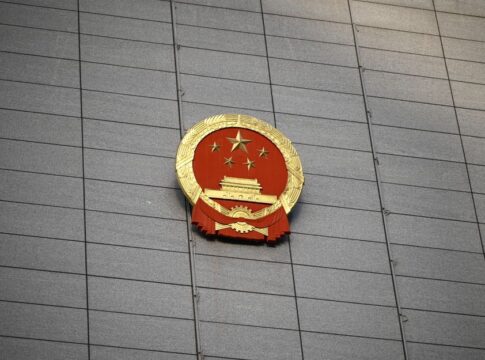
Photo: J.D. Books / Pexels
By Daily American Press Newsroom, National Desk — Published August 27, 2026
Table of Contents
- Key Takeaways on What the US Says Chinese Hackers Accessed
- The Background & Context
- Why This Matters
- Reactions & Analysis
- What Happens Next
- Frequently Asked Questions
Federal authorities have disclosed a sweeping cyber intrusion that penetrated some of America’s most sensitive government institutions. The US says Chinese hackers broke into multiple high-value targets including the Department of Justice, NASA, the Federal Reserve, and the United States Senate, according to court documents that reveal the scope of a state-sponsored espionage campaign.
The breach represents one of the most significant compromises of federal government systems in recent memory. These institutions handle everything from criminal investigations and space exploration to monetary policy and legislative deliberations—making them prime targets for foreign intelligence services seeking American secrets.
Court filings identify the attackers as part of a Chinese state-sponsored hacking group, raising fresh concerns about Beijing’s aggressive cyber operations against American interests. The revelations come as tensions between Washington and Beijing continue to simmer over technology, trade, and national security.
Key Takeaways on What the US Says Chinese Hackers Accessed
- Multiple federal agencies were compromised, including the Department of Justice, NASA, the Federal Reserve, and the US Senate
- Court documents identify the perpetrators as a Chinese state-sponsored hacking group
- The intrusions targeted institutions handling sensitive law enforcement, scientific research, monetary policy, and legislative information
- The disclosure raises serious questions about the security of federal government networks and data protection measures
- The breach adds to growing concerns about Chinese cyber espionage operations targeting American government and private sector entities
The Background & Context
Chinese cyber operations against American targets are nothing new. For more than a decade, US intelligence and law enforcement officials have warned about persistent campaigns by Beijing-backed hackers to steal sensitive information from government agencies, defense contractors, and private companies. What sets this incident apart is the breadth and prestige of the targets.
The Department of Justice sits at the heart of federal law enforcement. It oversees criminal prosecutions, counterintelligence operations, and sensitive investigations that could include cases involving Chinese nationals or interests. Access to DOJ systems could potentially expose ongoing investigations, witness information, and prosecutorial strategies.
NASA represents America’s civilian space program and conducts cutting-edge research in aerospace, satellite technology, and scientific exploration. The agency’s work often has dual-use applications—technologies developed for space can have military or commercial value. Foreign intelligence services have long sought to acquire NASA research to advance their own programs without the cost of independent development.
The Federal Reserve, meanwhile, controls American monetary policy and possesses vast amounts of sensitive economic data. Information from the Fed could provide insights into future interest rate decisions, economic assessments, and financial stability concerns—intelligence that could be exploited for economic advantage or market manipulation.
The Senate breach is particularly troubling. Lawmakers handle classified briefings, draft legislation affecting national security, and communicate about sensitive policy matters. Compromising Senate systems could expose legislative strategies, political intelligence, and confidential communications between elected officials and their staff.
Previous high-profile breaches have demonstrated the vulnerability of government networks. The 2015 Office of Personnel Management hack, also attributed to Chinese actors, exposed personal data of more than 21 million current and former federal employees. The SolarWinds compromise, discovered in 2020, showed how sophisticated adversaries could infiltrate multiple agencies through supply chain attacks.
Why This Matters
This breach strikes at the core of American governance and national security. When foreign adversaries penetrate federal agencies, they don’t just steal data—they gain strategic advantages that can persist for years.
For ordinary Americans, the implications ripple outward in ways both visible and hidden. Justice Department compromises could jeopardize criminal cases, expose confidential informants, or reveal investigative techniques that criminals and hostile nations can then evade. If your tax dollars fund federal law enforcement, you have a stake in whether those agencies can protect their operations from foreign spies.
NASA breaches threaten American leadership in space and technology. The United States has invested billions in space exploration and research. When foreign governments steal that work, they gain years of progress without the investment, undermining American competitive advantages and potentially threatening national security assets in orbit.
Federal Reserve intrusions pose economic risks. Markets operate on information. If foreign actors possess advance knowledge of Fed decisions or internal economic assessments, they can position themselves for profit while American investors and businesses operate in the dark. This creates an uneven playing field that can affect everything from retirement accounts to mortgage rates.
Senate compromises threaten the foundation of democratic governance. Elected officials need to communicate freely with staff, constituents, and each other to craft effective legislation. When those communications are monitored by foreign powers, it corrupts the legislative process and gives adversaries leverage over American policy.
The breach also raises fundamental questions about cybersecurity across the federal government. Despite years of warnings and billions spent on defense, sophisticated attackers continue to penetrate supposedly secure networks. This suggests either inadequate security measures, insufficient resources, or vulnerabilities that current defenses cannot address.
Reactions & Analysis
The disclosure through court documents suggests federal prosecutors are building cases against the perpetrators, though successful prosecution of state-sponsored hackers operating from foreign soil remains notoriously difficult. Previous indictments of Chinese military and intelligence officers have resulted in few arrests, as Beijing refuses to extradite its citizens and the hackers remain beyond US law enforcement reach.
Cybersecurity experts have long warned that government agencies face a resource mismatch against well-funded state adversaries. While private sector companies can offer competitive salaries to attract top security talent, federal pay scales often cannot match those offers. This creates staffing challenges in agencies tasked with defending against sophisticated nation-state threats.
The timing of the disclosure matters. US-China relations remain tense across multiple fronts, from trade disputes to military posturing in the Pacific. Cyber operations exist in a gray zone—aggressive enough to cause real damage but ambiguous enough to avoid triggering military responses. Beijing routinely denies involvement in hacking operations, dismissing US accusations as politically motivated.
Some analysts view these intrusions as part of a broader Chinese strategy to acquire information and technology through any available means. Unlike traditional espionage that might target specific secrets, modern cyber campaigns can vacuum up vast amounts of data for later analysis. This “collect everything” approach means even seemingly mundane information can provide valuable intelligence when combined with other sources.
What Happens Next
Federal agencies will likely conduct extensive damage assessments to determine what information was accessed and how the intrusions occurred. This process can take months or years, as investigators trace the hackers’ movements through networks and catalog compromised systems.
Congress may hold hearings to examine the breaches and question agency officials about security measures. Lawmakers from both parties have expressed concern about Chinese cyber operations, though they often disagree on funding priorities and regulatory approaches to improve cybersecurity.
Diplomatic consequences remain uncertain. The Biden administration has sought to stabilize relations with Beijing while maintaining pressure on issues like technology theft and human rights. These revelations complicate that balancing act, potentially strengthening voices calling for tougher measures against Chinese cyber operations.
The incident will likely accelerate efforts to modernize federal IT systems and improve information sharing about threats. Many government networks run on outdated infrastructure that makes them vulnerable to exploitation. Upgrading these systems requires sustained funding and political will—both often in short supply.
Private sector organizations should take note. If federal agencies with substantial security resources can be compromised, commercial entities face even greater risks. The techniques and tools used against government targets often migrate to attacks on businesses, hospitals, and critical infrastructure.
Frequently Asked Questions
How did Chinese hackers gain access to these federal agencies?
The court documents have not publicly detailed the specific methods used in these intrusions. State-sponsored hacking groups typically employ sophisticated techniques including spear-phishing emails, exploitation of software vulnerabilities, stolen credentials, and supply chain compromises. Federal investigators are likely still determining the full scope of how the attackers penetrated each agency’s networks.
What information did the hackers steal from these agencies?
Authorities have not disclosed the specific data compromised in these breaches. Damage assessments at agencies like the Department of Justice, NASA, Federal Reserve, and Senate can take considerable time as investigators catalog what systems were accessed and what information may have been exfiltrated. The sensitivity of these institutions suggests any stolen data could include classified, proprietary, or strategically valuable information.
Will anyone face prosecution for these cyber intrusions?
The revelation through court documents suggests federal prosecutors are pursuing legal action, though successfully prosecuting state-sponsored hackers operating from China presents enormous challenges. The United States has previously indicted Chinese military and intelligence officers for cyber espionage, but these individuals remain in China, beyond the reach of American law enforcement. Such indictments serve partly as public attribution and deterrence rather than realistic expectations of arrest and trial.
How can federal agencies prevent similar breaches in the future?
Improving federal cybersecurity requires multiple approaches: modernizing aging IT infrastructure, implementing zero-trust security architectures, increasing information sharing about threats, recruiting and retaining skilled cybersecurity professionals, and ensuring adequate funding for defensive measures. However, even well-resourced agencies face determined adversaries with significant capabilities. Complete prevention may be impossible, making rapid detection and response equally important to stopping intrusions before significant damage occurs.
As federal investigators continue their work and agencies strengthen their defenses, this breach serves as a stark reminder that cyberspace remains a contested domain where America’s adversaries operate with impunity. The challenge for policymakers, security professionals, and the public is ensuring that lessons learned translate into meaningful improvements that protect the institutions Americans depend on for justice, exploration, economic stability, and democratic governance.