
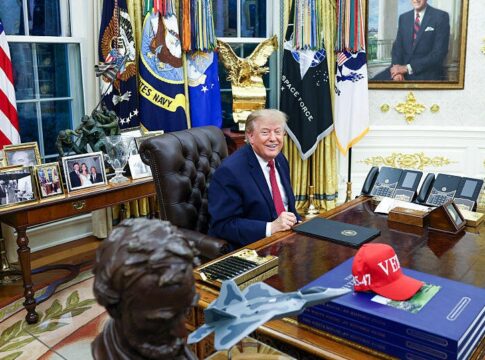
President Trump signed a proclamation designating the Oval Office and Cabinet Room as a national monument on Thursday, marking his first official action following his party’s defeat in Tuesday’s midterm elections. The move aims to preserve the historic spaces but includes significant exceptions that allow future presidents to reverse the decision entirely.
What the Proclamation Actually Does
The declaration does not prevent future administrations from redecorating the iconic office or undoing the monument designation itself. Trump acknowledged this reality while describing the order in sweeping terms, stating the Oval Office would not be “touched by anybody, destroyed, ripped down by stupid people, in order to build something in a slightly different shape.” The proclamation explicitly permits presidents to “redecorate the monument, select furnishings, or make ordinary operational and security modifications” without restriction.
The document requires the Interior Secretary to manage the spaces and mandates “documentation, review, and consideration of alternatives” before major structural changes. Trump claimed any significant alterations would require Congressional approval, though this requirement does not appear in the actual proclamation text. He suggested Congress would prevent changes like making the office square instead of oval, despite his own demolition of the White House East Wing to construct a ballroom.

Political Context and Timing
The proclamation arrives as Democrats prepare increased oversight following their midterm victory. Connecticut Senator Richard Blumenthal immediately sent letters to donors of Trump’s ballroom project, demanding information and threatening enforcement measures. A red baseball cap displaying “VETO” sat prominently on the Resolute Desk during the signing ceremony, acknowledging the power shift in Congress that will likely limit Trump’s legislative agenda moving forward.
Trump has extensively redecorated the Oval Office during his tenure, adding gold wall decorations, portraits, a copy of the Declaration of Independence, and new chandeliers in the Cabinet Room to address what he called “very bad lighting.” His beautification projects have generated multiple lawsuits alleging work proceeded without required approvals.
Constitutional Questions Remain
The preservation effort raises fundamental questions about presidential authority over federal property. Trump himself previously reversed national monument designations made by his predecessors, demonstrating how easily such proclamations can be undone. The National Capital Planning Commission, staffed with Trump allies, voted 8-4 to approve related projects after nine hours of public testimony. However, a federal judge is currently considering whether to block construction of an arch project, highlighting ongoing legal challenges to Trump’s Washington development initiatives.