
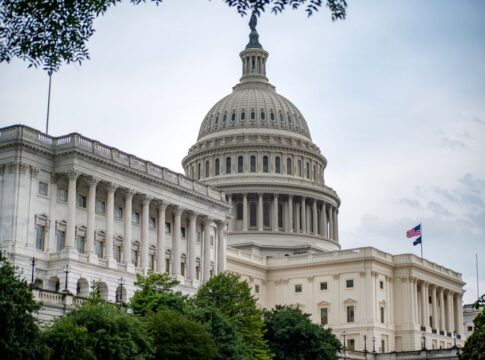
Photo: Ramaz Bluashvili / Pexels
By Daily American Press Newsroom, Politics Desk — Published November 8, 2026
Table of Contents
- Key Takeaways
- The Background & Context
- Why This Matters
- Reactions & Analysis
- What Happens Next
- Frequently Asked Questions
The balance of power in Washington has shifted, and with it, the fate of several high-profile Trump Washington projects hangs in the balance. As Democrats prepare to take control of Congress, ambitious development plans championed by the former president in the nation’s capital appear increasingly vulnerable to legislative roadblocks and renewed scrutiny.
The political landscape has transformed dramatically. What once seemed like viable pathways for federal approval and funding now face formidable obstacles. Democrats, wielding their new congressional majority, hold substantial leverage over projects requiring federal cooperation, permits, or appropriations tied to properties and initiatives bearing the Trump name in the District of Columbia.
This shift represents more than partisan politics. It signals a fundamental recalibration of priorities, oversight mechanisms, and the relationship between private development interests and public resources in the seat of American government.
Key Takeaways
- Trump-affiliated development projects in Washington, D.C. face significant obstacles as Democrats assume congressional control
- The change in legislative power dynamics creates new barriers for projects requiring federal permits, approvals, or cooperation
- A separate judicial matter involves a judge requesting investigation into potential government misconduct in a Trump golf course case
- The political transition affects not only current projects but also the broader relationship between private development and federal oversight
- District of Columbia projects emerge as particularly vulnerable given their dependence on federal collaboration and congressional appropriations
- The situation reflects broader tensions between executive branch initiatives and legislative branch priorities in a divided government
The Background & Context
Washington, D.C. occupies a unique position in American governance. Unlike any state, the District operates under direct congressional oversight. This constitutional arrangement means that major development projects, especially those involving federal land, buildings, or resources, require congressional blessing in ways that projects in other jurisdictions do not.
During periods of unified government, when the president’s party controls Congress, this arrangement facilitates smoother approval processes. Projects aligned with administration priorities can move forward with relative ease. But when control splits, the District becomes a battleground where partisan tensions play out through development decisions.
Trump-branded properties and projects in Washington have long generated controversy. Critics argue they create conflicts of interest when a sitting president maintains financial stakes in properties that benefit from federal proximity, government business, or regulatory decisions. Supporters counter that successful businesspeople shouldn’t be forced to divest from legitimate enterprises simply because they enter public service.
The projects in question span various categories. Some involve redevelopment of federal properties leased to private entities. Others require zoning changes, infrastructure improvements, or regulatory approvals that demand cooperation from agencies subject to congressional oversight and appropriations. Still others depend on maintaining favorable relationships with federal entities that control adjacent land or complementary services.
With Democrats now controlling the legislative agenda, committee chairmanships, and investigative powers, they possess multiple tools to slow, scrutinize, or block projects they view as problematic. Hearings can be convened. Budgets can be restricted. Regulatory appointments can be challenged. The mechanisms of legislative power, when deployed strategically, create formidable obstacles for private developers dependent on federal cooperation.
Why This Matters
This situation extends beyond the fortunes of particular real estate ventures. It raises fundamental questions about governance, accountability, and the appropriate boundaries between public office and private gain.
For American taxpayers, the issue centers on whether federal resources, properties, and regulatory processes serve the public interest or become vehicles for private enrichment. When projects involving current or former officeholders seek federal approval, citizens deserve assurance that decisions reflect merit, not political favoritism or financial entanglement.
The District of Columbia’s residents face their own distinct concerns. As Americans without full congressional representation, D.C. residents often watch helplessly as national politics shape their local landscape. Major development projects affect their neighborhoods, traffic patterns, housing markets, and quality of life, yet final decisions rest with a Congress where they lack voting representation.
Campaign finance and elections also intersect with these development questions. When politicians maintain business interests that benefit from their official positions, it complicates the relationship between donors, officeholders, and policy outcomes. Voters struggle to discern whether legislative actions reflect constituent interests or personal financial calculations.
The precedent matters too. How Congress handles projects associated with former presidents establishes norms for future administrations. Strict oversight and conflict-of-interest enforcement send signals about acceptable behavior. Lax standards invite abuse.
Reactions & Analysis
According to reports, judicial scrutiny has intensified around Trump-related matters beyond just Washington development projects. A federal judge has requested that a former U.S. attorney investigate whether government lawyers misled the court in a case involving a Trump golf course, suggesting broader concerns about transparency and truthfulness in matters touching the former president’s business empire.
This judicial development adds another dimension to the challenges facing Trump-affiliated projects. When courts question government candor in related proceedings, it undermines confidence in regulatory processes and invites heightened skepticism of approvals already granted or currently pending.
Democratic lawmakers, now chairing key oversight committees, have signaled their intention to examine financial arrangements involving former administration officials. While specific statements about individual D.C. projects remain limited, the overall posture suggests rigorous scrutiny ahead.
Republican members, meanwhile, face a delicate balancing act. Supporting constituents who value private enterprise and oppose what they view as political persecution must be weighed against maintaining institutional credibility and avoiding the appearance of favoritism toward wealthy donors or former party leaders.
Good governance advocates see this moment as an opportunity to strengthen ethics frameworks and conflict-of-interest protections. They argue that clearer rules, consistently enforced, serve everyone’s long-term interests by maintaining public trust in governmental institutions.
What Happens Next
The immediate future likely brings increased congressional oversight. Committee hearings will examine specific projects, scrutinizing approval processes, financial arrangements, and potential conflicts of interest. Document requests will flow to federal agencies involved in permitting or regulating Trump-affiliated developments.
Some projects may face direct legislative action. Congress could attach riders to appropriations bills restricting funds for particular initiatives. Zoning or land-use decisions affecting D.C. properties could be revisited through congressional intervention in District governance.
Legal challenges represent another probable avenue. Competitors, advocacy groups, or District residents may file lawsuits questioning approvals granted during the previous administration. Discovery processes in such litigation could reveal previously undisclosed communications or considerations that influenced decisions.
The broader political calendar matters too. With presidential campaign season approaching, these issues may become focal points in debates about ethics, accountability, and the proper relationship between wealth and power. Candidates will face pressure to articulate positions on conflicts of interest and government integrity.
For the projects themselves, delays accumulate costs. Construction timelines slip. Financing arrangements face renegotiation. Partners reconsider commitments. Even projects that ultimately proceed may find their economics fundamentally altered by the changed political environment.
Frequently Asked Questions
Why does Congress have power over Washington, D.C. development projects?
The U.S. Constitution grants Congress exclusive jurisdiction over the District of Columbia. This means that unlike state and local governments elsewhere, D.C. operates under direct congressional oversight. Major development projects, especially those involving federal land or requiring significant infrastructure support, typically need congressional approval or cooperation, giving legislators substantial influence over what gets built in the nation’s capital.
What specific Trump Washington projects are affected?
While the sources reference Trump-affiliated projects in the District of Columbia broadly, specific project details are not enumerated in the available reporting. The vulnerability stems from any development requiring federal permits, approvals, or cooperation, particularly those involving properties leased from the federal government or requiring congressional appropriations for related infrastructure or services.
How does the golf course investigation relate to D.C. projects?
The judicial request for investigation into potential government misconduct in a Trump golf course case, while separate from specific Washington development projects, creates a broader climate of scrutiny around Trump business dealings and government interactions. When courts question whether officials have been truthful in related matters, it intensifies oversight and skepticism regarding all projects involving similar parties or approval processes.
Can Democrats completely block these projects?
Democrats possess significant tools to slow or obstruct projects requiring federal cooperation, but outright blocking depends on specific circumstances. They control committee agendas, investigative powers, and appropriations processes. However, projects with existing approvals, private financing, and minimal ongoing federal involvement may prove more resistant to congressional intervention than those requiring new permits or continued government support.
The collision between politics and development in Washington, D.C. will continue playing out across legislative sessions, courtrooms, and construction sites. For citizens watching this unfold, the fundamental question remains whether our institutions can balance legitimate private enterprise against the imperative that public resources serve public purposes, not private enrichment. The answer will shape not just individual projects, but the integrity of governance itself.