
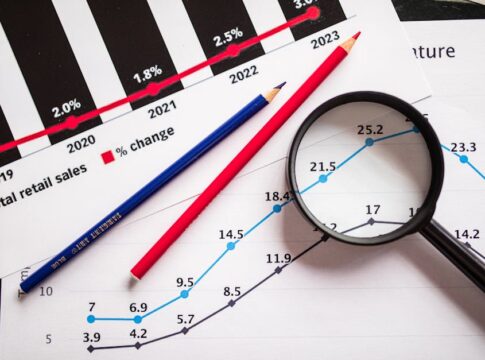
Economic Forecast Predicts Major Changes
Leading financial institutions and economic research organizations have released comprehensive forecasts indicating that significant transformations are expected to reshape the global economic landscape in the coming years. These predictions, based on extensive data analysis and current market trends, suggest that businesses, governments, and individuals should prepare for substantial shifts in economic conditions that will affect everything from employment patterns to international trade relationships.
Key Indicators Pointing Toward Transformation
Economic analysts have identified several critical indicators that form the foundation of these predictions. Inflation rates, which have been a central concern for policymakers worldwide, are expected to stabilize but at levels higher than the pre-pandemic era. Central banks across major economies have signaled their commitment to maintaining vigilant monetary policies, with interest rate adjustments remaining a primary tool for managing economic stability.
The labor market is projected to undergo significant restructuring as automation and artificial intelligence continue to penetrate various industries. While this technological advancement promises increased productivity, it also raises questions about workforce adaptation and the need for comprehensive retraining programs. Economists estimate that millions of workers will need to acquire new skills to remain competitive in an increasingly digital economy.
Global Trade Dynamics in Flux
International trade patterns are anticipated to shift dramatically as geopolitical tensions and supply chain vulnerabilities prompt countries to reassess their economic dependencies. The concept of “friend-shoring” or “near-shoring” has gained traction, with nations prioritizing trade relationships with allies and neighbors over distant partners, even if it means accepting higher costs in the short term.
Regional Economic Blocs
Forecasts suggest the strengthening of regional economic cooperation as countries seek to reduce exposure to global disruptions. Trade agreements within specific geographic areas are expected to deepen, creating more integrated economic zones that can better withstand international turbulence. This regionalization trend represents a departure from the hyper-globalization that characterized the previous decades.
Emerging Market Opportunities
Despite challenges in established economies, forecasters highlight substantial growth potential in emerging markets. Several developing nations are positioned to capitalize on demographic advantages, natural resource wealth, and increasing technological adoption. Countries in Southeast Asia, parts of Africa, and Latin America are expected to experience accelerated economic development, potentially reshaping the balance of global economic power.
These emerging economies present opportunities for international investment and partnership, though they also come with unique risks related to political stability, regulatory environments, and infrastructure development. Sophisticated investors are already repositioning their portfolios to capture growth in these dynamic markets while managing associated uncertainties.
Energy Transition and Economic Implications
The global shift toward renewable energy sources represents one of the most significant economic transformations on the horizon. Forecasts indicate that investment in green technology and sustainable infrastructure will reach unprecedented levels, creating new industries and employment sectors while disrupting traditional energy markets.
Investment Requirements
Estimates suggest that trillions of dollars will need to be invested annually to achieve climate targets while maintaining economic growth. This massive capital reallocation will affect virtually every sector of the economy, from manufacturing and transportation to construction and agriculture. Countries that successfully navigate this transition are expected to gain competitive advantages in emerging green industries.
Technology-Driven Economic Evolution
The rapid advancement of digital technologies continues to be a primary driver of economic change. Artificial intelligence, blockchain technology, quantum computing, and advanced robotics are not merely incremental improvements but transformative forces that will redefine business models and create entirely new economic sectors.
- Financial services are being revolutionized by fintech innovations and digital currencies
- Healthcare delivery is becoming increasingly digital and personalized
- Manufacturing is evolving toward smart factories with minimal human intervention
- Retail continues its transformation with immersive online experiences
- Education is being reimagined through digital platforms and AI-powered personalization
Demographic Shifts and Economic Consequences
Population aging in developed economies presents both challenges and opportunities. Healthcare and retirement services sectors are expected to expand significantly, while labor shortages in certain industries may intensify. Conversely, younger populations in developing regions will drive consumption growth and provide workforce advantages.
Migration patterns are also predicted to influence economic outcomes substantially. Countries with favorable immigration policies may benefit from talent acquisition and demographic balance, while those with restrictive approaches could face labor shortages and reduced innovation capacity.
Fiscal Policy Challenges
Governments worldwide face difficult fiscal decisions as they balance competing priorities. High levels of public debt accumulated during recent crises will constrain policy flexibility, while demands for social spending, infrastructure investment, and defense expenditures continue to grow. Economists warn that fiscal sustainability will become an increasingly pressing concern, particularly as interest rates remain elevated compared to the previous decade.
Tax Policy Evolution
Significant changes in taxation frameworks are anticipated as governments seek new revenue sources and address concerns about inequality. Digital taxation, carbon pricing, and wealth taxes are among the mechanisms being considered or implemented in various jurisdictions. These policy shifts will affect business strategies and individual financial planning.
Preparing for Economic Transformation
The forecasted economic changes demand proactive responses from all stakeholders. Businesses must embrace flexibility and innovation to remain competitive in rapidly evolving markets. Governments need to implement forward-looking policies that facilitate adaptation while protecting vulnerable populations. Individuals should focus on developing versatile skills and maintaining financial resilience.
While uncertainty inevitably accompanies major economic transitions, understanding the directional trends enables better preparation and positioning. The consensus among economists is that those who anticipate and adapt to these changes will find opportunities for growth and success, while those who resist transformation may face significant challenges in the evolving economic landscape.