
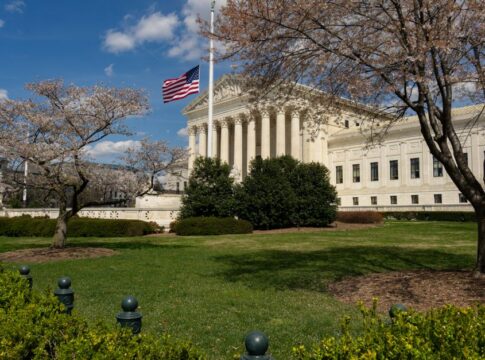
The Supreme Court delivered Republicans a critical win just weeks before the November midterms, blocking a lower court ruling that would have stripped party committees of discounted broadcast advertising rates worth millions of dollars in competitive races.
Multi-Million Dollar Stakes Before Elections
The National Republican Congressional Committee had already reserved $10.8 million in television advertisements across 23 House races this month when the legal challenge threatened to unravel their media strategy. In an unsigned emergency decision, the Supreme Court halted a Fourth Circuit Appeals Court ruling that prohibited political party committees from accessing favorable broadcast rates normally reserved for candidates. The justices determined the appeals court likely lacked jurisdiction to address the Federal Communications Commission policy challenge brought by Democratic candidates.
The high court emphasized that GOP committees faced immediate harm as broadcasters were already withdrawing favorable rates following the lower court decision. Republican party committees must now pay substantially more for advertising space during the critical final weeks before voters head to the polls, the justices noted. The court declared this injury implicates First Amendment rights to speak and coordinate political activities freely, with damage that cannot be remedied through post-election refunds or reimbursements.
Democrats Challenge FCC Guidance
The dispute centers on broadcast rates charged for political advertisements in the 60-day window before federal elections. Federal law requires stations to offer candidates and campaign committees discounted rates known as the lowest unit charge during this crucial period. In March, an FCC component issued guidance directing broadcasters to extend these favorable rates to joint fundraising committees and political parties spending in coordination with candidates.
Four Democratic candidates, including Senator Jon Ossoff of Georgia, Representative Kristen McDonald Rivet of Michigan, Sherrod Brown of Ohio, and Roy Cooper of North Carolina, challenged the policy after the FCC took no immediate action on their review request. The Fourth Circuit sided with Democrats in a divided 2-1 decision last month, ruling the FCC guidance unlawful because discounted rates should only apply to candidates themselves, not party committees or joint fundraising operations.
What This Means
Justice Ketanji Brown Jackson stood alone in dissent from the emergency relief. Roy Cooper’s North Carolina Senate campaign immediately criticized the ruling, with campaign manager Jeff Allen claiming the court ignored clear statutory language to provide massive television ad discounts benefiting wealthy donors. The decision allows Republican committees to proceed with tens of millions in planned advertising at reduced rates through Election Day, potentially shifting the financial landscape in closely contested races nationwide.