
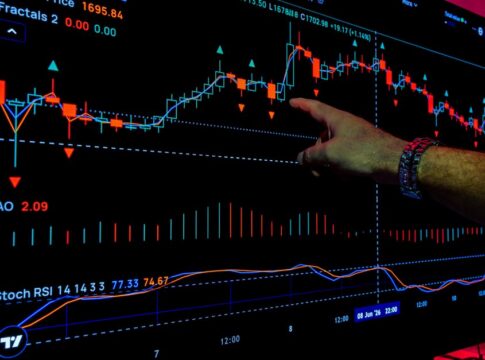
Photo: Rafael Minguet Delgado / Pexels
By Daily American Press Newsroom, Economy Desk — Published November 5, 2026
Table of Contents
- Key Takeaways
- The Background & Context
- Why This Matters
- Reactions & Analysis
- What Happens Next
- Frequently Asked Questions
Wall Street is riding high on optimism, but a growing chorus of economists and market analysts warn that investors expecting much from current political and economic conditions may be setting themselves up for disappointment. The Dow Jones Industrial Average recently posted its biggest gain of the year following Democrats taking control of Congress, fueling hopes for new stimulus measures and economic support. Yet beneath the celebratory headlines lies a more complex reality about what markets can realistically deliver in an environment shaped by inflation pressures, interest rate uncertainty, and persistent economic headwinds.
The disconnect between market exuberance and economic fundamentals raises urgent questions for American savers, retirees, and anyone with a 401(k). Are stock valuations justified by underlying corporate performance and economic growth? Or has enthusiasm outpaced reality?
This tension matters deeply. Millions of Americans depend on market returns for retirement security. Inflated expectations can lead to poor investment decisions, excessive risk-taking, and painful corrections that erode household wealth. Understanding what’s driving current market sentiment—and whether it’s sustainable—is essential for anyone trying to build long-term financial security in uncertain times.
Key Takeaways
- The Dow Jones Industrial Average recorded its largest single-day gain of the year after Democrats assumed control of Congress, reflecting investor optimism about potential policy changes.
- Economists caution that Wall Street may be expecting too much from a Democratic Congress, suggesting market enthusiasm could outstrip realistic policy outcomes.
- Broader questions are emerging about whether investors are harboring unrealistic expectations about stock market returns given current economic conditions.
- The debate highlights tensions between political optimism and economic fundamentals including inflation, interest rates, and jobs data.
- Retail and institutional investors face critical decisions about portfolio positioning amid conflicting signals from Washington and economic indicators.
- The situation underscores the risks of allowing political narratives to override sound investment analysis and risk management.
The Background & Context
Stock markets have long responded to political shifts in Washington. Investors parse election results, congressional composition, and policy proposals for clues about future corporate profits, tax policy, and regulatory environments. This pattern has accelerated in recent years as government intervention in the economy has grown more substantial and more frequent.
The recent surge in the Dow following Democratic control of Congress reflects expectations that the new political alignment will produce legislation favorable to economic growth and corporate earnings. Investors have historically anticipated that Democratic majorities might deliver infrastructure spending, clean energy investments, and expanded social programs—all of which could stimulate economic activity and boost certain sectors.
But the economy these policies would enter is vastly different from past recoveries. Inflation has proven more persistent than many forecasters predicted. The Federal Reserve has responded with interest rate adjustments that make borrowing more expensive for businesses and consumers alike. Jobs data sends mixed signals, with some sectors showing strength while others struggle. Supply chain disruptions, though improved from their pandemic peaks, continue to create uncertainty for manufacturers and retailers.
Against this backdrop, the fundamental question is whether political changes can overcome these structural economic challenges. Can congressional action genuinely move the needle on inflation? Will new spending programs boost growth without exacerbating price pressures? These are not simple questions, and the answers will determine whether current market optimism is justified or misplaced.
Why This Matters
The stakes extend far beyond Wall Street trading floors. Approximately 58 percent of American households own stock either directly or through retirement accounts. When markets rise on unfounded optimism, subsequent corrections don’t just hurt hedge fund managers—they diminish the retirement security of teachers, nurses, factory workers, and small business owners across the country.
Inflated market expectations create several specific risks for ordinary Americans. First, they can encourage excessive risk-taking as investors chase returns that may not materialize. Second, they can lead to misallocation of capital, with money flowing to sectors or companies based on political narratives rather than business fundamentals. Third, they set the stage for sharp corrections that can trigger panic selling and lock in losses for those who need to access their savings.
The broader economy also suffers when market expectations diverge from reality. Consumer confidence often tracks stock market performance, and overconfident consumers may increase spending beyond sustainable levels. Businesses making investment decisions based on overly rosy market signals may expand too aggressively, only to face painful contractions later.
For policymakers, the challenge is managing expectations while delivering substantive economic support. If Congress cannot meet the ambitious hopes now priced into markets, the resulting disappointment could trigger volatility that undermines genuine economic progress. This creates a feedback loop where political leaders face pressure to overpromise, markets overreact, and eventual reality checks create instability.
Reactions & Analysis
Economic analysts have begun sounding notes of caution about the enthusiasm gripping markets. The warning that Wall Street may be expecting too much from a Democratic Congress reflects concerns that investors are overestimating both the speed and scope of legislative action. Even when one party controls both chambers, the legislative process remains complex, requiring compromise, negotiation, and time.
Political realities impose constraints that markets sometimes ignore. Narrow majorities limit what can pass without bipartisan support. Budget rules restrict certain types of spending. Competing priorities within parties create internal divisions. And the courts can block or delay implementation of new policies. None of these factors typically feature in the optimistic scenarios that drive market rallies.
The broader question about whether investors are expecting too much from the stock market altogether reflects deeper concerns about valuations and return assumptions. For years, historically low interest rates made stocks attractive relative to bonds, pushing valuations to elevated levels. As interest rates rise to combat inflation, that calculus changes. The same stock that looked reasonably priced when bonds yielded two percent appears expensive when bonds yield five percent.
Some market observers note that corporate earnings growth, while solid in many sectors, may not justify current price levels if economic growth slows. Others point to geopolitical risks, from trade tensions to international conflicts, that could disrupt supply chains and corporate profits. Still others worry about consumer debt levels and whether spending can remain robust if unemployment rises or wages stagnate.
Not everyone shares these concerns. Market bulls argue that American companies remain innovative and profitable, that productivity gains will support earnings growth, and that political dysfunction is already priced into current valuations. They contend that pessimists consistently underestimate the resilience of the U.S. economy and the capacity of markets to adapt to changing conditions.
What Happens Next
The coming months will test whether current market optimism can withstand contact with political and economic reality. Congressional action on major legislation will provide early signals about whether Washington can deliver the policies investors anticipate. Economic data on inflation, employment, and growth will reveal whether the underlying economy can support elevated stock valuations.
Interest rate decisions by the Federal Reserve will prove critical. If inflation moderates and allows the Fed to pause or reverse rate increases, that could support stock prices and validate current optimism. If inflation persists and requires continued monetary tightening, markets may need to reset expectations downward. The interplay between fiscal policy from Congress and monetary policy from the Fed will shape the investment landscape for years to come.
Investors face difficult decisions about portfolio positioning. Those who believe expectations have run ahead of reality may reduce equity exposure or shift to more defensive sectors. Those who see current optimism as justified may maintain or increase stock allocations. Most will likely fall somewhere in between, trying to balance opportunity against risk in an uncertain environment.
For the broader economy, the resolution of this tension between expectations and reality will influence business investment, consumer spending, and employment. If markets adjust smoothly to more realistic assumptions, the economic impact may be modest. If adjustment comes through sharp corrections and volatility, the effects could ripple through the real economy, affecting jobs and incomes far from Wall Street.
Frequently Asked Questions
Why do stock markets react so strongly to political changes?
Stock markets respond to political shifts because government policies directly affect corporate profits through taxation, regulation, spending programs, and trade policy. Investors try to anticipate these changes and position portfolios accordingly. When political control shifts, it signals potential changes in the policy environment that could help or hurt different industries and companies. However, markets often overreact to political news, pricing in best-case or worst-case scenarios that may not materialize given the complexities of the legislative process.
How can individual investors protect themselves from inflated market expectations?
Individual investors can protect themselves by maintaining diversified portfolios across different asset classes, sectors, and geographies rather than concentrating in areas driven by political enthusiasm. Regular rebalancing helps lock in gains and maintain appropriate risk levels. Avoiding the temptation to chase performance or time the market based on political news reduces the risk of buying high and selling low. Working with financial advisors and maintaining a long-term perspective focused on fundamentals rather than headlines provides additional protection against volatility driven by unrealistic expectations.
What role does inflation play in stock market valuations?
Inflation affects stock valuations through multiple channels. Higher inflation typically leads to higher interest rates, which make bonds more attractive relative to stocks and increase the discount rate used to value future corporate earnings. Inflation can squeeze corporate profit margins if companies cannot pass higher costs to customers. However, some companies benefit from inflation if they have pricing power or own assets that appreciate with rising prices. The relationship between inflation and stock returns is complex and varies by sector, making inflation a critical factor investors must consider when evaluating whether current market levels are justified.
Can government policy really change the trajectory of the stock market?
Government policy can influence stock market performance through fiscal stimulus, tax changes, regulatory decisions, and infrastructure investment that affect economic growth and corporate profitability. However, the impact is often more limited and slower than markets initially expect. Policy must work through the legislative process, survive legal challenges, and then be implemented—all of which takes time. Moreover, policy operates within constraints imposed by inflation, debt levels, and global economic conditions. While government action matters, it cannot override fundamental economic forces or guarantee market returns, making it risky to invest based primarily on political expectations rather than business fundamentals.
As markets digest political changes and economic data in the weeks ahead, the gap between expectation and reality will narrow. Investors who recognize the limits of what politics can deliver—and who ground their decisions in sober analysis rather than enthusiasm—will be better positioned to weather whatever comes next. The lesson, as always, is that sustainable returns come from understanding value, not from chasing headlines.