
Quick Insight: Augmented Reality Apps
Augmented reality (AR) technology has transformed from a futuristic concept into a practical tool that millions of people use daily. By overlaying digital information onto the physical world, AR apps create enhanced experiences that blend virtual elements with real-world environments. This technology has found applications across numerous industries, fundamentally changing how consumers shop, learn, work, and entertain themselves.
Understanding Augmented Reality Technology
Augmented reality apps use smartphone cameras, sensors, and processing power to detect the physical environment and superimpose computer-generated images, text, or animations onto the real world. Unlike virtual reality, which creates entirely immersive digital environments, AR enhances the existing physical world by adding layers of digital information. This distinction makes AR more accessible, as it requires only a smartphone or tablet rather than specialized headsets or equipment.
The technology relies on several key components working in harmony. Computer vision algorithms analyze the camera feed to identify surfaces, objects, and spatial relationships. Simultaneous localization and mapping (SLAM) technology helps devices understand their position in three-dimensional space. Depth-tracking sensors measure distances to create accurate placement of virtual objects, while motion sensors ensure digital elements remain stable as users move their devices.
Categories of Augmented Reality Applications
Retail and E-Commerce
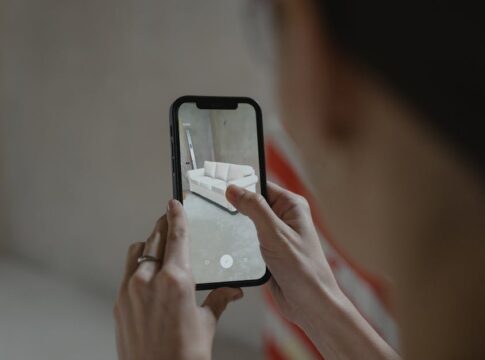
The retail sector has embraced AR technology to bridge the gap between online and in-store shopping experiences. Furniture retailers now offer apps that allow customers to visualize how products will look in their homes before making purchases. Cosmetics brands provide virtual try-on features, enabling users to test makeup shades and styles without physical application. Fashion retailers have implemented virtual fitting rooms where customers can see how clothing items fit their body types. These applications reduce return rates, increase customer confidence, and create more engaging shopping experiences.
Education and Training
Educational institutions and training programs leverage AR apps to create interactive learning experiences. Medical students can examine three-dimensional anatomical models from all angles, enhancing their understanding of complex biological systems. History students can view virtual reconstructions of ancient civilizations overlaid on archaeological sites. Technical training programs use AR to provide step-by-step guidance for equipment maintenance and repair, reducing errors and improving skill retention. These applications make abstract concepts tangible and provide hands-on experience in safe, controlled environments.
Navigation and Wayfinding
Navigation apps incorporating AR technology provide more intuitive guidance by overlaying directional arrows and markers directly onto real-world views. Users can hold up their phones to see exactly which direction to walk, which building houses their destination, or where to turn at complex intersections. Indoor navigation systems help visitors find their way through airports, shopping malls, and large facilities by displaying arrows and information on their screens as they move through spaces.
Gaming and Entertainment
The entertainment industry has produced some of the most popular AR applications, with games that encourage players to explore their physical surroundings while interacting with virtual elements. These applications have demonstrated AR’s potential for mass adoption, introducing millions of users to the technology. Beyond gaming, AR apps enable users to place virtual art installations in their environments, create animated messages, and experience interactive storytelling.
Industrial and Professional Use
Professional sectors utilize AR apps to improve efficiency and accuracy in complex tasks. Manufacturing facilities use AR guidance systems to assist workers in assembly processes, reducing errors and training time. Maintenance technicians access repair information overlaid directly on equipment, providing contextual guidance without requiring them to consult separate manuals. Architecture and construction professionals visualize building designs on actual sites, helping stakeholders understand projects before construction begins.
Key Benefits of AR Applications
Augmented reality apps deliver several significant advantages across different use cases. They provide contextual information precisely when and where users need it, eliminating the need to switch between physical tasks and reference materials. The technology enhances decision-making by allowing users to preview outcomes before committing to choices, whether selecting furniture, planning renovations, or learning new procedures.
AR applications also increase engagement and retention compared to traditional methods. The interactive, visual nature of AR experiences creates memorable interactions that help users better understand and remember information. Additionally, these apps democratize access to experiences that might otherwise require expensive equipment, travel, or specialized facilities.
Technical Considerations and Limitations
Despite rapid advancement, AR applications face several technical challenges. Battery consumption remains a significant concern, as AR apps require continuous use of cameras, sensors, and processors. Processing power limitations can affect the complexity and realism of virtual elements, particularly on older devices. Lighting conditions impact tracking accuracy, with poor lighting potentially degrading the AR experience.
Network connectivity also plays a crucial role, especially for apps that download 3D models or process data in the cloud. Privacy concerns arise as AR apps require camera access and may collect environmental data. Developers must address these considerations while creating applications that balance functionality with user experience and privacy protection.
Future Developments
The augmented reality landscape continues evolving rapidly. Advances in hardware capabilities, including improved sensors and processors, will enable more sophisticated applications with better tracking and more realistic virtual elements. The development of AR glasses and wearable devices promises hands-free experiences that feel more natural than holding up smartphones.
Artificial intelligence integration will make AR apps smarter, enabling them to recognize objects more accurately and provide more relevant contextual information. Cloud computing will offload processing demands, allowing more complex AR experiences on less powerful devices. As 5G networks become widespread, real-time collaborative AR experiences will become more feasible, enabling multiple users to interact with shared virtual elements simultaneously.
Conclusion
Augmented reality apps represent a significant technological shift in how people interact with digital information and their physical environments. From practical applications in retail and education to entertainment and professional use, AR technology continues expanding into new domains. As technical capabilities improve and developers discover innovative use cases, augmented reality applications will become increasingly integral to daily life, offering enhanced experiences that seamlessly blend digital convenience with physical reality.