
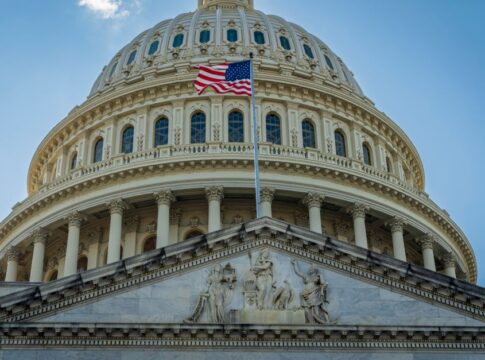
Photo: Mark Stebnicki / Pexels
By Daily American Press Newsroom, Politics Desk — Published September 30, 2026
Table of Contents
- Key Takeaways
- The Background & Context
- Why This Matters
- Reactions & Analysis
- What Happens Next
- Frequently Asked Questions
The U.S. Senate has approved the Protect College Sports Act of 2026, marking a significant legislative milestone in Congress’s effort to address the escalating chaos in college athletics. The bill now faces an uncertain path forward as it heads to the House of Representatives, where its fate remains unclear amid competing political priorities and divergent views on federal intervention in collegiate sports.
This legislation represents one of the most ambitious attempts by federal lawmakers to impose order on a college sports landscape that has been transformed by name, image, and likeness compensation and the transfer portal. The Senate’s passage follows months of debate over whether Washington should step into what has traditionally been the domain of the National Collegiate Athletic Association and individual universities.
For millions of American families with college-bound student-athletes, taxpayers who fund public universities, and sports fans who follow collegiate competition, the bill’s journey through Congress carries profound implications for the future structure of amateur athletics in the United States.
Key Takeaways
- The Senate has passed the Protect College Sports Act of 2026, advancing federal legislation designed to regulate college athletics
- The bill now moves to the House of Representatives, where its prospects for passage remain uncertain
- This legislation aims to address the disruption caused by recent changes in college sports, including athlete compensation and transfer rules
- The measure represents a rare bipartisan effort to bring federal oversight to an area traditionally governed by the NCAA
- Multiple news outlets have questioned what specific provisions the Senate bill contains and how it would actually stop the current instability in college sports
- The bill’s future depends on House action during a politically charged period with competing legislative priorities
The Background & Context
College sports in America have undergone seismic shifts in recent years. The traditional model—where athletes competed for scholarships and education while generating billions in revenue for their schools—began crumbling after a series of court decisions and NCAA policy changes.
The Supreme Court‘s 2021 ruling in NCAA v. Alston opened the door to athletes receiving education-related benefits. Shortly thereafter, the NCAA adopted interim policies allowing student-athletes to profit from their name, image, and likeness. This created a patchwork of state laws and institutional policies across the country, with no uniform standards.
Simultaneously, the transfer portal expanded, allowing athletes to switch schools with greater ease. Critics argue these changes have created a free-agency system that destabilizes team rosters and undermines the educational mission of college athletics. Supporters counter that athletes deserve compensation for the value they create and the freedom to control their own careers.
The chaos has been particularly acute in high-profile sports like football and basketball. Coaches complain about roster instability. University administrators worry about competitive balance. Smaller schools fear they cannot compete with wealthier programs in bidding for talent. Meanwhile, athletes navigate a confusing landscape with few protections or clear rules.
Against this backdrop, Congress has considered various proposals to establish federal standards. Some lawmakers want to preserve the amateur model while providing limited athlete compensation. Others advocate for more sweeping reforms that would treat college athletes more like employees. Still others question whether federal intervention is appropriate at all.
Why This Matters
The Senate’s passage of this legislation carries weight far beyond the sports pages. College athletics are woven into the fabric of American higher education, affecting institutions that serve millions of students and receive substantial public funding.
For taxpayers, the stakes are clear. Public universities use state and federal dollars to support athletic programs. When those programs face instability or legal challenges, the financial consequences can ripple through entire university systems. Federal legislation could establish clear rules that protect institutions from costly litigation and provide predictability for budget planning.
Student-athletes themselves face uncertain futures under the current system. Without consistent national standards, their rights and opportunities vary dramatically depending on which state they attend school in. Some athletes have secured lucrative endorsement deals, while others struggle to understand what compensation they can legally receive. A federal framework could level the playing field and ensure basic protections.
The legislation also touches on questions of fairness and equity. Women’s sports advocates worry that name, image, and likeness deals will primarily benefit male athletes in revenue-generating sports, widening existing gender disparities. Minority athletes, who make up a disproportionate share of participants in major sports programs, have particular stakes in ensuring any new system provides genuine opportunities rather than exploitation.
For communities across America, college sports represent cultural touchstones and economic engines. Game days bring thousands of visitors to college towns, supporting local businesses. Alumni donations often flow to athletic programs before academic departments. How Congress regulates this ecosystem will shape the character of countless communities.
Reactions & Analysis
The Senate’s action has generated mixed reactions across the political spectrum and among stakeholders in college athletics. While specific public statements were not detailed in available reports, the bill’s advancement suggests it garnered sufficient bipartisan support to overcome procedural hurdles in the chamber.
The NCAA has long sought congressional intervention to establish uniform national standards, arguing that the current state-by-state patchwork is unworkable. University presidents and athletic directors have similarly called for federal legislation to provide clarity and protection from conflicting state laws.
However, athlete advocacy groups have expressed concerns about any legislation that might limit compensation opportunities or restrict athlete mobility. These organizations argue that after decades of exploitation, college athletes deserve maximum freedom and earning potential.
Legal experts have questioned whether Congress has the constitutional authority to regulate college sports in the manner proposed, and whether any federal legislation can withstand judicial scrutiny given recent Supreme Court skepticism toward NCAA restrictions on athlete compensation.
The uncertainty surrounding the bill’s contents—as reflected in media coverage questioning what provisions it actually includes—suggests that public understanding of the legislation remains limited. This lack of clarity may complicate efforts to build broader support as the measure moves to the House.
What Happens Next
The House of Representatives now becomes the critical battleground for this legislation. Unlike the Senate, where the bill evidently secured passage, the House faces a different political calculus with distinct priorities and pressures.
House leadership must decide whether to bring the Senate bill to the floor as written, amend it, or allow it to languish without action. During an election cycle and amid competing legislative demands, college sports may struggle to command floor time unless leadership makes it a priority.
If the House passes a different version of the bill, the two chambers would need to reconcile their differences through a conference committee—a process that can take months and offers opportunities for opponents to derail the legislation.
Even if Congress ultimately passes the Protect College Sports Act, implementation will present challenges. Federal agencies will need to write regulations, universities will need to adjust their compliance systems, and courts will likely hear challenges to various provisions.
The NCAA and conferences may also continue their own reform efforts in parallel, creating potential conflicts between federal law and athletic association rules. State legislatures that have already passed their own name, image, and likeness laws may resist federal preemption.
For college athletes, coaches, and administrators, the coming months will bring continued uncertainty. Recruiting cycles, transfer decisions, and endorsement deals all hang in the balance as stakeholders await clarity on what rules will ultimately govern college sports.
Frequently Asked Questions
What is the Protect College Sports Act of 2026?
The Protect College Sports Act of 2026 is federal legislation recently passed by the U.S. Senate that aims to establish national standards for college athletics. While specific provisions have not been fully detailed in public reporting, the bill is designed to address disruptions in college sports caused by recent changes in athlete compensation rules and transfer policies. It represents Congress’s effort to bring federal oversight to an area traditionally governed by the NCAA and individual states.
Why does Congress want to regulate college sports?
Congress has become involved because the current system of state-by-state regulations has created chaos and inconsistency in college athletics. After court decisions and NCAA policy changes allowed athletes to profit from their name, image, and likeness, different states adopted different rules, making it difficult for universities to operate consistently across state lines. Federal legislation could establish uniform national standards, provide legal clarity for institutions, and ensure basic protections for student-athletes regardless of where they attend school.
Will the House of Representatives pass this bill?
The bill’s fate in the House remains uncertain. While the Senate approved the legislation, the House operates under different political dynamics and may have different priorities. House leadership will need to decide whether to bring the bill to the floor, and individual members may have concerns about specific provisions or the broader question of federal intervention in college sports. The outcome will depend on negotiations among House members, leadership decisions, and competing legislative priorities in the coming weeks and months.
How would this legislation affect college athletes?
The impact on college athletes will depend on the specific provisions in the final legislation. The bill could establish uniform rules for name, image, and likeness compensation, potentially providing clearer guidelines for athletes seeking endorsement deals. It might also address transfer rules and other aspects of athlete mobility. However, depending on how the legislation is structured, it could either expand athlete opportunities and protections or impose new restrictions. Athlete advocacy groups are closely monitoring the bill to ensure it serves student interests rather than limiting their rights.
As this legislation moves through the congressional process, Americans across the political spectrum will be watching to see whether federal lawmakers can bring order to college sports without stifling opportunity for student-athletes. The House’s decision in the coming weeks will determine whether this Senate action represents a turning point or merely another chapter in the ongoing struggle to define the future of collegiate athletics.