
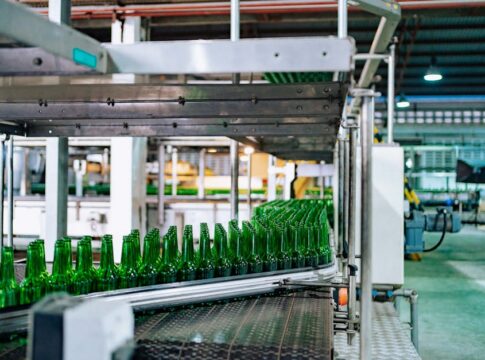
Supply Chain Automation Reduces Human Labor Reliance
The global supply chain landscape is undergoing a fundamental transformation as businesses increasingly adopt automation technologies to streamline operations, reduce costs, and improve efficiency. This shift toward automation is significantly reducing the reliance on human labor across various stages of the supply chain, from warehousing and inventory management to transportation and last-mile delivery. As organizations face mounting pressure to meet consumer demands for faster delivery times and greater transparency, automation has emerged as a critical solution that is reshaping the future of logistics and distribution.
The Driving Forces Behind Supply Chain Automation
Several factors are accelerating the adoption of automation technologies in supply chain operations. Labor shortages in key markets have become a persistent challenge, particularly in developed economies where warehouse and distribution center positions are increasingly difficult to fill. The COVID-19 pandemic further exposed vulnerabilities in traditional supply chain models that depend heavily on human labor, prompting companies to seek more resilient and flexible solutions.
Additionally, the exponential growth of e-commerce has created unprecedented demands for speed and accuracy in order fulfillment. Consumers now expect same-day or next-day delivery, leaving little room for the inefficiencies inherent in manual processes. Automation technologies offer the precision and speed necessary to meet these elevated expectations while maintaining cost-effectiveness at scale.
Key Technologies Transforming Supply Chain Operations
Modern supply chain automation encompasses a diverse array of technologies, each addressing specific operational challenges:
- Autonomous Mobile Robots (AMRs): These intelligent machines navigate warehouse floors independently, transporting goods between locations without human intervention. Unlike traditional automated guided vehicles, AMRs use sophisticated sensors and artificial intelligence to adapt to changing environments.
- Automated Storage and Retrieval Systems (AS/RS): These systems utilize computer-controlled mechanisms to automatically place and retrieve loads from defined storage locations, dramatically reducing the time required for inventory management tasks.
- Robotic Process Automation (RPA): Software robots handle repetitive digital tasks such as data entry, order processing, and inventory tracking, freeing human workers from mundane administrative duties.
- Artificial Intelligence and Machine Learning: These technologies enable predictive analytics for demand forecasting, route optimization, and inventory management, allowing companies to make data-driven decisions with minimal human input.
- Internet of Things (IoT) Sensors: Connected devices throughout the supply chain provide real-time visibility into inventory levels, equipment status, and shipment locations, reducing the need for manual tracking and monitoring.
Impact on Warehouse and Distribution Operations
Warehouses and distribution centers have experienced the most dramatic transformation through automation. Traditional warehouses relied heavily on human workers to pick, pack, and move products, processes that were time-consuming and prone to errors. Modern automated facilities now employ sophisticated robotic systems that can operate continuously without breaks, achieving picking accuracy rates exceeding 99.9 percent.
Major retailers and logistics providers have invested billions in automated fulfillment centers where robotic systems handle the majority of physical tasks. These facilities can process orders at speeds impossible for human workers to match, with some automated systems capable of sorting thousands of items per hour. The reduction in human labor requirements has been substantial, with some highly automated warehouses operating with 75 percent fewer workers than traditional facilities of comparable size.
Transportation and Last-Mile Delivery Innovation
The transportation sector is also experiencing significant automation-driven changes. Self-driving trucks and delivery vehicles are progressing from experimental concepts to practical applications, with several companies conducting pilot programs for autonomous freight transportation. While full autonomy remains subject to regulatory approval and technological refinement, partial automation features such as platooning and automated highway driving are already reducing the need for human drivers on certain routes.
Last-mile delivery, traditionally the most labor-intensive and expensive segment of the supply chain, is being revolutionized through autonomous delivery robots and drones. These technologies promise to handle routine deliveries in controlled environments, reserving human couriers for complex scenarios that require judgment and flexibility.
Economic and Operational Benefits
The economic case for supply chain automation is compelling. Organizations implementing automation technologies report significant cost reductions through improved efficiency, decreased error rates, and lower labor expenses. Automated systems can operate around the clock without fatigue, maximizing facility utilization and throughput.
Operational benefits extend beyond cost savings. Automation enhances scalability, allowing businesses to rapidly adjust capacity to meet fluctuating demand without the lengthy process of recruiting and training additional workers. Data generated by automated systems provides unprecedented visibility into supply chain performance, enabling continuous optimization and informed strategic planning.
Workforce Implications and Adaptation
The reduction in human labor reliance raises important questions about workforce displacement and the future of employment in logistics sectors. While automation eliminates many traditional roles, it simultaneously creates demand for new positions requiring technical skills. System maintenance, programming, data analysis, and technology oversight represent growing employment categories within automated supply chains.
Forward-thinking organizations are investing in workforce retraining programs to help employees transition from manual tasks to supervisory and technical roles. The most successful automation implementations recognize that human workers remain essential for complex decision-making, exception handling, and continuous improvement initiatives that automation alone cannot address.
Challenges and Considerations
Despite the clear benefits, supply chain automation presents challenges. The initial capital investment required for automation infrastructure can be substantial, creating barriers for smaller organizations. Integration with existing systems and processes often proves complex, requiring careful planning and execution. Cybersecurity concerns also intensify as supply chains become increasingly digitized and interconnected.
The Future Outlook
Supply chain automation will continue advancing as technologies mature and costs decline. The trajectory is clear: human labor reliance in supply chain operations will continue decreasing as automation becomes more capable, affordable, and widespread. Organizations that strategically embrace automation while thoughtfully managing workforce transitions will be best positioned to thrive in an increasingly competitive global marketplace. The supply chains of tomorrow will be characterized by seamless human-machine collaboration, where automation handles routine tasks and human expertise focuses on strategy, innovation, and complex problem-solving.