
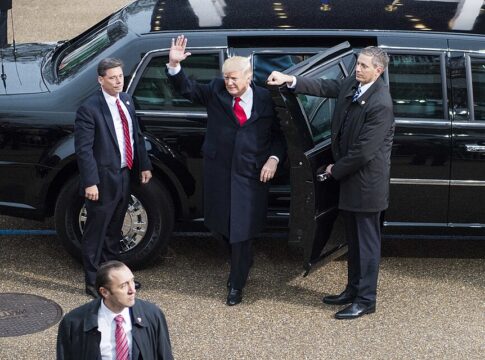
The Secret Service opened nearly 10,000 protective intelligence cases since January—a staggering 40% increase from last year that officials call unprecedented. Director Sean Curran, a 24-year veteran, stated he has never witnessed threat levels this severe in his entire career as agents confront an increasingly volatile security environment nationwide.
Mental Health Interventions Surge Tenfold
The agency conducted nearly ten times more mental health-related interventions compared to the previous year, involving individuals making threats against protected persons or venues. These efforts included both voluntary and involuntary commitments, plus coordination with families and mental health providers to stabilize people in crisis. Officials attributed the spike to online threats, lone actors with ideological grievances, foreign adversaries, and mental health concerns overwhelming traditional communication channels like handwritten letters.
Curran emphasized the transformation in threat patterns, noting most dangers now originate online rather than through conventional methods. The agency treats every reported threat as potentially credible until investigators determine whether individuals possess the intent, means, and ability to execute targeted violence. Agents monitor behavior patterns including obsessive fixation, escalating grievances, stalking, harassment, paranoia, delusions, suicidal tendencies, significant behavioral changes, and unusual fascination with violence rather than relying on demographic profiles.
Security Checkpoint Debate Intensifies
When questioned about security distances at the rescheduled White House Correspondents’ Dinner, Curran defended magnetometer placement approximately 120 yards from the podium—more than a football field’s length. He argued that stopping threats at checkpoints proves the system functions properly, though acknowledged the agency must balance standoff distances against disrupting surrounding streets, hotels, and businesses. Curran stressed that specialized response teams expect dangerous individuals to reach screening locations by design.
The director explained advance teams survey sites repeatedly because environments constantly change, refusing to disclose specific methods to avoid tipping off adversaries. Deputy Director Matt Quinn confirmed the well-publicized Iranian threat against President Trump factors into protective planning continuously, alongside additional classified intelligence the agency cannot reveal publicly. Quinn stated Iran publicly declared intentions to target the former president, making this threat component routine in security assessments.
What This Means
The 40% surge in threat cases signals deteriorating security conditions for protected individuals across America. With mental health crises driving intervention rates upward and online platforms amplifying dangerous rhetoric, the Secret Service faces operational demands unlike any period in recent history. The agency’s transparency about these challenges underscores the gravity of protecting public figures in an increasingly polarized, digitally connected era where threats materialize faster and more frequently than traditional security models anticipated.