
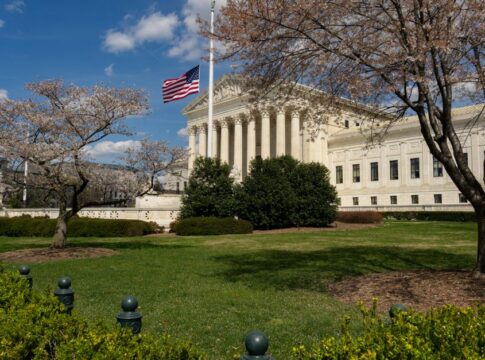
The Supreme Court abolished limits on political party spending in direct coordination with candidates, a landmark campaign finance ruling that empowers Republican fundraising efforts ahead of November midterms while opening new pathways for wealthy donors to influence elections through party contributions.
Court Strikes Down Spending Restrictions
Political parties previously faced strict spending caps when supporting individual candidates. House races carried limits between $65,300 and $130,600, Senate races between $130,600 and $4,071,800, and presidential campaigns topped out at $32,392,200. The National Republican Senatorial Committee and Vice President J.D. Vance challenged these restrictions as First Amendment violations. The court’s majority agreed, removing coordination barriers between parties and candidates entirely.
The ruling arrives as Republicans traditionally struggle against Democratic candidates in individual fundraising totals. Party leaders can now channel unlimited sums toward specific races, potentially offsetting Democratic advantages in direct campaign contributions. Conservative justices argued existing earmarking laws prevent donors from directing party funds toward chosen candidates, maintaining legal guardrails against corruption.
Wealthy Donors Gain Powerful New Channel
Federal law caps individual donations to candidates at $7,000 total for primary and general elections combined. Donors can contribute substantially more to parties however, with $44,000 allowed for national committees plus $132,900 for specialized party accounts covering recounts or legal expenses. State and local party committees accept $10,000 donations. These larger party contributions now flow directly into candidate support without previous coordination restrictions.
Liberal Justice Elena Kagan warned in dissent that joint fundraising committees managed by candidates and parties create incentives to maximize candidate benefits from donor contributions. Justice Sonia Sotomayor outlined scenarios where donors could secure candidate favors through large party donations without technically earmarking funds, describing such arrangements as straightforward quid pro quo corruption opportunities.
Constitutional Clash Over Campaign Finance
The decision deepens divisions over money in politics and First Amendment protections. Conservative justices prioritized political speech rights for parties and candidates, viewing spending limits as unconstitutional restraints. Liberal justices emphasized corruption risks when wealthy interests gain enhanced access through multiplied contribution power. The November midterms will provide the first major test of how parties deploy their expanded coordination authority and whether predicted Republican advantages materialize in competitive races nationwide.