
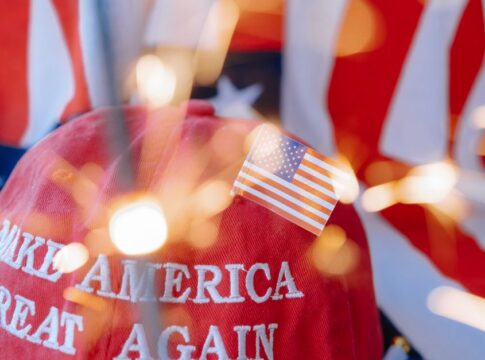
Photo: Polina Zimmerman / Pexels
By Daily American Press Newsroom, Politics Desk — Published September 28, 2026
Table of Contents
- Key Takeaways
- The Background & Context
- Why This Matters
- Reactions & Analysis
- What Happens Next
- Frequently Asked Questions
Former President Donald Trump is preparing to announce a major economic development initiative in Iowa: a planned $15 billion steel manufacturing facility that could reshape the political and industrial landscape of the Hawkeye State. The unveiling comes as Trump positions himself for a potential return to the White House and seeks to bolster his appeal in a crucial swing state that has trended Republican in recent election cycles.
According to multiple reports, Trump will unveil planned details of the massive steel project in the coming days, marking one of the largest proposed industrial investments in Iowa’s history. The announcement arrives at a politically strategic moment, blending economic policy with campaign messaging as the 2024 election cycle intensifies.
The proposed facility represents more than just an industrial development. It’s a statement about manufacturing policy, trade priorities, and the future of American steel production—issues that have been central to Trump’s political brand since his first campaign in 2016.
Key Takeaways
- Trump is set to announce a planned $15 billion steel manufacturing project in Iowa, one of the largest industrial proposals in the state’s history.
- The timing of the announcement aligns with Trump’s political positioning ahead of the 2024 presidential election and Iowa’s status as a key battleground state.
- Steel manufacturing has been a cornerstone of Trump’s economic and trade policy messaging throughout his political career.
- The project would represent a significant investment in American manufacturing at a time when domestic production capacity remains a political flashpoint.
- Iowa’s political and economic landscape could be substantially affected by such a large-scale industrial development.
- The announcement comes as Congress and presidential candidates debate the future of American industrial policy and trade relationships.
The Background & Context
Iowa has long been known primarily as an agricultural powerhouse, with corn and soybean production dominating its economy. Yet the state has also maintained a smaller but significant manufacturing sector. A $15 billion steel project would represent a dramatic expansion of Iowa’s industrial base and signal a potential shift in the state’s economic identity.
Trump’s focus on steel dates back to his first presidential campaign. He consistently championed American steel workers and manufacturers, arguing that decades of trade policy had hollowed out domestic production capacity. During his presidency, Trump imposed tariffs on imported steel and aluminum, citing national security concerns and the need to protect American industry. Those policies generated fierce debate. Supporters argued they protected jobs and rebuilt critical manufacturing capacity. Critics contended they raised costs for consumers and businesses that use steel.
The political calculus behind choosing Iowa for such an announcement is clear. While the state voted twice for Barack Obama, it swung decisively toward Trump in 2016 and again in 2020. Iowa also hosts the first-in-the-nation caucuses, making it a critical early battleground in presidential campaigns. Any major economic development proposal carries weight with voters concerned about jobs, wages, and their communities’ futures.
Steel manufacturing has experienced significant consolidation and overseas competition over recent decades. Chinese production capacity expanded dramatically, fundamentally altering global steel markets. American producers struggled to compete on price, leading to mill closures and job losses in traditional steel regions like Pennsylvania, Ohio, and Indiana. The debate over how to respond—through tariffs, subsidies, or allowing market forces to prevail—has divided policymakers and economists.
Why This Matters
For American voters and taxpayers, this announcement carries implications far beyond Iowa’s borders. Steel production is foundational to national security and economic sovereignty. Everything from military equipment to infrastructure projects requires steel. When domestic production capacity shrinks, the nation becomes more dependent on foreign suppliers—a vulnerability that concerns both political parties.
The project also speaks to broader debates about industrial policy. Should government actively support specific industries through tax incentives, tariffs, or direct investment? Or should market forces determine which industries thrive and where? These questions have gained urgency as the United States competes with China for technological and manufacturing supremacy.
For Iowa residents, the stakes are immediate and tangible. A $15 billion investment would bring construction jobs, permanent manufacturing positions, and economic ripple effects throughout the community. Suppliers, service providers, and local businesses would benefit. Property values and tax revenues could rise. Schools and infrastructure might see new investment.
But large industrial projects also bring challenges. Environmental concerns about emissions and water use require careful scrutiny. Traffic, housing demand, and strain on public services must be managed. Communities must balance economic opportunity against quality of life considerations.
The announcement also tests Trump’s ability to deliver on economic promises. Announcing a project is far easier than completing it. Financing must be secured. Permits obtained. Environmental reviews completed. Labor agreements negotiated. The gap between campaign-trail promises and operational steel mills can be vast, and voters will be watching to see whether this proposal materializes into actual jobs and investment.
Reactions & Analysis
While specific reactions to the announcement have not yet emerged publicly, the proposal is certain to generate intense debate across political and industry lines. Democrats will likely scrutinize the details closely, questioning whether the project represents genuine economic development or political theater timed for campaign purposes. They may also raise concerns about environmental standards and whether appropriate safeguards are in place.
Republican allies in Congress and Iowa state government are expected to embrace the announcement as evidence of Trump’s commitment to American manufacturing and job creation. The proposal aligns with broader Republican messaging about rebuilding domestic production capacity and reducing dependence on China.
Steel industry analysts will examine the project’s viability carefully. Key questions include: Who are the investors? What technology will be used? Where will raw materials come from? What products will the facility produce? How will it compete with existing domestic and foreign producers? A $15 billion investment is substantial, and the economics must make sense beyond political messaging.
Labor unions, particularly the United Steelworkers, will watch closely. Union jobs in steel manufacturing traditionally offer solid wages and benefits. If the project moves forward, negotiations over labor agreements will be critical. Trump has courted union members despite sometimes tense relationships with union leadership, and this project could test those dynamics.
Environmental groups will demand rigorous review. Steel production generates significant emissions and requires substantial energy and water resources. Modern facilities can incorporate cleaner technologies, but environmental advocates will insist on strong standards and enforcement.
What Happens Next
The immediate future involves Trump formally unveiling the project details. Key information will include the specific location within Iowa, the timeline for development, the identity of investors and partners, and the expected number of jobs created. Transparency about financing sources will be particularly important—is this entirely private investment, or does it involve public subsidies or incentives?
If the project is serious, a lengthy development process follows. Environmental impact assessments must be completed. State and local permits secured. Financing finalized. Site preparation and construction could take years. Steel mills are complex facilities requiring specialized equipment, skilled labor, and extensive infrastructure.
Politically, the announcement will become a talking point throughout the campaign. Trump will cite it as evidence of his economic vision and ability to bring investment to American communities. Opponents will scrutinize every detail, looking for exaggerations or unfulfilled promises. Iowa voters will ultimately judge whether the proposal represents real opportunity or merely political positioning.
The project’s fate may also depend on the 2024 election outcome. A Trump victory could smooth regulatory pathways and potentially bring federal support. A Democratic win might subject the project to different scrutiny, though major economic development initiatives often receive bipartisan support at state and local levels when jobs are at stake.
Broader questions about American industrial policy will continue regardless of this specific project’s outcome. How should the United States balance free trade principles against concerns about manufacturing capacity and national security? What role should government play in supporting or protecting specific industries? These debates will shape legislation in Congress and policy decisions for years to come.
Frequently Asked Questions
Where exactly in Iowa will the steel project be located?
The specific location within Iowa has not yet been disclosed publicly. Trump is expected to provide additional details when he formally unveils the project. The choice of location will likely depend on factors including access to transportation infrastructure, availability of water and energy resources, workforce considerations, and local government incentives.
How many jobs would the project create?
The number of jobs has not been specified in available reports. A $15 billion steel manufacturing facility would typically create several thousand construction jobs during the build-out phase and hundreds to thousands of permanent manufacturing positions once operational. Additional indirect jobs would be created in supporting industries and services throughout the region.
Who is financing the $15 billion investment?
The sources of financing have not been publicly disclosed. Major industrial projects of this scale typically involve a combination of private investment, debt financing, and often public incentives such as tax breaks or infrastructure support. Trump is expected to provide more details about the investors and financial structure when he announces the project.
When would the steel mill begin production?
No timeline has been announced. Steel manufacturing facilities require extensive planning, permitting, construction, and equipment installation. Even under an accelerated schedule, such projects typically take several years from announcement to operational production. The actual timeline will depend on numerous factors including regulatory approvals, financing completion, and construction progress.
As Trump prepares to unveil this ambitious industrial proposal, Americans will be watching to see whether it represents a genuine path toward manufacturing renewal or another promise that fails to materialize. For Iowa communities, the hope of economic revitalization is real. For the nation, the debate over industrial policy and America’s manufacturing future continues. The coming months will reveal whether this $15 billion vision becomes steel and jobs or remains merely campaign rhetoric.