
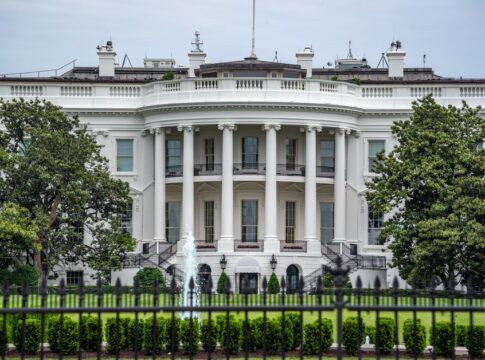
Photo: Dominik Gryzbon / Pexels
By Daily American Press Newsroom, Politics Desk — Published August 29, 2026
Table of Contents
- Key Takeaways
- The Background & Context
- Why This Matters
- Reactions & Analysis
- What Happens Next
- Frequently Asked Questions
The White House is preparing to launch a comprehensive cybersecurity initiative aimed at safeguarding America’s water infrastructure from increasingly sophisticated digital threats. The program represents a critical escalation in federal efforts to shore up defenses around essential services that millions of Americans depend on daily. As cyber attacks targeting critical infrastructure have surged in recent years, the White House unveil of this water protection program signals growing recognition that the nation’s drinking water and wastewater systems remain dangerously vulnerable to foreign adversaries and criminal hackers.
Multiple reports confirm the administration is finalizing details of the initiative, which will provide water utilities across the country with enhanced security tools, technical assistance, and coordination with federal cybersecurity agencies. The timing reflects mounting concerns in both politics and national security circles about the fragility of systems that serve communities large and small.
Water systems have emerged as attractive targets for hackers because they combine essential public services with often-outdated technology and limited security budgets. A successful attack could contaminate drinking water supplies, disrupt treatment processes, or shut down service to entire regions—scenarios that carry profound public health and safety implications.
Key Takeaways
- The White House is preparing to unveil a new cybersecurity program specifically designed to protect water systems from hacking attempts and digital intrusions.
- The initiative addresses growing vulnerabilities in water infrastructure that serves millions of Americans, including both drinking water and wastewater treatment facilities.
- Water providers will gain access to enhanced security resources, technical support, and closer coordination with federal cybersecurity authorities.
- The program comes amid escalating cyber threats targeting critical infrastructure sectors across the United States.
- Implementation will require collaboration between federal agencies, state governments, and thousands of local water utilities of varying sizes and capabilities.
- The announcement reflects bipartisan concern in Congress about the nation’s preparedness to defend essential services against sophisticated adversaries.
The Background & Context
America’s water infrastructure presents a uniquely challenging cybersecurity landscape. The sector comprises more than 150,000 public water systems serving communities from major metropolitan areas to rural towns. Many of these utilities operate with lean budgets, small staffs, and aging technology that was never designed with digital security in mind.
Recent years have witnessed a disturbing pattern of attempted and successful intrusions into water system networks. Foreign state actors, particularly from Iran, China, and Russia, have probed U.S. water infrastructure as part of broader campaigns to map vulnerabilities in critical sectors. Criminal ransomware gangs have also targeted water utilities, recognizing that the essential nature of these services may make operators more likely to pay extortion demands.
The vulnerability extends beyond large urban systems. Small and mid-sized water providers often lack dedicated IT security staff or the financial resources to implement robust defenses. A single compromised password or unpatched system can provide attackers with access to supervisory control and data acquisition (SCADA) systems that manage treatment processes and distribution networks.
The federal response has evolved gradually. The Environmental Protection Agency has authority over water system security, but enforcement has been inconsistent. The Cybersecurity and Infrastructure Security Agency (CISA) has worked to provide guidance and threat intelligence, yet adoption of security best practices remains uneven across the sector.
Congressional attention has intensified following high-profile incidents and warnings from intelligence agencies. Legislation aimed at strengthening critical infrastructure protection has moved through various committees, though comprehensive reforms have faced obstacles related to cost, regulatory authority, and the complex federal-state-local governance structure of water systems.
Why This Matters
The stakes could hardly be higher for American families and communities. Water is not merely infrastructure—it is life itself. Every household, school, hospital, and business depends on reliable access to clean water and functioning wastewater treatment.
A successful cyber attack on water systems could trigger public health emergencies. Hackers who gain control of treatment processes could alter chemical dosing, potentially contaminating drinking water with dangerous levels of chlorine or other substances. They could manipulate pressure levels in distribution systems, causing main breaks or backflow that introduces contaminants. Wastewater treatment disruptions could result in raw sewage releases into rivers and coastal waters.
The economic implications extend far beyond immediate response costs. Prolonged water service disruptions would force businesses to close, halt manufacturing, and potentially trigger evacuations. Agricultural operations depend on water access. The cascading effects through regional economies could reach billions of dollars.
For taxpayers, the program represents a necessary investment in prevention. The cost of hardening defenses and improving detection capabilities pales in comparison to the expense of responding to a major attack and its aftermath. Emergency water distribution, infrastructure repairs, public health interventions, and economic losses would dwarf proactive security spending.
The initiative also carries implications for the broader campaign to secure critical infrastructure. Success in the water sector could provide a model for protecting other vulnerable systems—power grids, transportation networks, healthcare facilities—that face similar threats. Failure would embolden adversaries and expose the limits of federal capacity to defend essential services.
Reactions & Analysis
While specific reactions to the forthcoming White House program await its official announcement, the initiative arrives amid broad recognition across the political spectrum that water infrastructure security demands urgent attention. The issue has drawn concern from lawmakers in both parties who represent districts where water utilities have reported suspicious network activity or struggled to fund security improvements.
National security experts have consistently warned that critical infrastructure protection represents a fundamental challenge for American defense in the 21st century. Unlike traditional military threats, cyber attacks on civilian infrastructure blur the lines between war and peace, foreign and domestic security. Water systems sit at the intersection of these vulnerabilities.
Water utility associations have advocated for federal support while expressing concerns about unfunded mandates. Many smaller systems lack the technical expertise to implement sophisticated security measures without substantial assistance. The industry has emphasized the need for practical, scalable solutions that account for the vast differences in size, resources, and capabilities across thousands of water providers.
Cybersecurity professionals note that protecting operational technology in water systems requires specialized knowledge distinct from traditional IT security. SCADA systems and industrial control networks operate differently than business computer networks, with unique protocols and constraints. Effective protection demands understanding both water treatment operations and digital security principles.
What Happens Next
The program’s success will depend heavily on implementation details that remain to be specified. Critical questions include funding levels, the balance between voluntary participation and regulatory requirements, and the mechanisms for delivering technical assistance to thousands of diverse water systems.
Federal agencies will need to coordinate closely. EPA’s regulatory authority, CISA’s cybersecurity expertise, and the FBI’s investigative capabilities must align with state drinking water programs and local utility operations. Building these relationships and establishing clear communication channels will take time and sustained effort.
Water utilities themselves face decisions about prioritizing limited resources. Security improvements compete with aging infrastructure replacement, water quality compliance, and rate pressures from customers. Making the business case for cybersecurity investments—which may never produce visible results if they succeed in preventing attacks—challenges utility managers and elected officials.
The broader political context matters too. As the 2024 elections approach and Congress navigates partisan divisions, sustaining bipartisan support for infrastructure security funding will test legislative commitment. The program may become entangled in larger debates about federal spending, regulatory authority, and the appropriate role of government in protecting private and local public systems.
International cooperation represents another frontier. Water infrastructure in allied nations faces similar threats from the same adversaries. Sharing threat intelligence, coordinating defensive measures, and establishing norms around attacks on civilian infrastructure require diplomatic engagement alongside technical programs.
Frequently Asked Questions
Why are water systems vulnerable to cyber attacks?
Water systems combine several factors that create cybersecurity vulnerabilities. Many utilities operate with limited budgets and small staffs that lack dedicated security expertise. The technology controlling water treatment and distribution often dates back decades and was designed before digital security became a priority. These systems increasingly connect to the internet for remote monitoring and management, creating entry points for attackers. The essential nature of water services makes utilities attractive targets for adversaries seeking to cause disruption or demonstrate capability against critical infrastructure.
What could hackers do if they breached a water system?
Attackers who gain access to water system controls could manipulate treatment processes by altering chemical dosing levels, potentially contaminating drinking water. They could shut down pumps and valves to disrupt service delivery. Hackers might change pressure settings in distribution networks, causing infrastructure damage or allowing contaminants to enter the system. In wastewater facilities, attackers could disable treatment processes, leading to releases of untreated sewage. Beyond operational disruption, hackers could steal sensitive data about infrastructure layouts, security measures, and customer information.
How does this program differ from existing water security efforts?
While EPA has long held authority over water system security and CISA provides cybersecurity guidance, this White House initiative appears designed to create a more comprehensive, coordinated approach specifically focused on cyber threats. The program likely will provide enhanced resources, technical assistance, and direct support to water providers rather than relying primarily on regulations and voluntary guidance. It represents a recognition that existing efforts have not kept pace with evolving threats and that federal leadership and investment are necessary to protect this critical sector.
Will small water systems receive support under this program?
Small and mid-sized water utilities—which comprise the vast majority of the nation’s water systems—face the greatest challenges in implementing cybersecurity measures due to limited budgets and technical capacity. The program’s effectiveness will largely depend on whether it provides accessible, practical support scaled to these smaller providers. This likely means not just funding but also simplified security tools, training programs, and technical assistance that recognize the constraints under which small utilities operate. Without addressing the needs of smaller systems, the program would leave significant vulnerabilities across the water sector.
As the White House prepares to roll out this water cybersecurity initiative, the program represents both recognition of a serious threat and a test of federal capacity to protect dispersed, locally controlled infrastructure. The challenge extends beyond technology to encompass funding, governance, expertise, and sustained political commitment. For Americans who turn on their taps expecting clean water, the invisible work of digital defense has become as essential as the pipes and treatment plants themselves.