
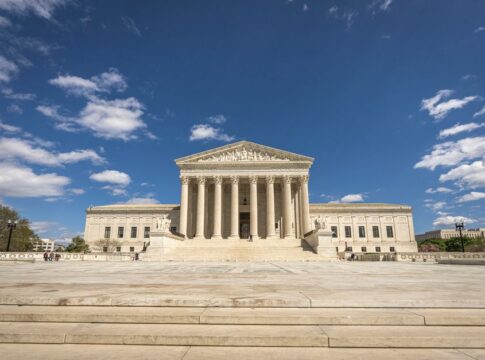
Photo: Mark Stebnicki / Pexels
By Daily American Press Newsroom, National Desk — Published August 31, 2026
Table of Contents
- Key Takeaways on preservation group urges Supreme Court action
- The Background & Context
- Why This Matters
- Reactions & Analysis
- What Happens Next
- Frequently Asked Questions
A historic preservation organization has taken its fight to the nation’s highest court, asking Supreme Court justices to halt construction on a controversial $400 million White House ballroom project championed by former President Donald Trump. The emergency appeal represents the latest chapter in a heated legal battle over the massive construction initiative, which critics say threatens the historic integrity of the executive mansion’s grounds.
The preservation group urges the Supreme Court to intervene after the Chief Justice initially allowed work to continue. This clash between development ambitions and heritage conservation has ignited debate about who controls decisions affecting one of America’s most iconic federal properties. The dispute now sits at the intersection of presidential authority, judicial oversight, and the public’s stake in preserving national landmarks.
At the heart of the controversy is a sprawling ballroom complex that would dramatically alter the White House landscape. The project has divided Americans between those who see necessary modernization and those who view it as an assault on historical preservation. With construction already underway, the clock is ticking for preservationists seeking to protect what they consider irreplaceable national heritage.
Key Takeaways on preservation group urges Supreme Court action
- A preservation group has filed an emergency appeal with the Supreme Court seeking to suspend the White House ballroom construction project
- The ballroom project, valued at approximately $400 million, was initiated during the Trump administration
- Chief Justice of the Supreme Court initially permitted construction work to proceed while legal challenges continue
- The case pits historic preservation advocates against federal government development plans for the executive mansion
- The legal battle raises fundamental questions about oversight of construction on federal property of national significance
- Multiple news organizations have reported on the escalating court fight, signaling broad public interest in the outcome
The Background & Context
The White House has undergone numerous renovations and expansions throughout its more than two-century history. From the Truman reconstruction to the Reagan-era upgrades, each generation of occupants has left its mark on the presidential residence. Yet few projects have sparked the level of controversy now surrounding the proposed ballroom complex.
The $400 million ballroom project represents an ambitious vision to expand the White House’s capacity for hosting state dinners, diplomatic receptions, and other official functions. Proponents argue the current facilities are inadequate for modern presidential needs, forcing the administration to rent outside venues for major events. They contend that a purpose-built ballroom would enhance America’s ability to conduct diplomacy on home ground while potentially saving taxpayer money over time.
Preservationists tell a different story. They warn that the scale and scope of construction could permanently alter the historic character of the White House grounds. The executive mansion sits at the center of a carefully designed landscape, much of it dating back generations. Any major construction, critics argue, risks damaging archaeological resources, disrupting sight lines, and fundamentally changing the relationship between the building and its surroundings.
The legal fight began in lower courts, where preservation groups challenged the federal government’s authority to proceed without adequate environmental and historical impact reviews. Those early rounds produced mixed results, with some judges expressing concern about the rushed timeline while others deferred to executive branch prerogatives. The matter eventually reached the Supreme Court through an emergency appeal mechanism reserved for cases requiring urgent intervention.
Why This Matters
For American taxpayers, the stakes are both financial and symbolic. The $400 million price tag represents a significant public investment at a time when federal spending faces intense scrutiny. Citizens have a legitimate interest in understanding how such funds are allocated and whether the project delivers value commensurate with its cost.
Beyond dollars and cents, the White House occupies a unique place in the American imagination. It belongs not to any single president but to the nation itself. Millions of tourists visit Washington each year hoping to glimpse the iconic building. Schoolchildren study its history. Immigrants see it as a symbol of democratic possibility. Any alteration to this shared national treasure carries weight far beyond the immediate construction zone.
The case also tests important principles of government accountability. Who decides when and how federal properties of historical significance can be modified? What role do courts play in reviewing such decisions? How do we balance the legitimate needs of a functioning government against the imperative to preserve heritage for future generations? These questions extend well beyond one ballroom project to touch fundamental issues of civic stewardship.
Historic preservation advocates see this fight as a bellwether. If major construction can proceed at the White House with limited oversight, what does that signal for other historic federal properties across the country? From Civil War battlefields to Depression-era public buildings, the federal government manages thousands of sites with cultural and historical value. The precedent set here could reverberate through preservation policy for decades.
Reactions & Analysis
The preservation community has rallied behind the Supreme Court challenge. Organizations dedicated to protecting America’s architectural heritage view the ballroom project as precisely the kind of threat they were founded to combat. Their argument rests on established principles: historic properties deserve careful study before alteration, and the public deserves meaningful input on changes to nationally significant sites.
Supporters of the project counter that the White House must evolve to meet contemporary needs. They point out that the building has been modified many times throughout its history, from the addition of the West Wing to the construction of the underground bunker. Each generation, they argue, has a responsibility to ensure the presidency can function effectively, even if that requires physical changes to the complex.
Legal experts watching the case note its unusual procedural posture. Emergency appeals to the Supreme Court typically involve matters of life and death, or situations where irreparable harm is imminent. Using this mechanism for a construction dispute signals how seriously the preservation groups view the threat. It also puts pressure on the justices to act quickly, potentially before they have time for the deliberative process that normally characterizes Supreme Court decision-making.
The Chief Justice’s initial decision to allow construction to continue surprised some observers who expected a pause while the legal issues were sorted out. That ruling, however preliminary, suggests at least some skepticism on the Court about the preservationists’ claims of irreparable harm. Yet the fact that the case remains active indicates the justices have not dismissed the concerns entirely.
What Happens Next
The Supreme Court now faces a decision with no easy answers. Granting the preservation group’s request would halt a major federal project already underway, potentially wasting money already spent and disrupting government operations. Denying the appeal could allow construction to proceed to a point where reversal becomes impossible, effectively mooting any later legal victory for the preservationists.
If the Court decides to hear full arguments on the merits, the case could drag on for months or even years. During that time, construction might continue, stop, or proceed in fits and starts depending on interim rulings. The uncertainty creates headaches for contractors, government planners, and anyone hoping for a clear resolution.
Congress could theoretically intervene, using its appropriations power to defund the project or its oversight authority to demand additional reviews. However, legislative action seems unlikely given the political divisions that characterize contemporary Washington. The courts may represent the only realistic avenue for those seeking to block or delay the ballroom construction.
Beyond the immediate legal maneuvering, this case may prompt broader conversations about how America manages its historic properties. Some preservation advocates hope the controversy will lead to stronger protections and more robust review processes. Others worry that the fight could produce a backlash, with officials becoming more resistant to preservation concerns they view as obstructionist.
Frequently Asked Questions
What is the White House ballroom project?
The White House ballroom project is a $400 million construction initiative to build a large-scale ballroom facility at the executive mansion. The project was initiated during the Trump administration and is intended to expand the White House’s capacity to host state dinners, diplomatic receptions, and other official events. Critics argue the construction threatens the historic character of the White House grounds, while supporters contend it addresses legitimate functional needs of the modern presidency.
Why is a preservation group challenging the project in court?
Historic preservation organizations oppose the ballroom project because they believe it could permanently damage the White House’s historic integrity and surrounding landscape. They have filed legal challenges arguing that the federal government has not conducted adequate environmental and historical impact reviews before beginning construction. The preservation groups contend that the public has a stake in protecting this nationally significant property and that proper procedures must be followed before major alterations are made.
What role is the Supreme Court playing in this dispute?
The preservation group has filed an emergency appeal with the Supreme Court asking the justices to suspend construction while legal challenges proceed. The Chief Justice initially allowed work to continue, but the case remains active before the Court. The Supreme Court’s involvement represents the highest level of judicial review in this dispute, and whatever the justices decide could set important precedents for how historic federal properties are managed and what oversight applies to construction projects at such sites.
How much will the ballroom project cost taxpayers?
According to reports, the White House ballroom project carries a price tag of approximately $400 million. This represents a significant investment of public funds in expanding the executive mansion’s facilities. The substantial cost has added fuel to the controversy, with critics questioning whether such an expenditure is justified and supporters arguing that purpose-built facilities could prove more economical than repeatedly renting outside venues for major presidential events.
As this legal battle unfolds, Americans are watching to see whether the Supreme Court will weigh in decisively or allow the political branches to resolve the dispute on their own terms. Whatever happens, the controversy has already succeeded in focusing public attention on questions that too often go unexamined: who owns our shared heritage, and who gets to decide its future?