
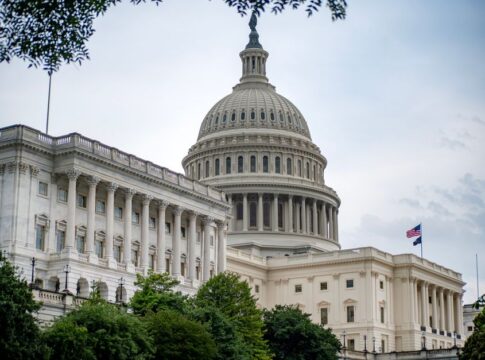
Photo: Ramaz Bluashvili / Pexels
By Daily American Press Newsroom, Politics Desk — Published September 1, 2026
Table of Contents
- Key Takeaways
- Trump Urges Congress: The Background & Context
- Why This Matters
- Reactions & Analysis
- What Happens Next
- Frequently Asked Questions
Former President Donald Trump has called on lawmakers to enact federal tax incentives aimed at revitalizing the American film and television industry. The push comes as Hollywood faces mounting economic pressures from international competition and shifting production patterns. Trump urges Congress to take swift action on legislation that could reshape where movies and TV shows are made, potentially bringing billions of dollars in production spending back to U.S. soil.
The entertainment sector has long been a cornerstone of American cultural and economic power. Yet in recent years, many productions have fled to Canada, the United Kingdom, and other nations offering generous tax breaks. The proposal marks a rare moment of potential bipartisan interest, as lawmakers from both parties have expressed concern about the erosion of domestic film jobs.
For American workers in the entertainment trades—grips, electricians, set designers, caterers—the stakes are personal. Each major production that shoots abroad represents hundreds of jobs lost and millions in economic activity that never materializes in local communities. The question now is whether Congress will act on Trump’s urging and what form any legislation might take.
Key Takeaways
- Trump has publicly called for Congress to pass federal tax incentives targeting the film and television production industry
- The proposal aims to revive and strengthen the U.S. entertainment sector amid growing international competition
- Many American productions have relocated to countries offering more attractive tax breaks, draining domestic jobs and revenue
- The initiative could affect thousands of entertainment industry workers and billions in annual production spending
- Bipartisan support may exist for measures that bring Hollywood jobs back home, though details remain unclear
- The entertainment industry represents significant cultural influence and economic output for the United States
Trump Urges Congress: The Background & Context
The American entertainment industry has faced a slow-motion crisis over the past two decades. What was once an almost exclusively domestic enterprise has become a global production marketplace. States like Georgia, Louisiana, and New Mexico have offered their own tax incentives to lure productions, creating a patchwork of competing programs. But even these state-level efforts have struggled to compete with nations that offer coordinated federal support.
Canada has been particularly successful at attracting American productions. Vancouver and Toronto regularly double for U.S. cities on screen, while Canadian crews work on projects funded and distributed by American studios. The United Kingdom, Hungary, and Australia have similarly positioned themselves as production-friendly alternatives. These countries offer rebates that can cover 20 to 40 percent of production costs, making the economics of shooting abroad irresistible for budget-conscious producers.
The result? Fewer productions shooting in California, New York, and other traditional entertainment hubs. Soundstages sit empty. Skilled workers take jobs outside the industry or relocate. Local businesses that once thrived on production spending—hotels, restaurants, equipment rental houses—see revenue decline. The cultural impact is harder to quantify but no less real: when productions shoot abroad, American locations, stories, and perspectives can get lost.
Previous attempts at federal-level intervention have stalled. Some lawmakers view entertainment tax breaks as corporate welfare, questioning whether taxpayers should subsidize a wealthy industry. Others argue that without federal action, the U.S. will continue losing ground to competitors who understand the strategic value of their entertainment sectors. The politics have been complicated, with regional interests often trumping national strategy.
Trump’s involvement adds a new dimension to this long-running debate. His relationship with Hollywood has been contentious, marked by public feuds and mutual criticism during his presidency and campaign. Yet his business background and understanding of branding may give him unique insight into the industry’s economic significance. Whether his endorsement will help or hinder the legislation’s prospects remains an open question in today’s polarized political environment.
Why This Matters
The entertainment industry generates far more than box office receipts and streaming subscriptions. It’s an economic engine that supports hundreds of thousands of jobs across dozens of professions. When a major film shoots in a city, it brings construction workers, catering staff, security personnel, drivers, and countless others into the orbit of production. Hotels fill. Restaurants see business boom. Equipment suppliers rent cameras, lights, and grip gear. The multiplier effect can be substantial.
Consider the numbers: a single big-budget production can spend $100 million or more in a local economy over several months. That money flows to working-class tradespeople, not just actors and executives. It supports families and funds local tax bases. When those productions move overseas, that economic activity vanishes from American communities.
There’s also a national competitiveness angle. Entertainment is one of America’s most successful exports. Films, television shows, and streaming content project American culture and values globally. They create soft power and international influence that complement military and economic might. Allowing the production infrastructure to atrophy risks ceding this strategic advantage to other nations.
For voters and taxpayers, the question becomes one of priorities and effectiveness. Should federal dollars subsidize an industry that has historically been profitable? Will tax incentives actually keep productions in the U.S., or will they simply pad studio profit margins? These are legitimate concerns that Congress must weigh as it considers any legislation. The challenge is designing a program that genuinely supports workers and communities rather than merely enriching corporations.
The timing matters too. As artificial intelligence and digital production tools transform how content is made, the U.S. has an opportunity to position itself at the forefront of next-generation entertainment. Federal incentives could encourage investment in cutting-edge facilities and training programs that keep American workers competitive in an evolving industry. Alternatively, continued inaction could mean the U.S. falls further behind while other countries build the infrastructure of tomorrow’s entertainment economy.
Reactions & Analysis
Industry groups have long advocated for federal tax incentives, arguing that a coordinated national approach would level the playing field with international competitors. Labor unions representing entertainment workers have been particularly vocal, emphasizing that jobs are at stake. These organizations point to the success of state-level programs as proof that incentives work, while noting that a federal program could be more efficient and equitable.
Critics, however, question the return on investment. Some economists argue that tax incentives for specific industries distort markets and create inefficiencies. They note that states have sometimes engaged in bidding wars that benefit studios while draining public treasuries. A federal program, they warn, could simply replicate these problems on a larger scale. Fiscal conservatives worry about the cost at a time when the national debt continues to climb.
The political dynamics are complex. Democrats have traditionally been more supportive of Hollywood, given the industry’s cultural alignment and campaign contributions. Republicans have often been skeptical, viewing entertainment as a liberal bastion. Trump’s endorsement could scramble these alignments, potentially bringing conservative lawmakers on board while creating awkward dynamics for Democrats who might otherwise support such legislation.
Regional considerations will also shape the debate. States with existing production industries—California, New York, Georgia—have different interests than those hoping to attract their first major productions. Rural states may see little benefit from entertainment tax breaks, while urban centers could reap substantial rewards. Building a coalition broad enough to pass legislation will require addressing these diverse concerns.
What remains unclear is the specific form any legislation might take. Would incentives be automatic or require applications? Would they favor certain types of productions or locations? Would there be caps on how much any single project could claim? These details will determine whether a program truly serves the public interest or simply transfers wealth from taxpayers to studio shareholders.
What Happens Next
Congressional action is far from certain. Even with presidential backing, legislation must navigate committee hearings, floor debates, and the ever-present threat of filibuster in the Senate. Competing priorities—from healthcare to infrastructure to immigration—will vie for lawmakers’ attention and political capital. Entertainment tax incentives, while significant to industry workers, may struggle to rise to the top of the agenda.
If legislation does advance, expect intense lobbying from all sides. Studios will push for generous, easily accessible incentives with minimal strings attached. Labor unions will demand provisions protecting workers and ensuring that tax breaks translate into jobs, not just profits. Fiscal watchdogs will insist on accountability measures and sunset provisions to prevent programs from becoming permanent entitlements. The final product, if any emerges, will reflect these competing pressures.
The 2024 election cycle adds another layer of uncertainty. Campaign promises and legislative realities don’t always align. Trump’s ability to influence congressional Republicans varies by issue and individual lawmaker. Democrats will weigh the political optics of cooperating with Trump against the substantive benefits of legislation they might otherwise support. The result could be compromise, stalemate, or something unexpected.
Meanwhile, other countries aren’t standing still. Canada recently enhanced its federal incentives. The UK continues to refine its programs. New competitors like Saudi Arabia are entering the market with massive investments in production infrastructure. Every month that passes without U.S. action is a month when productions make long-term decisions about where to locate. The window for effective intervention may be closing.
Ultimately, the fate of entertainment tax incentives will test whether American politics can address economic competitiveness issues in a globalized world. It will reveal whether regional and partisan divisions can be overcome in service of a national interest. And it will show whether Trump’s influence extends beyond his base to shape actual policy outcomes. The answers will matter not just for Hollywood, but for how America competes in the 21st century economy.
Frequently Asked Questions
What exactly are entertainment industry tax incentives?
Entertainment tax incentives are financial benefits—typically credits, rebates, or deductions—that reduce the tax burden on film and television productions. These programs aim to attract productions by offsetting costs like crew wages, equipment rentals, and location fees. Many states already offer such incentives, but a federal program would provide consistent, nationwide support that could better compete with incentives offered by other countries.
Why have so many productions moved overseas?
Productions relocate primarily for economic reasons. Countries like Canada, the UK, and Australia offer substantial tax rebates that can cover 20 to 40 percent of production costs. Lower labor costs, favorable exchange rates, and modern production facilities make these locations attractive. Without comparable U.S. federal incentives, many productions find it financially advantageous to shoot abroad, even when stories are set in America.
How would federal tax incentives affect American workers?
Federal incentives could create or preserve thousands of jobs for grips, electricians, set builders, costume designers, caterers, and other entertainment workers. When productions shoot domestically, they employ American crews and spend money in local communities. However, the actual impact would depend on how legislation is structured—whether it includes labor protections, wage requirements, or other provisions ensuring that benefits reach workers rather than just increasing studio profits.
What are the arguments against entertainment tax incentives?
Critics argue that tax incentives represent corporate welfare, using public funds to subsidize a profitable industry. They point to studies suggesting that state-level programs often fail to generate sufficient economic returns to justify their costs. Some economists worry that incentives distort markets and create inefficiencies. Fiscal conservatives question whether such programs are appropriate when the federal government faces significant budget deficits. These concerns will shape the congressional debate over any proposed legislation.
The entertainment industry stands at a crossroads. Trump’s call for congressional action has brought renewed attention to an issue that affects thousands of workers and billions in economic activity. Whether lawmakers will respond with meaningful legislation remains uncertain. What’s clear is that the decision will have lasting consequences for American cultural influence, economic competitiveness, and the communities that depend on production spending. The cameras are rolling, and Congress is now in the spotlight.