
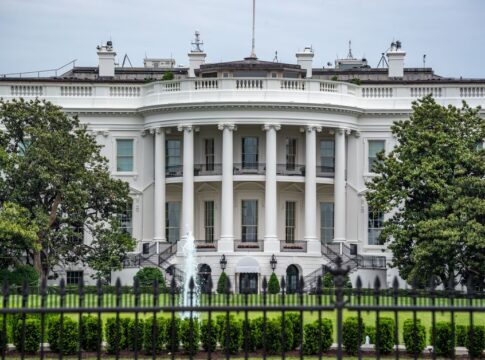
Photo: Dominik Gryzbon / Pexels
By Daily American Press Newsroom, Politics Desk — Published August 31, 2026
Table of Contents
- Key Takeaways
- The Background & Context
- Why This Matters
- Reactions & Analysis
- What Happens Next
- Frequently Asked Questions
The appointment of a new White House counsel typically generates little public fanfare. Yet the latest selection has sparked intense scrutiny as questions swirl about the delicate balance between legal independence and political loyalty in one of the most sensitive positions in American government. As the attorney general confirmation vote approaches, the role of the White House counsel has come under fresh examination, raising fundamental questions about legal guardrails in the executive branch.
According to recent reports, the new counsel has publicly insisted he is not a “yes man” to the president. Yet critics and observers wonder whether that assurance carries weight when the position demands both fierce loyalty to the chief executive and adherence to the rule of law. The tension is not new, but it has intensified in recent years as partisan divisions deepen and the lines between campaign promises, political objectives, and constitutional constraints blur.
The timing matters. With an attorney general vote looming in Congress, the relationship between the White House’s top lawyer and the nation’s chief law enforcement officer will shape everything from legislation to executive orders to how the administration responds to investigations. For American voters who entrusted their government to uphold democratic norms, the question is stark: who keeps the president within legal bounds when political pressure mounts?
Key Takeaways
- The new White House counsel has publicly denied being a “yes man” to the president, though questions persist about the extent of his independence in providing legal advice.
- The appointment comes as Congress prepares for a critical attorney general confirmation vote, heightening attention on executive branch legal positions.
- The White House counsel role requires balancing fierce loyalty to the president with adherence to constitutional and legal constraints, a tension that has grown more acute in recent administrations.
- Public discourse increasingly reflects confusion about ethical boundaries in politics, with traditional distinctions between “good guys” and “bad guys” becoming less clear to many Americans.
- The relationship between the White House counsel and attorney general will significantly influence how the administration approaches legislation, executive actions, and potential investigations.
- The debate touches core questions about accountability, the rule of law, and whether legal advisers can effectively constrain presidential power in a highly partisan environment.
The Background & Context
The White House counsel serves as the president’s lawyer, but the job description is maddeningly complex. Unlike a private attorney who owes undivided loyalty to a client, the counsel must serve both the office of the presidency and the Constitution itself. Past counsels have resigned rather than carry out orders they deemed illegal or unethical. Others have been criticized for enabling presidential overreach.
The position gained public prominence during Watergate, when White House counsel John Dean broke with President Nixon and testified before Congress about the cover-up. That moment crystallized the counsel’s dual obligation: protect the president’s legitimate interests while preventing lawbreaking. In subsequent administrations, counsels have navigated everything from impeachment proceedings to questions about war powers, executive privilege, and the limits of presidential authority.
Recent years have tested these boundaries further. Campaigns make sweeping promises. Elections deliver mandates, real or perceived. Presidents arrive in office determined to implement agendas quickly, sometimes pushing legal boundaries. Meanwhile, Congress has grown more polarized, making bipartisan legislation increasingly rare and elevating the importance of executive orders and regulatory actions that require careful legal vetting.
The current counsel’s assertion that he is not a “yes man” echoes similar statements from predecessors. But the proof emerges only in moments of crisis, when a president wants to do something legally questionable and the counsel must decide whether to bless it, modify it, or oppose it outright. Those conversations happen behind closed doors, away from public scrutiny, making it difficult for citizens to assess whether their government is operating within constitutional guardrails.
Why This Matters
For ordinary Americans, the White House counsel might seem like an obscure bureaucratic position. It is anything but. This lawyer reviews every executive order before the president signs it. The counsel advises on judicial nominations, responds to congressional oversight requests, and helps determine what information the administration will share or withhold. When investigations loom, the counsel shapes the legal strategy.
The stakes extend to taxpayers who fund government operations and expect officials to follow the law. When legal corners get cut, the consequences can include costly litigation, constitutional crises, and erosion of public trust. Citizens across the political spectrum share an interest in having a counsel who will say “no” when necessary, even if it frustrates a president’s agenda.
The attorney general vote adds another dimension. If confirmed, the new attorney general will oversee the Justice Department, including decisions about prosecutions, civil rights enforcement, and antitrust actions. The relationship between that official and the White House counsel will determine how much independence the Justice Department maintains from political pressure. History shows that when those boundaries collapse, scandals follow.
Elections have consequences, and presidents deserve lawyers who understand their policy goals. But voters also expect those lawyers to prevent illegal actions, regardless of which party controls the White House. The counsel’s role is to find lawful ways to achieve presidential objectives while blocking unlawful ones. That requires both creativity and courage, traits not always rewarded in political environments that prize loyalty above all.
The broader context includes growing public confusion about ethical standards in politics. As one recent opinion piece noted, many Americans are no longer sure who the “good guys” and “bad guys” are in political disputes. That uncertainty reflects deeper questions about whether traditional norms still apply, whether legal constraints matter when opponents seem to ignore them, and whether the system itself can hold powerful people accountable.
Reactions & Analysis
The counsel’s public statements denying “yes man” status represent an attempt to establish credibility before controversies arise. Such preemptive assurances are common but ultimately unverifiable until tested. Legal experts note that the real measure of a counsel’s independence is whether the president occasionally loses arguments about what is legally permissible. A counsel who never says “no” is not doing the job, regardless of public protestations.
Congressional reactions have been mixed, largely breaking along partisan lines. Members of the president’s party tend to express confidence in the appointment, while opposition lawmakers voice skepticism. This pattern reflects the broader polarization that makes it difficult to assess nominees on qualifications rather than political alignment. The attorney general confirmation process will likely feature similar dynamics, with each party viewing the same facts through different lenses.
Some legal scholars worry that the “yes man” question misses the point. The real issue is not whether a counsel reflexively agrees with everything a president wants, but whether the counsel has sufficient stature, independence, and institutional support to resist improper pressure. That requires not just personal integrity but also a White House culture that respects legal constraints and a Congress willing to conduct meaningful oversight.
Public opinion remains divided, mirroring the broader political landscape. Supporters of the administration trust that the president chose a qualified lawyer who will provide sound advice. Critics fear that any lawyer willing to serve this particular president has already compromised the independence necessary for the role. Both views contain elements of truth and partisan assumption, making objective assessment challenging.
The uncertainty extends to fundamental questions about political morality. When traditional markers of right and wrong seem to shift based on whose team you support, the very concept of legal and ethical boundaries becomes contested. This erosion of shared standards makes the counsel’s job harder, because the public may not rally behind legal constraints if those constraints primarily affect their preferred political leaders.
What Happens Next
The attorney general vote will provide the first major test of how the White House counsel and Justice Department will interact. Confirmation hearings typically include questions about independence from political interference, prosecutorial discretion, and respect for department traditions. How the nominee answers, and how the counsel’s office responds to any controversies that emerge, will signal the administration’s approach to legal boundaries.
Beyond the immediate confirmation, the counsel will face decisions about executive orders, legislative strategy, and responses to investigations. Each choice will either reinforce or undermine the claim of independence. Presidents push boundaries; that is the nature of executive power. The question is whether this counsel will push back when necessary or find legal justifications for whatever the president wants to do.
Congress has tools to conduct oversight, including subpoenas, hearings, and budget controls. Whether lawmakers use those tools effectively depends on political will and bipartisan cooperation, both in short supply. The courts provide another check, but litigation takes time and judges can only rule on cases brought before them. Much depends on the counsel’s willingness to prevent problems before they require judicial intervention.
The long-term implications extend beyond this administration. Each precedent set now will influence future presidents and their lawyers. If legal constraints prove toothless, future administrations of both parties will feel emboldened to test limits further. If the system holds, it may restore some public confidence that the rule of law still means something in American governance.
For citizens, the path forward requires sustained attention to how government actually operates, not just campaign rhetoric. Accountability depends on voters demanding transparency, supporting independent journalism, and insisting that elected officials respect legal boundaries regardless of party affiliation. The White House counsel works for the president, but the president works for the people.
Frequently Asked Questions
What exactly does the White House counsel do?
The White House counsel serves as the president’s chief legal adviser, reviewing executive orders, providing guidance on constitutional questions, handling ethics issues, responding to congressional oversight, and coordinating judicial nominations. The counsel must balance loyalty to the president with obligations to uphold the Constitution and legal norms, a tension that defines the role.
How is the White House counsel different from the attorney general?
The White House counsel represents the president and the office of the presidency, while the attorney general leads the Justice Department and serves as the nation’s chief law enforcement officer. The attorney general requires Senate confirmation and traditionally maintains some independence from White House political pressure, whereas the counsel serves at the president’s pleasure and works directly for the chief executive.
Can the White House counsel refuse to follow presidential orders?
Yes, though the consequences typically include resignation or dismissal. The counsel can and should refuse to approve legally questionable actions, but cannot force the president to follow advice. If the president insists on a course the counsel believes is illegal, the counsel’s options are to persuade the president otherwise, resign in protest, or in extreme cases, report potential lawbreaking to appropriate authorities.
Why does it matter whether the counsel is a “yes man”?
A counsel who simply approves whatever the president wants provides no meaningful legal check on executive power. The role exists partly to prevent presidents from breaking the law, even inadvertently. An effective counsel must be willing to deliver unwelcome legal advice and occasionally say “no” to proposed actions, protecting both the president and the country from constitutional violations and legal jeopardy.
The White House counsel operates largely in the shadows, making decisions that shape American governance without much public visibility. Whether the current counsel proves to be genuinely independent or merely another voice affirming what the president wants to hear will become clear only through actions, not assurances. For now, Americans can only watch, wait, and demand the accountability their democracy requires.