
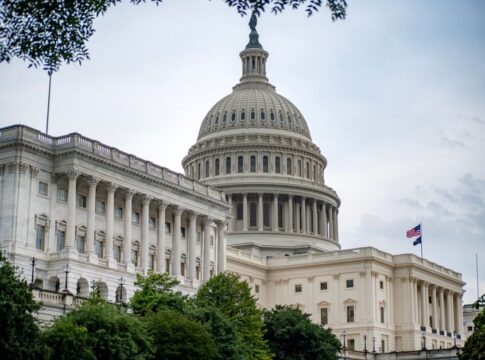
Photo: Ramaz Bluashvili / Pexels
By Daily American Press Newsroom, National Desk — Published October 26, 2026
Table of Contents
- Key Takeaways
- The Background & Context
- Why This Matters
- Reactions & Analysis
- What Happens Next
- Frequently Asked Questions
The federal government has filed an extraordinary lawsuit aimed at potentially invalidating Alaska’s U.S. Senate election results, setting up a constitutional showdown that could reshape how states conduct their elections. President Donald Trump personally confirmed he ordered the Justice Department to pursue the legal action, targeting the outcome should Democratic Representative Mary Peltola emerge victorious in the contest. The Trump administration sues Alaska in what legal experts and Alaskans are denouncing as an unprecedented federal intrusion into state electoral processes.
The lawsuit represents a sharp escalation in tensions between the executive branch and state sovereignty over election administration. Alaska has long employed a ranked-choice voting system that allows voters to rank candidates by preference, a mechanism that has drawn scrutiny from some national Republicans. The federal intervention raises fundamental questions about the balance of power between Washington and state capitals.
Legal scholars and Alaska residents alike are condemning the move as an attempt to overturn the will of voters before ballots are even fully counted. The case could eventually reach the Supreme Court, with implications extending far beyond Alaska’s borders to every state that manages its own election systems.
Key Takeaways
- President Trump personally ordered the Justice Department to file a lawsuit targeting Alaska’s U.S. Senate election results
- The legal action specifically seeks to block certification if Democratic Representative Mary Peltola wins the Senate race
- Alaskans and legal experts are widely criticizing the lawsuit as an attempt to invalidate legitimate votes
- The case raises fundamental constitutional questions about federal versus state authority over elections
- Alaska’s ranked-choice voting system appears to be a central focus of the federal government’s challenge
- The lawsuit could set a precedent affecting how all fifty states administer their electoral processes
The Background & Context
Alaska has operated under a unique electoral framework that distinguishes it from most other states. The state adopted ranked-choice voting through a citizen ballot initiative, fundamentally changing how Alaskans select their representatives. Under this system, voters rank candidates in order of preference rather than selecting just one. If no candidate receives more than fifty percent of first-choice votes, the candidate with the fewest votes is eliminated and their supporters’ second choices are redistributed. This process continues until someone achieves a majority.
The system has produced outcomes that traditional primary and general election structures might not have delivered. It has also drawn criticism from some political figures who argue it confuses voters or produces unrepresentative results. Supporters counter that ranked-choice voting ensures winners have broad support and reduces negative campaigning, since candidates must appeal to voters beyond their core base.
Representative Mary Peltola currently serves Alaska in the U.S. House of Representatives. Her potential candidacy for the Senate has apparently triggered the federal lawsuit. The timing of the legal action—before final results are certified—marks a departure from typical election disputes, which usually arise after outcomes are official.
The Justice Department traditionally operates with a degree of independence from direct presidential involvement in specific cases. Trump’s public statement that he personally ordered this lawsuit breaks with longstanding norms designed to prevent the appearance of politically motivated prosecutions or legal actions. The department’s civil division would typically handle election-related litigation, but direct presidential orders raise questions about the political nature of the suit.
Why This Matters
This lawsuit carries profound implications for American federalism and democracy. The Constitution grants states broad authority to manage their own elections, with Congress holding power to regulate the “times, places and manner” of federal elections. When the federal government sues to block a state’s election results, it tests the outer boundaries of that authority.
For ordinary Americans, the case threatens to inject federal courts into state-level electoral decisions in unprecedented ways. If the Trump administration prevails, it could embolden future presidents to challenge election results they find politically unfavorable, regardless of whether votes were legally cast and counted. The precedent would extend beyond Alaska to any state whose voting methods differ from federal preferences.
Taxpayers should note that federal resources are being deployed to challenge a state election before results are finalized. The Justice Department’s involvement diverts attention and funding from other national priorities, including criminal prosecutions and civil rights enforcement. The lawsuit also forces Alaska to mount an expensive legal defense of its electoral system using state resources.
The case illuminates deeper tensions about who controls American democracy. States have historically served as laboratories for electoral innovation, testing different approaches to voting, ballot access, and representation. Federal intervention to block these experiments could stifle innovation and concentrate power in Washington, fundamentally altering the balance the Founders envisioned.
Reactions & Analysis
Alaskans across the political spectrum have expressed alarm at the federal lawsuit. According to reports, legal experts are condemning the action as an attempt to invalidate votes cast by Alaska citizens in a lawful election. The criticism reflects deep unease about federal overreach into matters traditionally reserved to states.
Legal scholars have raised constitutional objections to the suit’s premise. Elections are primarily state functions, and federal courts have historically been reluctant to second-guess state electoral choices absent clear constitutional violations. The lawsuit’s attempt to block results before certification is particularly unusual, as most election litigation addresses completed processes rather than hypothetical future outcomes.
The conditional nature of the lawsuit—seeking to block results only if Peltola wins—has drawn special criticism. Legal experts note that lawsuits typically challenge processes or rules, not specific outcomes. A suit designed to take effect only if a particular candidate wins appears nakedly political rather than based on genuine legal principle.
Alaska officials face a difficult position. They must defend their state’s sovereignty and electoral integrity while navigating a legal challenge backed by the full resources of the federal government. The state’s defense will likely emphasize constitutional provisions granting states authority over their own elections and the absence of any federal law prohibiting ranked-choice voting.
National implications extend beyond this single case. Other states have adopted or are considering ranked-choice voting and other electoral reforms. If federal courts allow this lawsuit to proceed and potentially succeed, those reforms could face similar challenges, chilling state-level democratic experimentation.
What Happens Next
The lawsuit will likely move quickly through the federal court system given the time-sensitive nature of election certification. A federal district court in Alaska will probably hear initial arguments, with both sides seeking expedited proceedings. The state will almost certainly file a motion to dismiss, arguing the federal government lacks standing or that the suit is premature.
If the case advances, it could reach the Supreme Court within weeks or months. The high court has shown varying degrees of willingness to involve itself in election disputes, sometimes deferring to states and other times intervening on constitutional grounds. The court’s conservative majority might be sympathetic to federalism arguments favoring state authority, or it might view ranked-choice voting skeptically.
Alaska’s election officials must continue their work while the lawsuit proceeds. Ballots need counting, results need certification, and voters deserve timely resolution of their electoral choices. The lawsuit creates uncertainty that could undermine public confidence in the process, regardless of the outcome.
Other states will watch closely. The case could establish precedents affecting how much federal oversight states face in administering elections. A ruling favoring the Trump administration might invite more federal intervention; a ruling for Alaska would reinforce state sovereignty. Either way, the decision will reverberate through American democracy for years.
Frequently Asked Questions
What exactly is the Trump administration suing to prevent in Alaska?
The federal government has filed a lawsuit seeking to block certification of Alaska’s U.S. Senate election results if Democratic Representative Mary Peltola wins the race. President Trump personally ordered the Justice Department to pursue this legal action, which targets the state’s electoral process and potentially the ranked-choice voting system Alaska uses to determine winners.
Does the federal government have the authority to challenge state election results?
The Constitution grants states primary authority over their own elections, though Congress can regulate certain aspects of federal elections. Federal courts can intervene when constitutional rights are violated, but preemptively blocking state election results before certification is highly unusual. Legal experts are questioning whether the federal government has legitimate grounds for this particular lawsuit.
What is ranked-choice voting and why is it controversial?
Ranked-choice voting allows voters to rank candidates in order of preference rather than selecting just one. If no candidate wins a majority of first-choice votes, the last-place candidate is eliminated and their supporters’ second choices are redistributed until someone achieves a majority. Supporters say it ensures winners have broad support, while critics argue it can be confusing and may not reflect true voter preferences.
Could this lawsuit affect elections in other states?
Yes, the case could set precedents affecting all fifty states. If federal courts allow the Trump administration to block Alaska’s election results, it might encourage similar challenges to other states’ electoral systems. Several states have adopted or are considering ranked-choice voting and other reforms that could face federal legal challenges if this lawsuit succeeds.
The coming weeks will determine whether Alaska’s voters or federal courts have the final say in this Senate race. The lawsuit tests fundamental principles about who controls American democracy and whether states retain meaningful sovereignty over their own electoral processes. Whatever the outcome, this case will shape the relationship between federal power and state autonomy for a generation.