
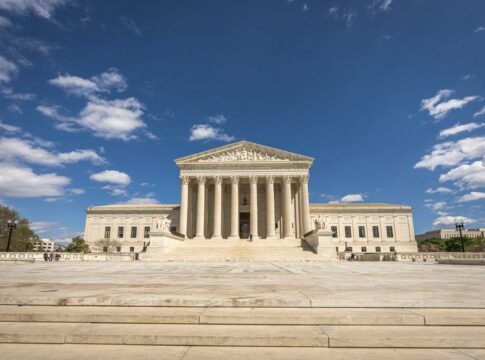
Photo: Mark Stebnicki / Pexels
By Daily American Press Newsroom, National Desk — Published October 23, 2026
Table of Contents
- Key Takeaways
- The Background & Context
- Why This Matters
- Reactions & Analysis
- What Happens Next
- Frequently Asked Questions
The Trump administration has turned to the nation’s highest court in a bid to restart construction of a controversial border wall segment through Big Bend National Park. The move represents one of the most significant tests yet of executive authority over protected federal lands and immigration enforcement. According to reports from multiple news outlets, the administration is asking the Supreme Court to lift a lower court’s halt on the project, setting up a potential landmark clash between national security priorities and environmental preservation.
Big Bend National Park, a sprawling 800,000-acre wilderness along the Texas-Mexico border, has become the latest flashpoint in America’s ongoing border security debate. The administration’s Supreme Court filing comes after federal judges blocked construction, citing environmental and legal concerns. For millions of Americans who value both border security and conservation, the case poses difficult questions about competing national interests.
The legal battle carries implications far beyond one stretch of desert terrain. How the Supreme Court responds could reshape the balance of power between the executive branch and the judiciary on matters of national defense, immigration policy, and federal land management for years to come.
Key Takeaways
- The Trump administration seeks Supreme Court intervention to resume border wall construction within Big Bend National Park in Texas
- Lower federal courts have previously halted the construction project, prompting the administration’s appeal to the nation’s highest judicial body
- Big Bend National Park encompasses roughly 800,000 acres of protected wilderness along the U.S.-Mexico border
- The case represents a significant test of executive authority over immigration enforcement versus environmental protection on federal lands
- The Supreme Court’s decision could establish precedent affecting future border security projects and federal land use policies
- The legal dispute highlights ongoing tensions between national security priorities and conservation efforts in border regions
The Background & Context
Big Bend National Park stands as one of America’s most remote and ecologically diverse protected areas. Established in 1944, the park preserves a unique ecosystem where the Chihuahuan Desert meets the Rio Grande. The region hosts hundreds of bird species, rare plants, and archaeological sites dating back thousands of years. Its designation as a national park placed it under federal protection, theoretically shielding it from development.
Border wall construction has been a centerpiece of Trump administration policy since 2017. The federal government has built or replaced hundreds of miles of barriers along the southern border, often invoking national security and immigration enforcement as justification. Previous administrations, both Republican and Democratic, constructed border fencing in various locations, but Big Bend’s protected status makes this proposal particularly contentious.
The legal framework governing this dispute involves multiple statutes. National park enabling legislation generally prohibits construction that would impair park resources or visitor experiences. However, the administration argues that immigration and border security fall under executive powers related to national defense. This creates a direct collision between environmental law and executive authority.
Lower courts have sided with environmental groups and legal challengers who argue that wall construction would irreparably damage the park’s ecosystem, disrupt wildlife corridors, and violate statutes protecting federal lands. Those rulings prompted the administration to escalate the matter to the Supreme Court, seeking emergency relief that would allow construction to proceed while litigation continues.
The timing matters. Supreme Court appeals of this nature typically request stays of lower court orders, allowing government action to continue pending full review. If granted, construction could begin immediately. If denied, the project remains frozen until lower courts resolve the underlying legal questions—a process that could take years.
Why This Matters
American taxpayers have invested billions in border security infrastructure. How those funds are deployed, and under what legal constraints, directly affects public resources and national priorities. The Big Bend case forces a reckoning with fundamental questions: Can a president override environmental protections in the name of border security? Where do executive powers end and judicial oversight begin?
For border communities, the wall debate is personal. Residents along the Texas-Mexico border live with the daily realities of immigration, trade, and cross-border relationships. Some support enhanced barriers as necessary security measures. Others view walls as ineffective symbols that damage ecosystems and community ties without addressing root causes of migration.
Environmental advocates warn that construction through Big Bend would fragment habitat for endangered species, alter water flow patterns, and mar landscapes that belong to all Americans. The park attracts roughly 500,000 visitors annually, many drawn by its pristine wilderness character. Once altered, such environments cannot easily be restored.
Constitutional scholars note that the case tests separation of powers principles. If the Supreme Court grants the administration’s request, it could signal broad deference to executive branch claims of national security necessity. Such a precedent might extend beyond immigration to other policy areas where presidents invoke defense or security rationales to circumvent normal regulatory processes.
The decision also carries political weight. Immigration and border security remain deeply polarizing issues in American politics. How the Supreme Court—particularly its conservative majority—handles this request will be scrutinized as an indicator of judicial philosophy on executive power, environmental law, and the role of courts in checking presidential authority.
Reactions & Analysis
Legal experts have offered varied assessments of the administration’s chances before the Supreme Court. Some note that the Court has previously shown reluctance to second-guess executive branch decisions on immigration and border security. Others point to the unique context of building through a national park, arguing that statutory protections for federal lands present unusually strong legal barriers.
Environmental organizations have mobilized opposition, framing the issue as a test case for whether any protected land remains truly safe from development when national security is invoked. Conservation groups argue that alternative security measures—including technology and personnel—could achieve border monitoring goals without permanent construction in sensitive areas.
Border security advocates counter that physical barriers remain essential tools for controlling illegal crossings in remote areas where personnel cannot maintain constant presence. They argue that Big Bend’s isolation makes it attractive for smuggling operations, and that wall construction represents a legitimate exercise of sovereign authority to secure national borders.
Local officials in Texas border counties have expressed mixed views. Some welcome federal investment in border infrastructure, seeing it as recognition of security challenges their communities face. Others worry about impacts on tourism, outdoor recreation economies, and the region’s international identity.
The Supreme Court itself has not yet indicated when it might act on the administration’s request. Emergency applications can be decided quickly, sometimes within days, or they can languish for weeks as justices consider briefs and deliberate. The Court’s silence so far reveals nothing about its ultimate disposition.
What Happens Next
Several scenarios could unfold. If the Supreme Court grants the administration’s request, construction equipment could roll into Big Bend within days. Contractors would begin building barriers through terrain that has remained largely unchanged for millennia. Environmental groups would likely continue their legal fight, but physical construction, once completed, creates facts on the ground difficult to reverse.
Alternatively, the Court could deny the request, leaving lower court injunctions in place. This would represent a significant setback for the administration’s border security agenda and might embolden other legal challenges to wall construction in environmentally sensitive areas. The underlying case would proceed through normal appellate channels, a process extending well into the future.
A third possibility involves the Court issuing a partial stay or conditional approval, allowing some preparatory work while prohibiting actual barrier construction until legal questions are resolved. Such middle-ground approaches are less common in emergency applications but not unprecedented.
Beyond the immediate legal outcome, the case will shape future debates about executive power and environmental protection. A ruling favorable to the administration could encourage future presidents to invoke national security broadly when seeking to bypass environmental regulations. A ruling against the government would reinforce statutory protections for federal lands as meaningful constraints on executive action.
Congress could also intervene. Legislation explicitly authorizing or prohibiting border wall construction in national parks would resolve the legal ambiguity, though partisan divisions make such action unlikely in the current political environment. The question may ultimately rest with the courts and, by extension, with the constitutional principles they choose to emphasize.
Frequently Asked Questions
What is Big Bend National Park and why is it significant?
Big Bend National Park is an 800,000-acre protected wilderness area in southwestern Texas along the Rio Grande and U.S.-Mexico border. Established in 1944, it preserves unique desert ecosystems, diverse wildlife, and archaeological resources. Its protected status under federal law makes proposed construction particularly controversial, as national parks are generally shielded from development that would impair their natural and cultural resources.
Why is the Trump administration asking the Supreme Court to intervene?
The administration is seeking Supreme Court approval after lower federal courts halted border wall construction in Big Bend National Park. By appealing to the nation’s highest court, the administration hopes to overturn those lower court injunctions and resume construction. This represents an attempt to use executive authority on immigration and national security matters to override judicial decisions that favored environmental protections.
What legal issues are at stake in this case?
The case involves competing legal principles: executive authority over immigration enforcement and border security versus statutory protections for federal lands and national parks. The administration argues that border security falls under presidential powers related to national defense, while opponents cite laws protecting park resources from development. The Supreme Court’s decision could establish important precedent about the limits of executive power when it conflicts with environmental legislation.
How might this decision affect other national parks and protected areas?
A Supreme Court ruling favorable to the administration could set precedent allowing future executive branch actions in protected federal lands when national security or defense is invoked. This might extend beyond border security to other policy areas. Conversely, a decision upholding lower court injunctions would reinforce statutory protections as meaningful limits on presidential authority, potentially strengthening environmental safeguards across the federal lands system.
As the Supreme Court weighs this consequential request, Americans face fundamental questions about the nation they want to build. The Big Bend case is not merely about one stretch of border or one national park. It is about the kind of country we are—how we balance security with preservation, executive power with legal constraints, and immediate priorities with long-term values. The answer will echo far beyond the desert.