
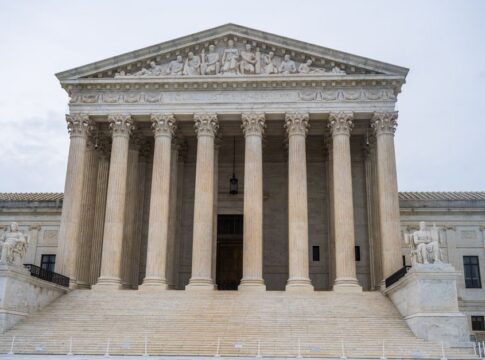
Photo: Guohua Song / Pexels
By Daily American Press Newsroom, National Desk — Published October 19, 2026
Table of Contents
- Key Takeaways
- The Background & Context
- Why This Matters
- Reactions & Analysis
- What Happens Next
- Frequently Asked Questions
A federal appeals court has raised pointed questions about the Justice Department’s legal position regarding ownership of White House records, signaling potential complications for the government’s stance in ongoing disputes over presidential materials. The judicial skepticism emerged as courts across the nation continue to grapple with unprecedented questions about executive power, document retention, and the boundaries of presidential authority in the post-Trump era.
The appeals court questions come at a moment when multiple legal battles involving the former president and federal agencies are playing out simultaneously. From media access disputes to administrative policy challenges, the judiciary is being asked to resolve fundamental questions about government transparency and executive prerogatives. These cases collectively represent a stress test for long-standing assumptions about how our democracy functions when norms are challenged.
While the specific details of the appeals court’s inquiry remain the subject of ongoing litigation, the broader landscape reveals a federal government navigating complex constitutional terrain. Separate but related developments include lawsuits by news organizations seeking restored White House access and court rulings on administrative program changes, all pointing to an era of heightened judicial scrutiny of executive branch actions.
Key Takeaways
- An appeals court has questioned the Justice Department’s legal arguments regarding ownership of White House records, potentially undermining the government’s position in document-related disputes.
- Three news outlets have filed suit to regain White House access, raising First Amendment concerns about press freedom and government transparency.
- A federal court has ruled that the Trump administration may proceed with significant changes to homelessness programs, affecting vulnerable populations nationwide.
- These parallel cases demonstrate the judiciary’s active role in checking executive power and resolving disputes between government branches.
- The legal questions being raised have implications far beyond individual cases, potentially reshaping the relationship between presidents, federal records, and public accountability.
- American taxpayers and citizens face direct consequences as courts determine the scope of executive authority and government transparency obligations.
The Background & Context
Presidential records have been governed by federal law since the aftermath of Watergate, when Congress sought to prevent future presidents from destroying or concealing documents of historical and legal significance. The Presidential Records Act established that materials created in the course of official duties belong to the American people, not to individual office holders.
For decades, this framework operated largely without controversy. Presidents left office, their records were transferred to the National Archives, and researchers eventually gained access according to established timelines. The system wasn’t perfect, but it worked.
That changed dramatically in recent years. Questions about document handling, classification, and retention have moved from the realm of archivists and historians into the center of national political and legal debates. What once seemed like settled administrative procedure has become contested legal territory, with the Justice Department forced to defend positions that courts are now scrutinizing with fresh eyes.
The appeals court’s skepticism reflects a broader judicial reluctance to simply defer to executive branch interpretations of laws governing presidential conduct. Courts have shown increasing willingness to examine closely the legal foundations of government claims, particularly when those claims involve assertions of broad executive privilege or immunity.
Meanwhile, the lawsuit by news organizations over White House access touches on a different but related question: what obligations does the executive branch have to facilitate public oversight through a free press? The case represents the latest chapter in a long-running tension between presidential administrations that seek to control their message and journalists who demand access to do their jobs.
The homelessness program ruling adds another dimension to this judicial landscape. It demonstrates that courts are simultaneously weighing in on substantive policy questions, not just procedural or transparency disputes. When a federal court allows an administration to proceed with major program changes, it affects real people in real communities across America.
Why This Matters
These legal battles matter because they determine how accountable our government remains to the people it serves. When courts question whether the Justice Department has correctly interpreted laws about presidential records, they’re really asking: who owns the history of our government? Can a president claim personal ownership of documents created while executing the duties of the highest office in the land?
The answer affects every American who believes in transparent, accountable governance. If White House records can be treated as personal property, the public’s ability to understand what happened during any administration becomes dramatically compromised. Historians lose access to crucial materials. Investigators hit dead ends. Citizens remain in the dark.
The press access lawsuit carries equally high stakes. A free press serves as a check on government power, but only if journalists can actually observe and report on government activities. When news organizations are denied access to the White House, the public loses a critical window into executive branch operations. The lawsuit tests whether administrations can pick and choose which media outlets receive access based on coverage preferences.
For vulnerable Americans, the homelessness ruling has immediate, tangible consequences. Changes to federal homelessness programs can mean the difference between shelter and the streets for thousands of people. When courts allow such changes to proceed, they’re making decisions that ripple through communities, affecting local governments, service providers, and most importantly, individuals struggling with housing insecurity.
Taxpayers fund all of these government operations and have a stake in ensuring they’re conducted legally and transparently. When courts step in to resolve disputes about executive power, they’re fulfilling their constitutional role as a co-equal branch of government. That system of checks and balances exists precisely for moments like these.
Reactions & Analysis
Legal experts watching these cases have noted the unusual concentration of significant executive power questions arriving in courts simultaneously. The appeals court’s willingness to question Justice Department arguments suggests judges are not simply rubber-stamping government positions, even in cases involving sensitive questions of presidential authority.
The news organizations pursuing their White House access lawsuit have framed the issue as fundamental to democracy. Without press access, they argue, the public cannot hold government accountable. The suit represents a direct challenge to any administration’s ability to exclude journalists based on editorial decisions or coverage tone.
Advocates for homeless individuals and families have expressed concern about the court’s decision allowing program changes to proceed. They worry that administrative overhauls could disrupt existing services and leave vulnerable populations without adequate support during the transition. The ruling demonstrates that courts will sometimes side with executive branch flexibility over continuity in social programs.
Constitutional scholars have pointed to these cases as evidence of ongoing tensions in our system of separated powers. When different branches disagree about fundamental questions—who owns presidential records, what press access the First Amendment requires, how much discretion agencies have to reshape programs—courts become the final arbiters. That’s by design, but it places enormous responsibility on the judiciary.
What Happens Next
The appeals court’s questions about presidential records ownership will likely require further legal proceedings, potentially including additional briefing and oral arguments. Depending on how the court rules, the case could establish important precedents about executive privilege and document retention that outlast any single administration.
If the appeals court sides with skepticism of the Justice Department’s position, it could force a rethinking of how presidential records are classified, stored, and ultimately transferred to public custody. Such a ruling might also have implications for ongoing investigations and litigation involving presidential documents.
The press access lawsuit will proceed through its own trajectory, with discovery, motions, and potentially a trial. The outcome could establish clearer standards for when and how the White House must accommodate journalists, or it might reaffirm broad executive discretion over access decisions. Either way, the case will shape the relationship between future administrations and the media.
Implementation of the homelessness program changes will move forward following the court’s green light, though affected parties could still seek further judicial review if specific aspects of the overhaul prove problematic. State and local governments will need to adapt to new federal requirements and funding structures.
Looking further ahead, these cases collectively may prompt Congress to revisit and clarify laws governing presidential records, press access, and administrative procedures. Legislators often wait for court decisions to expose ambiguities before acting, and these rulings could provide the impetus for statutory reforms.
Frequently Asked Questions
What exactly is the appeals court questioning about presidential records?
The appeals court has raised questions about the Justice Department’s legal position regarding who owns White House records. This challenges the government’s interpretation of laws governing presidential materials and could affect how such documents are handled, stored, and eventually made available to the public and researchers.
Why are news outlets suing for White House access?
Three news organizations have filed suit to regain access to the White House, arguing that their exclusion violates First Amendment principles and undermines the press’s ability to report on government activities. The lawsuit tests whether administrations can deny access to specific media outlets based on their coverage or editorial positions.
How will the homelessness program changes affect communities?
The federal court ruling allowing the administration to proceed with homelessness program overhauls means significant changes to how federal resources are allocated and programs are structured. Local governments, service providers, and homeless individuals will all experience impacts as new policies are implemented, potentially disrupting existing support systems during the transition.
Could these cases reach the Supreme Court?
It’s certainly possible. Cases involving fundamental questions about executive power, First Amendment rights, and administrative law are precisely the types of disputes that often warrant Supreme Court review. If the appeals court issues a significant ruling on presidential records or if the press access case produces conflicting interpretations of constitutional principles, the nation’s highest court might ultimately weigh in.
As these legal battles unfold in courtrooms across the country, ordinary Americans are reminded that abstract questions of law have concrete consequences. The judges deciding these cases are not just resolving disputes between lawyers—they’re determining the practical boundaries of government power, transparency, and accountability in our democracy. The answers will shape how future presidents handle records, how journalists access information, and how vulnerable citizens receive government services. Those are questions worth watching closely.