
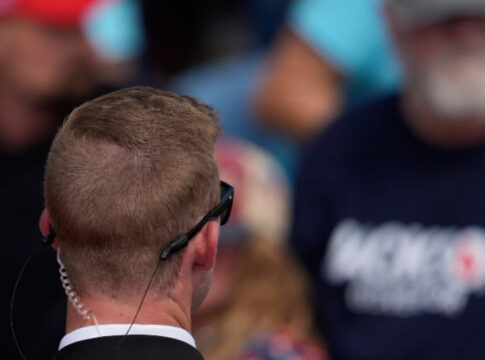
Secret Service Deputy Director Matthew Quinn announced his resignation effective November 7, departing as the agency grapples with a staggering 40% surge in threats against President Trump and mounting concerns over its ability to defend against coordinated drone attacks that experts warn represent the next generation of assassination attempts.
Threat Environment Reaches Critical Levels
Secret Service Director Sean Curran revealed in a CBS News interview that the agency has opened approximately 10,000 threat cases since January alone. The dramatic escalation in dangers facing the president comes as the Secret Service continues to face intense scrutiny following multiple security failures. Quinn acknowledged the severity of emerging threats, stating that drone swarms pose a massive problem and represent a significant danger to protectees.


The resignation arrives at a precarious moment for presidential security. Trump survived two separate assassination attempts in 2024, including the July shooting at a Butler, Pennsylvania rally that killed attendee Corey Comperatore and wounded two others. A subsequent attempt occurred at Trump’s Florida golf course in September 2024. Most recently, a gunman breached security at the White House Correspondents’ Association dinner in April 2026, forcing the evacuation of Trump and other senior officials.
Inspector General Reveals Systemic Failures
A Department of Homeland Security inspector general report issued July 1, 2026, documented devastating failures surrounding the Butler assassination attempt. The investigation found the Secret Service missed multiple opportunities to detect, prevent, and disrupt the attack. Critical breakdowns included failures in communications protocols, intelligence sharing between agencies, and fundamental security planning deficiencies that allowed a gunman to gain a clear shooting position.
Conflict of Interest Questions Emerge
Quinn’s employment history raises eyebrows among government watchdogs. After retiring from 23 years of Secret Service duty in 2021, he joined Fortem Technologies as senior vice president. Fortem manufactures counter-drone systems, the very technology the Secret Service now desperately needs. Quinn returned to government service in 2025 at Director Curran’s request. While no evidence confirms his previous employer influenced his departure, the relationship between Quinn’s former company and the agency’s technology procurement decisions invites scrutiny about potential conflicts of interest.
What This Means
The departure of the second-ranking Secret Service official during this threat surge signals deeper organizational challenges. The agency continues developing counter-drone capabilities and studying tactics from the Ukraine conflict, but Quinn’s resignation suggests internal turmoil as the service races to adapt to modern assassination methods. For Americans concerned about constitutional continuity and presidential security, these developments reveal an agency struggling to meet 21st-century threats with outdated protocols and insufficient technology.
The SS agent took the chose the profession to defend and protect the president of the US even if it means the loss of his life he knew of all risk involved. What a candy ass I guess money talks