
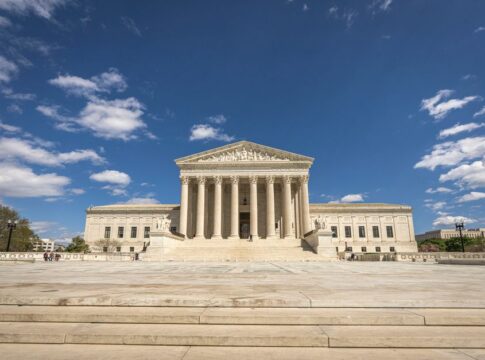
Photo: Mark Stebnicki / Pexels
By Daily American Press Newsroom, National Desk — Published October 17, 2026
Table of Contents
- Key Takeaways
- The Background & Context
- Why This Matters
- Reactions & Analysis
- What Happens Next
- Frequently Asked Questions
The nation’s highest court has handed the Trump administration a significant victory in its ongoing effort to verify the citizenship status of registered voters. In a decision that has ignited fierce debate across the political spectrum, the Supreme Court revives a disputed federal database system that states may now use to audit voter rolls and check whether non-citizens are registered to vote. The ruling marks a pivotal moment in the intersection of immigration enforcement, election integrity, and civil liberties.
The database at the center of this legal battle is a federal tool that cross-references state voter registration records with citizenship information held by various government agencies. Critics have long warned that such systems are prone to errors and could lead to eligible American citizens being wrongly flagged or removed from voter rolls. Supporters, however, argue the tool is essential for maintaining the integrity of elections and ensuring that only citizens cast ballots in federal contests.
The Supreme Court’s decision allows states to proceed with using this controversial system while legal challenges continue to wind through lower courts. The immediate practical effect is that state election officials who wish to employ the database for citizenship verification can now do so without the legal impediments that had temporarily blocked its use.
Key Takeaways
- The Supreme Court has cleared the way for states to use a controversial federal database system designed to check voter citizenship status during voter roll audits.
- The decision represents a win for the Trump administration, which has prioritized efforts to identify and remove non-citizens from voter registration lists.
- Civil rights advocates have expressed alarm that the database could lead to eligible voters being wrongly purged from rolls due to data errors or mismatches.
- The ruling does not settle the underlying legal questions but allows the practice to continue while litigation proceeds in lower courts.
- States now have the option to use the tool for voter audits, though implementation will vary by jurisdiction and state election laws.
- The controversy highlights ongoing national tensions between election security measures and voting rights protections.
The Background & Context
For years, election officials and federal authorities have grappled with how to balance two competing imperatives: ensuring that voter rolls are accurate and free from ineligible registrants, while simultaneously protecting the voting rights of legitimate citizens. The database system now approved by the Court emerged from these efforts, drawing on citizenship records maintained by federal agencies including immigration authorities and the Department of Homeland Security.
The controversy surrounding this tool is not new. Data-matching systems have historically been plagued by technical problems. Names can be misspelled. Records can be outdated. A naturalized citizen who became American after obtaining a driver’s license might appear in one database as a non-citizen and in another as eligible to vote. These discrepancies have led to documented cases where American citizens received letters questioning their eligibility or were removed from voter rolls entirely.
Previous administrations have approached citizenship verification with caution, aware of the potential for disenfranchisement. But the current federal government has made voter roll maintenance a priority, arguing that public confidence in elections depends on rigorous verification that only citizens participate. This philosophical shift has driven the push to expand use of federal databases for election purposes.
Lower courts had temporarily blocked the database’s use in some jurisdictions, citing concerns about accuracy and the risk of voter suppression. Those injunctions created a patchwork situation where some states could proceed with citizenship checks while others could not. The Supreme Court’s intervention has now resolved that uncertainty, at least for the time being.
Why This Matters
The stakes in this debate extend far beyond administrative procedure. At its heart, this controversy touches on fundamental questions about who gets to vote in America and how that determination is made. For ordinary citizens, the implications are direct and personal.
Consider the naturalized immigrant who has been voting for decades. A database error flagging them as a non-citizen could result in a letter demanding proof of citizenship weeks before an election. The burden then falls on that voter to navigate bureaucracy, gather documents, and clear their name. Miss a deadline, and they lose their vote.
Election officials face their own dilemma. They have a legal obligation to maintain accurate voter rolls and remove ineligible registrants. But they also must ensure that eligible voters are not wrongly disenfranchised. The database offers a tool to help with the first obligation, but its error rate raises serious questions about the second.
The broader American public has a stake as well. Trust in elections depends on both security and accessibility. If voters believe non-citizens are casting ballots, confidence erodes. But if eligible citizens are being purged from rolls, that trust also suffers. Finding the right balance is not merely a technical challenge but a democratic imperative.
Taxpayers fund both the database system and the election infrastructure it affects. The costs of implementation, error correction, and potential litigation are borne by the public. Whether this represents money well spent or a misallocation of resources depends largely on one’s view of the underlying problem and the tool’s effectiveness.
Reactions & Analysis
The Supreme Court’s decision has generated predictable responses along partisan and ideological lines. Supporters of stricter voter roll maintenance have hailed the ruling as a common-sense measure that empowers states to enforce existing laws requiring citizenship for voting. They argue that the database provides an efficient way to identify potential problems that can then be investigated further before any voter is removed.
Opponents, particularly civil rights organizations and voting rights advocates, have responded with alarm. They point to studies showing that database matching systems often produce false positives, flagging citizens as non-citizens due to clerical errors, name changes, or outdated records. The concern is that aggressive use of such tools will disproportionately affect naturalized citizens, particularly those from immigrant communities.
State election officials find themselves in varying positions. Some welcome the additional tool for maintaining voter rolls, especially in states where legislatures have mandated citizenship verification. Others express reservations about the administrative burden and the risk of wrongly challenging eligible voters. The practical reality is that implementation will vary widely based on state law, local resources, and political priorities.
Legal experts note that the Supreme Court’s action does not resolve the fundamental constitutional questions at play. The Court has simply allowed the practice to continue while lower courts work through the merits of the case. This means further litigation is likely, and the ultimate legal status of the database system remains uncertain.
What Happens Next
In the immediate term, states that wish to use the federal database for citizenship checks can now proceed. Election officials will begin the process of cross-referencing voter registration records with federal citizenship data. When mismatches are identified, voters will likely receive notices requiring them to verify their citizenship status within a specified timeframe.
The administrative workload for election offices will increase substantially. Each flagged voter requires individual attention, documentation review, and often direct communication. In jurisdictions with large immigrant populations or high rates of naturalization, the volume could be significant. Staffing and budgetary implications will need to be addressed.
Legal challenges will continue in lower courts. Plaintiffs arguing that the database system violates constitutional protections or federal voting rights laws will press their cases. Discovery processes may reveal data about error rates and the system’s actual impact on eligible voters. These findings could shape future judicial decisions.
Congressional oversight is also possible. Lawmakers concerned about voter suppression may hold hearings or demand audits of the database’s accuracy. Conversely, legislators focused on election security may seek to expand the program or codify its use in federal law. The political dynamics will depend partly on how the system performs in practice and what problems, if any, emerge.
Public awareness will likely grow as more voters receive citizenship verification notices. Media coverage of individual cases—particularly those involving long-time citizens wrongly flagged—could shift public opinion and political pressure. Conversely, any documented cases of non-citizens being discovered on voter rolls would bolster arguments for the system’s necessity.
Frequently Asked Questions
What exactly does this Supreme Court decision allow?
The decision permits states to use a federal database system that cross-references voter registration records with citizenship information from various government agencies. States can use this tool to audit their voter rolls and identify individuals who may not be citizens. The ruling lifts previous legal blocks that had prevented some jurisdictions from using the system while legal challenges proceed.
Does this mean non-citizens have been voting in large numbers?
There is no evidence of widespread non-citizen voting in American elections. Multiple studies and investigations have found that such cases are extremely rare. The database system is designed to identify potential non-citizens on voter rolls, but many experts caution that database mismatches often reflect clerical errors rather than actual ineligible voters. The true scale of any problem remains a matter of significant debate.
What happens if the database incorrectly flags a citizen as a non-citizen?
Voters flagged by the system typically receive a notice requiring them to provide proof of citizenship within a certain timeframe. This might include presenting a birth certificate, naturalization papers, or passport. If the voter responds with adequate documentation, their registration remains active. However, if they fail to respond or cannot provide the required documents by the deadline, they risk being removed from voter rolls or having their registration challenged.
Is this decision final, or could it change?
The Supreme Court’s action allows the database system to be used while legal challenges continue in lower courts. This is not a final ruling on the merits of whether the system is constitutional or complies with federal voting rights laws. Future court decisions could still restrict or prohibit the use of the database, depending on how the ongoing litigation unfolds and what evidence emerges about the system’s accuracy and impact.
As states begin implementing this newly cleared database system, Americans will be watching to see whether it proves to be an effective safeguard for election integrity or a barrier to legitimate voting rights. The answer will likely emerge not from legal theory but from the lived experiences of voters navigating a system designed to verify what, for most citizens, has never been in question: their right to participate in American democracy.