
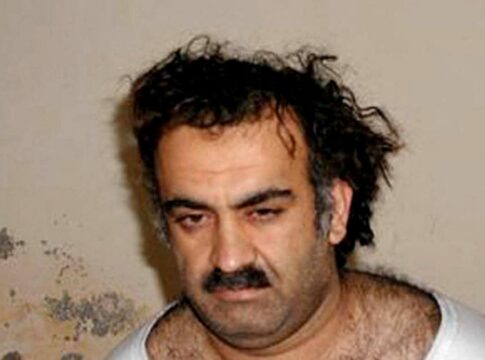
The Supreme Court delivered a decisive blow to alleged September 11 mastermind Khalid Sheikh Mohammed, rejecting his final appeal and leaving the government’s withdrawal of his plea deal firmly in place. The decision keeps the death penalty on the table for the man accused of orchestrating America’s deadliest terrorist attack.
Plea Deal Collapse Stands
Mohammed attempted to challenge the Defense Secretary’s decision to revoke a negotiated plea agreement that would have spared him from execution. The high court refused to intervene, maintaining the government’s position that military commission defendants have no constitutional right to enforce plea deals once withdrawn. Justice Brett Kavanaugh recused himself from considering the appeal, though no explanation was provided for his absence from the deliberations.
The D.C. Circuit Court had previously ruled in the government’s favor, finding that the Defense Secretary operated within his legal authority when he pulled the controversial agreements. The appellate panel specifically declined to question the Secretary’s judgment on matters of national security and military justice, establishing a precedent that strengthens executive authority over terrorism prosecutions.


Two Decades of Legal Stalemate
Mohammed and co-defendants Walid bin Attash and Mustafa al-Hawsawi have languished at Guantanamo Bay since their capture in 2003. Military prosecutors charged them with crafting and executing the attacks that killed nearly 3,000 Americans, filing five capital charges that carry potential death sentences. Yet their cases have crawled through the military justice system for over two decades, caught in complex disputes about torture evidence.
The defendants spent years in secret CIA detention facilities where interrogators subjected them to enhanced interrogation techniques that critics and human rights organizations classify as torture. They arrived at Guantanamo Bay in 2006, but prosecutors did not formally charge them until 2008. Defense attorneys have argued that evidence obtained through coercive interrogation methods should be excluded from trial, creating procedural delays that have prevented any case from reaching verdict.
What This Means
The Supreme Court’s refusal to hear the case removes a significant obstacle to moving forward with military commission proceedings. Families of September 11 victims have waited more than 23 years for justice, watching legal proceedings stall repeatedly over torture claims and procedural challenges. The decision reinforces the executive branch’s control over terrorism prosecutions while signaling that the nation’s highest court will not micromanage military commission procedures. Mohammed and his co-defendants now face the prospect of capital trials without the protection of negotiated plea agreements that would have guaranteed life imprisonment instead of execution.
Sources
Cbsnews: Supreme Court turns away appeal from alleged 9/11 mastermind Khalid Sheikh Mohammed