
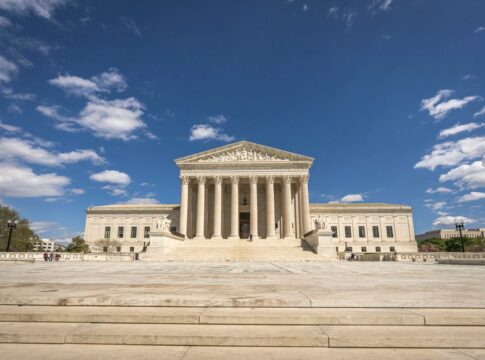
Photo: Mark Stebnicki / Pexels
By Daily American Press Newsroom, National Desk — Published October 25, 2026
Table of Contents
- Key Takeaways
- The Background & Context of Shadow Docket Rulings
- Why This Matters to American Citizens
- Reactions & Analysis from Legal Observers
- What Happens Next
- Frequently Asked Questions
The U.S. Supreme Court‘s shadow docket rulings have emerged as a flashpoint in American jurisprudence, reshaping the balance of power between federal branches and affecting millions of citizens. Unlike traditional cases that receive full briefing, oral arguments, and detailed written opinions, these emergency orders arrive with little warning and often no explanation. As the second Trump administration unfolds, the nation’s highest court continues to issue consequential decisions through this expedited process, drawing scrutiny from legal scholars, civil liberties advocates, and elected officials who warn that justice conducted in the shadows undermines public trust and accountability.
The shadow docket—a term that has gained currency in recent years—refers to the Supreme Court’s handling of emergency applications, stays, and injunctions outside its regular merits docket. These rulings can halt lower court decisions, allow controversial policies to take effect immediately, or freeze government actions pending further review. The practice has intensified, transforming what was once a procedural backwater into a primary avenue for resolving urgent disputes involving national security, immigration, public health, and now economic policy.
Recent developments have thrust the shadow docket back into the national spotlight. New tariff policies announced by the administration have triggered a wave of legal challenges, setting the stage for potential emergency appeals to the Supreme Court. The intersection of trade policy, executive authority, and judicial review promises to test the boundaries of presidential power in ways that will reverberate through the economy and the lives of ordinary Americans who face higher prices and economic uncertainty.
Key Takeaways
- The Supreme Court increasingly relies on shadow docket rulings to decide major policy disputes without the transparency and deliberation of traditional cases, according to legal observers tracking the trend.
- These emergency orders often arrive unsigned, undebated, and unexplained, leaving lower courts, government officials, and citizens struggling to understand the legal reasoning behind decisions that affect fundamental rights and national policy.
- The second Trump administration’s policy initiatives, particularly new tariff measures, have generated fresh litigation expected to reach the Supreme Court through emergency applications rather than the conventional appellate process.
- Civil liberties organizations and legal scholars warn that the expanding use of the shadow docket represents a fundamental shift in how the Supreme Court exercises its power, with profound implications for democratic accountability and the rule of law.
- The shadow docket has become a tool for resolving disputes involving executive authority, touching areas from trade and immigration to public health and national defense, affecting the daily lives of millions of Americans.
- Critics across the political spectrum have expressed concern that major constitutional questions are being decided hastily, without the benefit of full briefing, oral argument, or reasoned opinions that provide guidance for future cases.
The Background & Context of Shadow Docket Rulings
The Supreme Court has always maintained procedures for handling urgent matters that cannot wait for the regular schedule of briefing and argument. For decades, these emergency applications remained relatively rare and typically involved straightforward procedural questions: should an execution proceed, should a lower court order be stayed pending appeal, should an injunction be lifted or maintained temporarily?
The landscape shifted dramatically in recent years. What was once an exceptional practice became routine. The volume of consequential shadow docket rulings surged, particularly in cases involving federal policy. Instead of serving as a narrow safety valve for genuine emergencies, the shadow docket evolved into an alternative track for resolving major legal disputes on an accelerated timeline.
This transformation did not occur in a vacuum. It reflects broader tensions in American governance: a presidency asserting expansive executive authority, lower courts willing to issue nationwide injunctions blocking federal policies, and a Supreme Court majority increasingly impatient with what it views as judicial overreach by district and appellate judges. The result is a feedback loop where controversial policies trigger immediate legal challenges, which in turn generate emergency appeals to the Supreme Court, which then decides fundamental questions of law and policy through unsigned orders issued late at night or over weekends.
The lack of transparency compounds the problem. Traditional Supreme Court opinions run dozens of pages, carefully explaining the legal reasoning, addressing counterarguments, and providing guidance to lower courts. Shadow docket orders, by contrast, often consist of a single paragraph or even a single sentence. Sometimes the Court offers no explanation at all, simply granting or denying the requested relief. Dissenting justices occasionally write opinions explaining their disagreement, but the majority typically remains silent about its rationale.
Legal experts note that this opacity creates confusion and uncertainty. Lower court judges struggle to apply precedents they cannot fully understand. Government lawyers find it difficult to predict how the Court will rule on similar questions in the future. Citizens and advocacy groups affected by these rulings are left to speculate about the constitutional principles at stake. The shadow docket, critics argue, transforms the Supreme Court from a deliberative institution that operates through reasoned elaboration of legal principles into something resembling an emergency command center issuing cryptic directives.
Why This Matters to American Citizens
The expanding shadow docket has concrete consequences for ordinary Americans, even if the technical legal procedures seem remote from daily life. Consider the economic impact. When the Supreme Court uses its shadow docket to allow or block tariff policies, the effects ripple through the economy immediately. Businesses make investment decisions, supply chains adjust, prices shift. Consumers pay more at the checkout counter or find products unavailable. Workers face layoffs or hiring freezes. These real-world consequences flow from legal rulings that arrive without warning and without explanation.
The stakes extend beyond economics. Shadow docket rulings have touched virtually every area of federal policy that affects citizens directly. Immigration enforcement, public health measures, environmental regulations, voting rights, religious liberty—all have been subject to emergency Supreme Court intervention through the shadow docket. When the Court acts through this expedited process, it is making decisions about fundamental rights and government power that shape the lived experience of millions of people.
The erosion of transparency poses its own threat to democratic governance. Americans have a stake in understanding how their government works and why courts make the decisions they do. The Supreme Court’s legitimacy rests not on force or political power but on public acceptance of its role as an impartial interpreter of the Constitution and laws. That acceptance depends on transparency and reasoned explanation. When the Court issues consequential rulings in the shadows, it risks undermining the very foundation of its authority.
There is also the question of equal access to justice. Bringing an emergency application to the Supreme Court requires sophisticated legal representation and significant resources. The federal government has a dedicated team of experienced Supreme Court advocates. Wealthy corporations can hire elite lawyers. But individual citizens, small businesses, and under-resourced advocacy groups face barriers in accessing this expedited process. The shadow docket may thus tilt the playing field toward powerful repeat players who know how to navigate the system.
For voters and taxpayers, the shadow docket raises fundamental questions about accountability. When unelected judges make major policy decisions through opaque emergency orders, it becomes harder for citizens to hold anyone responsible. Elected officials can point to the courts. Judges can claim they are simply applying the law. The public is left with outcomes that profoundly affect their lives but little ability to understand or influence the process that produced those outcomes.
Reactions & Analysis from Legal Observers
The Supreme Court’s increasing reliance on shadow docket procedures has not gone unnoticed. Organizations dedicated to judicial transparency and civil liberties have documented the trend and raised alarms about its implications. Reports indicate that the Court is moving more cases into this shadowy realm, handling through emergency orders what would previously have proceeded through the regular appellate process with its attendant safeguards of briefing, argument, and detailed opinions.
Legal scholars across the ideological spectrum have expressed concern, though they may disagree about specific rulings. Some worry that the shadow docket allows the Court to make major changes in the law without the discipline imposed by full briefing and oral argument. Others focus on the practical problems created by unexplained orders that leave lower courts guessing about what the law requires. Still others emphasize the democratic deficit: major constitutional questions being resolved without the transparency that allows for public scrutiny and debate.
The new tariff policies that have sparked legal challenges illustrate how contemporary policy disputes quickly become shadow docket cases. When the administration announces significant trade measures, affected parties immediately file lawsuits in federal district courts. Those courts may issue preliminary injunctions blocking the tariffs. The government then rushes to the Supreme Court seeking emergency relief. Within days or even hours, the Court must decide whether to allow the policy to proceed or maintain the lower court’s block—all without the months of preparation that normally precede Supreme Court decisions.
This compressed timeline creates pressure on the justices and the litigants alike. Lawyers have little time to research and brief complex legal questions. Justices must decide weighty matters quickly, often based on incomplete records and hurried arguments. The risk of error increases. The opportunity for careful deliberation decreases. And the public watches major policy battles resolved through a process that resembles crisis management more than judicial deliberation.
Some defenders of current practice argue that the shadow docket serves a necessary function in an era of aggressive lower court intervention. When a single district judge can issue a nationwide injunction halting a federal policy, the argument goes, the Supreme Court needs a mechanism to restore the status quo while the case proceeds through normal channels. Emergency relief prevents irreparable harm and maintains the government’s ability to function pending full review.
Critics respond that this justification fails to explain why the Court cannot provide reasoned explanations for its emergency rulings. Even if speed is essential, a brief opinion explaining the legal basis for a stay or injunction would provide valuable guidance and maintain transparency. The choice to issue unexplained orders, they contend, reflects a preference for operating without accountability rather than a genuine necessity imposed by time constraints.
What Happens Next
The trajectory of the shadow docket appears unlikely to reverse course in the near term. The structural factors driving its expansion remain in place: a presidency pursuing ambitious policy goals, lower courts willing to block those policies through nationwide injunctions, and a Supreme Court majority determined to assert control over the pace and direction of legal change. As long as these dynamics persist, emergency applications will continue to flood the Court, and shadow docket rulings will continue to shape American law and policy.
The tariff litigation represents a test case for how this process will unfold during the current administration. If the Supreme Court grants emergency relief allowing controversial trade policies to proceed, it will signal deference to executive authority in economic matters. If it maintains lower court blocks, it will suggest limits on presidential power even in areas traditionally considered within executive discretion. Either way, the decision will likely come through a terse order that leaves observers guessing about the underlying legal reasoning.
Longer term, the shadow docket may prompt calls for reform. Legislation could potentially impose procedural requirements on the Supreme Court, though such efforts face constitutional questions about separation of powers. The Court itself could adopt internal rules providing for more transparency in emergency matters. Individual justices might choose to write more frequently in shadow docket cases, explaining their votes even when the majority remains silent. Public pressure and professional criticism could gradually shift institutional norms.
The stakes extend beyond any single case or policy. At issue is how the Supreme Court will exercise its extraordinary power in the twenty-first century. Will it operate as a transparent institution that explains its reasoning and invites public understanding? Or will it increasingly function through opaque emergency orders that deliver outcomes without explanation? The answer will shape not only the law but also public confidence in the judiciary as a legitimate and accountable branch of government.
For citizens, businesses, and government officials trying to navigate the legal landscape, the shadow docket creates ongoing uncertainty. Planning becomes difficult when major legal questions can be resolved overnight through unexplained orders. The rule of law depends on predictability and clarity. The shadow docket undermines both, replacing them with a system where emergency has become routine and opacity has become standard practice.
Frequently Asked Questions
What exactly is the Supreme Court’s shadow docket?
The shadow docket refers to the Supreme Court’s handling of emergency applications, stays, injunctions, and other matters outside its regular merits docket. Unlike traditional cases that receive full briefing, oral arguments, and detailed written opinions, shadow docket cases are decided quickly, often without oral argument, and frequently without any explanation of the Court’s reasoning. These rulings can have major policy consequences despite the abbreviated process.
How do shadow docket rulings differ from regular Supreme Court decisions?
Regular Supreme Court decisions follow a deliberative process that includes months of preparation, written briefs from both sides, friend-of-the-court submissions, oral arguments before the justices, and ultimately a detailed written opinion explaining the legal reasoning. Shadow docket rulings, by contrast, arrive quickly in response to emergency requests, often consist of a single paragraph or sentence, and typically provide no explanation for why the Court ruled as it did. Regular decisions also set clear precedents for future cases, while shadow docket orders leave their precedential value uncertain.
Why are legal experts concerned about the expansion of the shadow docket?
Legal experts worry that the shadow docket allows the Supreme Court to make major changes in law and policy without the transparency, deliberation, and reasoned explanation that characterize traditional judicial decision-making. The lack of written opinions makes it difficult for lower courts to understand and apply the law, creates uncertainty for citizens and businesses trying to comply with legal requirements, and undermines public confidence in the judiciary by conducting important work in the shadows rather than through open and accountable processes.
How might shadow docket rulings affect ordinary Americans?
Shadow docket rulings can have immediate and tangible effects on daily life. They have addressed issues ranging from immigration enforcement and public health measures to economic policies like tariffs that affect prices consumers pay. When the Supreme Court uses its shadow docket to allow or block government policies, those decisions ripple through the economy and society, affecting jobs, prices, access to services, and fundamental rights—all without the transparency that would allow citizens to understand why the Court ruled as it did or to hold decision-makers accountable.
The shadow docket has become a defining feature of the contemporary Supreme Court, transforming how America’s highest judicial body exercises its power. As the second Trump administration pursues its policy agenda and legal challenges multiply, these emergency rulings will continue to shape the nation’s legal and political landscape. Whether this transformation strengthens or weakens the rule of law remains an open question, one that will be answered not in a single dramatic decision but through the accumulation of countless orders issued in the shadows, affecting millions of lives in ways both profound and poorly understood.