
A mysterious object hurtling through space with unexplained acceleration could be a Soviet probe that vanished nearly four decades ago, according to researchers examining the phenomenon. The discovery raises questions about what else from the Cold War space race remains lost in our solar system.
The Mystery of 1998 KY26
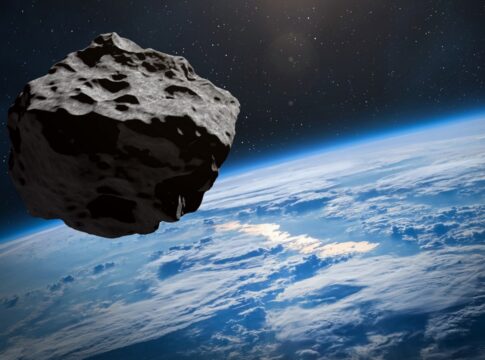
Scientists have designated the object as 1998 KY26, initially believing it to be a near-Earth asteroid measuring roughly 36 feet wide. However, the object exhibits what researchers call nongravitational acceleration, meaning forces beyond the gravitational pull of the sun and planets are influencing its trajectory through space. NASA Administrator Jared Isaacman assured Americans the object poses no threat to Earth, emphasizing continued monitoring shows no cause for alarm about planetary safety.
One leading theory suggested KY26 might be a dark comet containing buried water ice that vaporizes and propels the object forward. But new peer-reviewed research from Georgia Institute of Technology researchers Korbin Hansen and Masatoshi Hirabayashi, published in the journal Icarus, undermines this explanation. Their calculations demonstrate KY26 is likely too warm for water ice to survive long enough to produce the observed movement.

#ufox #ufotwitter

The Soviet Connection
Harvard astrophysicist Avi Loeb and fellow researchers Adam Hibberd and Adam Crowl developed an intriguing alternative hypothesis. They examined whether KY26 could actually be Phobos 1, an unmanned Soviet spacecraft that lost communication while traveling to Mars in 1988. The researchers constructed a simplified model of the Soviet probe and compared how it would reflect sunlight while spinning against observations of KY26.
The spacecraft model closely matched eight separate observation sets of the mysterious object. The team found that sunlight pushing against cylindrical components or solar panels could help explain the unusual movement patterns. Their findings, while not conclusive, add substantial credibility to the theory that America’s Cold War rival may have inadvertently left hardware drifting through our solar system for nearly forty years.
Testing the Theory
The Japan Aerospace Exploration Agency’s Hayabusa2 spacecraft will rendezvous with KY26 in July 2031, potentially settling the debate definitively. Loeb anticipates the encounter will reveal whether cameras capture an asteroid or Soviet engineering. Separate research published in Astronomy and Astrophysics examined reflected light from KY26, concluding its composition appears consistent with rocky asteroids from the inner asteroid belt. This ongoing scientific mystery demonstrates how much remains unknown about objects moving through space near Earth, decades after the space race between America and the Soviet Union supposedly ended.